

Boko Haram said comrades shouldn’t be in prison after Buhari pardoned political cronies jailed for stealing billions: Officials

President Muhammadu Buhari’s decision to pardon his political allies who were tried, found guilty and sentenced by federal courts for looting public funds emboldened Boko Haram elements who staged the prison break that has left Nigerians horrified since Wednesday, per senior correctional officers managing the attack’s aftermath.
Mr Buhari’s action, which was constitutional but nonetheless deemed morally problematic as it undermined public accountability and the campaign against endemic graft, came in April and saw about 150 convicted felons released from jails across the country.
Former governors Jolly Nyame and Joshua Dariye, members of the president’s ruling APC, were amongst those asked to go home before serving any meaningful period of their sentences for stealing billions from public coffers. Other business executives with ties to the president and his party were also freed as part of the executive pardons which were later enmeshed in racket allegations.
Besides political opposition and civil society groups who criticised Mr Buhari’s directive as overly distasteful and self-serving, violent outlaws also took note of the president’s action and Boko Haram used it to recruit and coordinate its attack on the correctional centre in serving the nation’s capital Abuja on Wednesday night, officials said.
“Some of them shouted at our officers that Buhari pardoned governors and big people convicted by the Federal High Court,” an official wrote in a WhatsApp message to Peoples Gazette on Thursday evening. “So their members should not be in prison because the government is not Allah that has the power to punish people.”
Boko Haram members bombed their way into the correctional facility at about 10:00 p.m. in Kuje, roughly 43 kilometres southwest of the capital city centre. No fewer than 600 hardened criminals were set free during the raid, although scores have since returned. Khalid al-Barnawi, the vicious leader of the sect known for bombing the UN Headquarters in Abuja in 2011, was among about 64 Boko Haram elements released, officials said.
Officials confirmed weak resistance from security forces during the attack, which lasted about three hours before the insurgents fled on motorcycles said to be more than 300. Mr Buhari condemned the nation’s security architecture following the attack and ordered a thorough investigation while corrections chief Haliru Nababa expressed confidence that more escapees would return to the centre.
Another officer, who admitted receiving reports that the insurgents mentioned the presidential pardons, said the prison would be focusing more on the lapses responsible for the successful breach.
“They said so many things about the government and shouted the name of Allah many times,” the official said by telephone under anonymity to comment on an unfolding situation. “But we are focusing on making sure that the attack does not occur again.”
“Kuje is a medium security jail but we are holding ourselves responsible for allowing anyone to break in,” the official said. “No one should be able to invade the prison inside the capital like what we saw two days ago, so it is not about the motive but the success of the attackers.”
A spokesman for the correctional service did not immediately provide comments about the terrorists’ comments. The State House did not return a request seeking comments about whether or not the president had been briefed about the implications of his pardon on the latest terror attack as claimed by the attackers themselves.
Hundreds of thousands have been killed since Boko Haram launched its campaign against Nigeria in 2009. Although the group’s deadly assaults are largely around the country’s northeastern flank, they are not restricted to the region. Attacks have been launched by the group in other parts of the country, including multiple bombings in and around Abuja, as well as the recent exploits across Niger State.
The group’s capacity has waned in recent months after the death of its leader Abubakar Shekau, but the country’s defence and law enforcement infrastructure has been overwhelmed by rampaging bandits, separatist elements and the proliferation of abduction-for-ransom syndicates.

We have recently deactivated our website's comment provider in favour of other channels of distribution and commentary. We encourage you to join the conversation on our stories via our Facebook, Twitter and other social media pages.

More from Peoples Gazette

Agriculture
FG tasks ECOWAS on leveraging financing strategies for agroecology
The federal government has urged stakeholders in the agriculture and finance sectors in the West Africa region to leverage financing strategies to enhance agroecology practices

Politics
Katsina youths pledge to deliver over 2 million votes to Atiku
“Katsina State is Atiku’s political base because it is his second home.”
States
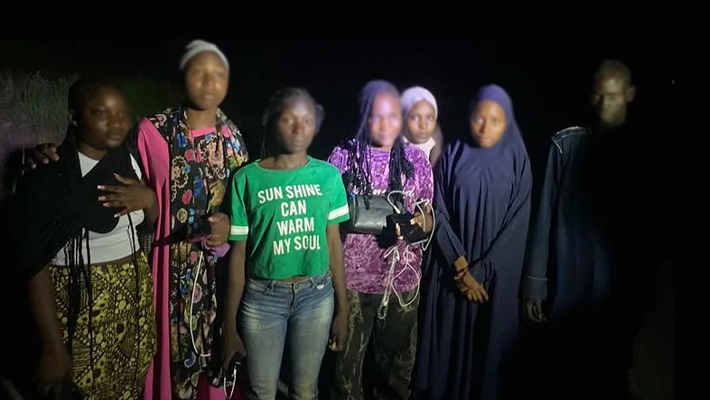
Kidnapping: Six female students rescued from bandits in Katsina, says military
The students were rescued along the Daye-Malufashi road in Danmusa council area after troops responded to a kidnapping incident at about 10:48 p.m. on Monday.

Agriculture
Ogun: Urgent response advised amid African swine fever outbreak
Eustace Iyayi, special assistant to the livestock development minister, Idi Maiha, called for an emergency response to the African swine fever outbreak in Ogun.
Economy
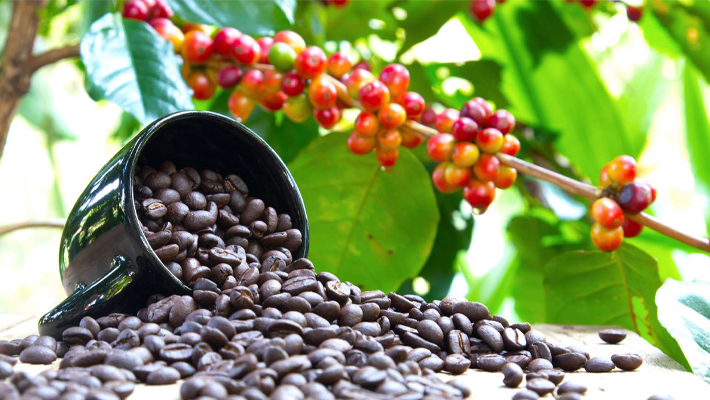
Ethiopia seeks world’s largest producer of arabica coffee status
Ethiopia is modernising its coffee industry to become the world’s largest producer of arabica coffee.

World
Vietnam now Southeast Asia’s largest electric-car market with 40% share
Vietnam became Southeast Asia’s largest electric-car market in 2025, with electric vehicles accounting for nearly 40 per cent of new-car sales, according to the IEA.
Anti-Corruption
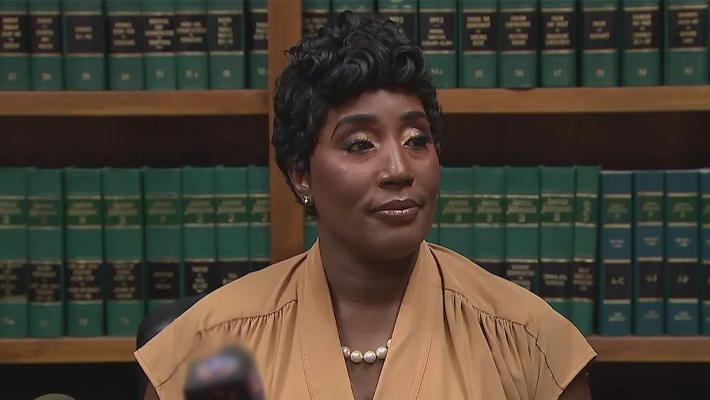
Charlotte City councilwoman Tiawana Brown, two daughters sentenced for COVID-19 loan fraud
Ms Brown will spend 10 months in prison and two years of supervised release, while her daughters, Tijema Brown, 32, and Antionette Rouse, 34, were also sentenced.

Africa
Ghana: Mahama urges developing countries against dependency on foreign health aid
Mr Mahama stated this while launching the ‘Sovereign Future’ report, which aims to reshape global health governance and foster self-reliance across the Global South.


