

CBN working hard but oil production decline weakening economy: Emefiele

The Central Bank of Nigeria (CBN) says it is leading the drive towards diversifying the nation’s economy away from oil through its numerous interventions, but crude production decline is undermining the economy.
According to CBN governor Godwin Emefiele, Nigeria has depended mainly on the oil sector for revenue generation over the past four decades. He, therefore, said there was the need to build a broad-based and well-diversified economy that would guarantee overall macroeconomic stability.
“The quest for building a more sophisticated economy and agricultural, micro, small, and medium enterprises, industrial and manufacturing concerns have become the major component of our monetary policy,” said Mr Emefiele.
The CBN chief added, “Nigeria has largely depended on the oil sector for revenue generation over the past four decades, and the sustained decline in crude oil production has continued to negatively undermine the performance of the economy. Thus, there is the urgent need for a conscientious effort to diversify to other non-oil sectors.”
Mr Emefiele said this at a seminar organised by CBN for the finance correspondents and business editors on Saturday in Lagos. The conference, held simultaneously in Lagos and Abuja, had ‘Policy Options for Economic Diversification: Thinking Outside the Crude Oil-Box’, as its theme.
He also mentioned that the quest for building a robust economy had remained the major component of the monetary policy.
Mr Emefiele, represented by the CBN’s director of corporate communication, Osita Nwanisobi, said the apex bank had supported non-oil sectors such as agriculture, manufacturing, healthcare, education, power and aviation and other allied economic value chains.
The apex bank’s governor also noted that Nigeria had become a rice exporting country as the bank’s flagship Anchor Borrowers Programme (ABP) had changed the long-standing dependence on imported rice.
He said the CBN had, through its Agriculture Credit Scheme, supported commercial farmers in the country in different value chains, including oil palm, cotton, and cocoa, among others.
The CBN boss explained that the implementation of 44 items prohibited from foreign exchange for import had revealed that the bank’s continued support to the manufacturing sector and MSMEs was yielding great results.
He also said the apex bank’s health sector intervention was beginning to reduce healthcare tourism, which according to him, was helping to conserve the country’s foreign exchange and improve the well-being of Nigerians.
Similarly, Mr Emefiele stated that the new 100 for 100 Policy on Production and Productivity was beginning to yield quality results.
He also said the RT200 FX initiative, designed to take advantage of Nigeria’s large domestic production to other regional markets, targeted increasing foreign exchange inflows to the economy and supporting exchange rate stability.
On digitalisation across all sectors, specifically in entrenching a resilient payments system, Mr Emefiele said the bank had established strategic initiatives and policies in the financial sector over the years.
He named the strategies as the Payments System Vision 2020 (2007), National Financial Inclusion Strategy (2012, 2018 ), Cash-less Policy (2012), Framework for Regulatory Sandbox Operations (2018, 2021) Open Banking Initiative (2021), among others.
The apex bank governor said that due to the strategies, the Nigerian payment ecosystem had witnessed tremendous improvements over the years.
He said, “To consolidate its efforts towards engendering a digital economy, the bank deployed the eNaira, Africa’s first Central Bank Digital Currency (CBDC), in preparation for the payment landscape of the future, given the potential benefits that will accrue to a digital economy.”
(NAN)

We have recently deactivated our website's comment provider in favour of other channels of distribution and commentary. We encourage you to join the conversation on our stories via our Facebook, Twitter and other social media pages.

More from Peoples Gazette

States
Independence: NBA urges Nigerians to expect better future
The NBA said that ordinary Nigerians should be deriving benefit from the subsidy removal rather than hardship.

Agriculture
FG tasks ECOWAS on leveraging financing strategies for agroecology
The federal government has urged stakeholders in the agriculture and finance sectors in the West Africa region to leverage financing strategies to enhance agroecology practices

Politics
Katsina youths pledge to deliver over 2 million votes to Atiku
“Katsina State is Atiku’s political base because it is his second home.”

Economy
NG-CARES: Lawmaker backs additional funding to lift Nigerians out of poverty
Mr Kusada stated this at the closing of the NG-CARES additional financing technical workshop in Abuja, describing it as an opportunity to improve livelihoods and reduce poverty.

NationWide
Nigeria’s $70 million passport-producing facility to be first in West Africa: Tunji-Ojo
Interior minister Olubunmi Tunji-Ojo disclosed this on Friday at the groundbreaking ceremony of a $70 million national passport manufacturing centre in Abuja.

NationWide
NCoS releases photos of fleeing convicted criminals who escaped from Kwara prison
Mr Nasiru, one of the escapees, had previously fled from the Mandala Custodial Centre in Ilorin but was later rearrested and transferred to Oke-Kura.
Economy
Centre urges wider adoption of Kaizen to boost public sector productivity
NPC urged public institutions to adopt continuous improvement practices to enhance productivity and service delivery.
Economy
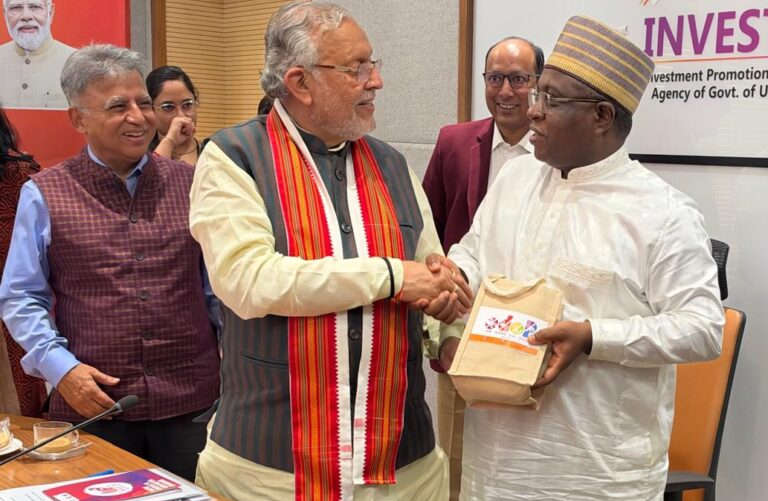
Kwairanga seeks stronger Nigeria-India economic cooperation
Umaru Kwairanga, chairman of Nigerian Exchange Group, has called for stronger economic cooperation between Nigeria and India.
Education
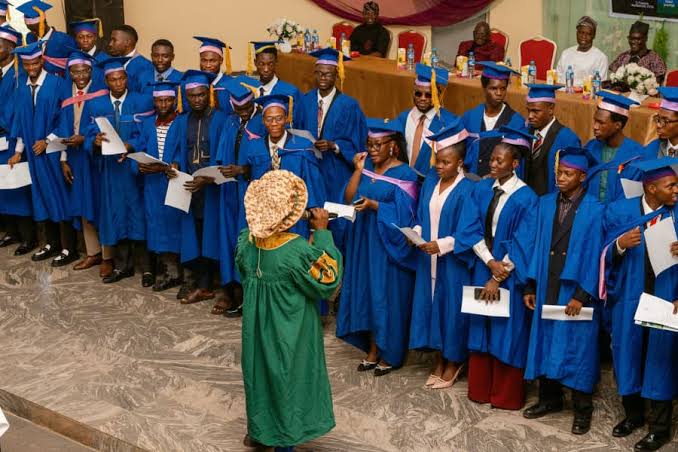
FUTA graduates 3,139 students, 256 with first class
The Federal University of Technology, Akure (FUTA), on Friday graduated 3,139 undergraduates, including 256 earning first class, at its 37th convocation.


