

CBN bans Nigerians from buying, selling bitcoin, other cryptos
![CBN Governor, Godwin Emefiele. [CREDIT: Bloomberg]](https://gazettengr.com/wp-content/uploads/CBN-Governor-Godwin-Emefiele.jpg)
The Central Bank of Nigeria has ordered banks and other financial institutions to close customer accounts used in trading cryptocurrencies and other related transactions.
In a circular seen by Peoples Gazette after circulating on social media on Friday afternoon, the Nigerian bank regulator ordered deposit money banks, non-bank financial institutions and other financial institutions to “identify persons and/or entities transacting in or operating cryptocurrency exchanges within their systems and ensure that such accounts are closed immediately. “
The CBN has been long taken a hardline position against cryptocurrencies, which have become a major unit of commerce across the world in recent years.
In October last year, at the height of the #ENDSARS protests, the bank restricted some financial institutions from receiving or making crypto payments.
The restricted accounts belonged to predominantly young Nigerians who had either sent or received funds to run the #EndSARS protests. When the major fundraisers, Feminist Coalition, were blocked, a bitcoin wallet was set up which donors used to pour in support from across the world.
The CBN was helpless at blocking the inflow due to cryptocurrencies being run on decentralised monetary systems that no conventional regulator can restrain.
In the past few weeks, trading in Bitcoin and other cryptocurrencies has skyrocketed as the global economy becomes increasingly volatile. Nigerians have started utilising crypto transactions to avoid the numerous challenges faced with traditional money transfer services.
In 2020, crypto marketplace Paxful reported that Nigeria had the world’s second-largest Bitcoin by trading volume. In the last five years, Nigerians have traded 60,215 Bitcoins, or more than $566 million USD, it was reported.
In 2017, CBN said it would not licence cryptocurrencies such as Bitcoin, Ripples, Monero, Litecoin, Dogecoin, Onecoin, amongst others, and any transactions conducted through them would not have the protection of the Nigerian law.

We have recently deactivated our website's comment provider in favour of other channels of distribution and commentary. We encourage you to join the conversation on our stories via our Facebook, Twitter and other social media pages.

More from Peoples Gazette

Agriculture
FG tasks ECOWAS on leveraging financing strategies for agroecology
The federal government has urged stakeholders in the agriculture and finance sectors in the West Africa region to leverage financing strategies to enhance agroecology practices

Politics
Katsina youths pledge to deliver over 2 million votes to Atiku
“Katsina State is Atiku’s political base because it is his second home.”

States
UN commends Imo’s digital transformation, recommends reforms as national model
Mrs Mohammed expressed delight over the rapid progress recorded in youth development and technological empowerment in the state.
Africa
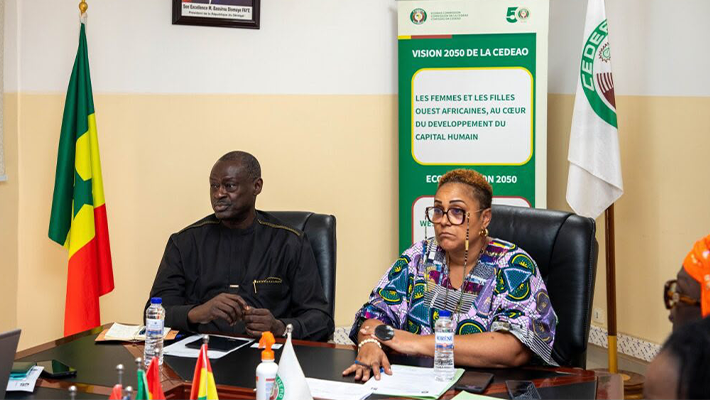
ECOWAS, ISOFS partner to end obstetric fistula by 2030
The partnership is projected to accelerate medical progress for West African obstetric fistula patients.

World
U.S. ICE arrests Nigerian Raphael Oludemilade-Adebowale convicted of money laundering
U.S. ICE officers arrested Nigerian Raphael Oludemilade-Adebowale, who was convicted of larceny and money laundering.

Heading 3
Global oil prices rise as U.S.-Iran war raises supply concerns
Global oil prices rose on Thursday amid heightened concerns about further supply disruptions.

Heading 4
Russian drone attack kills four, injures more than 60 in Ukraine
Russian drone killed at least four people and injured more than 60 others in Pavlohrad city, Ukraine.

Education
FG inaugurates N180 billion free data scheme for five million Nigerian students
Mr Alausa stated that under the scheme, five million learners would receive 100 megabytes of sponsored data daily.


