


Three million people die yearly from wrong medication: WHO
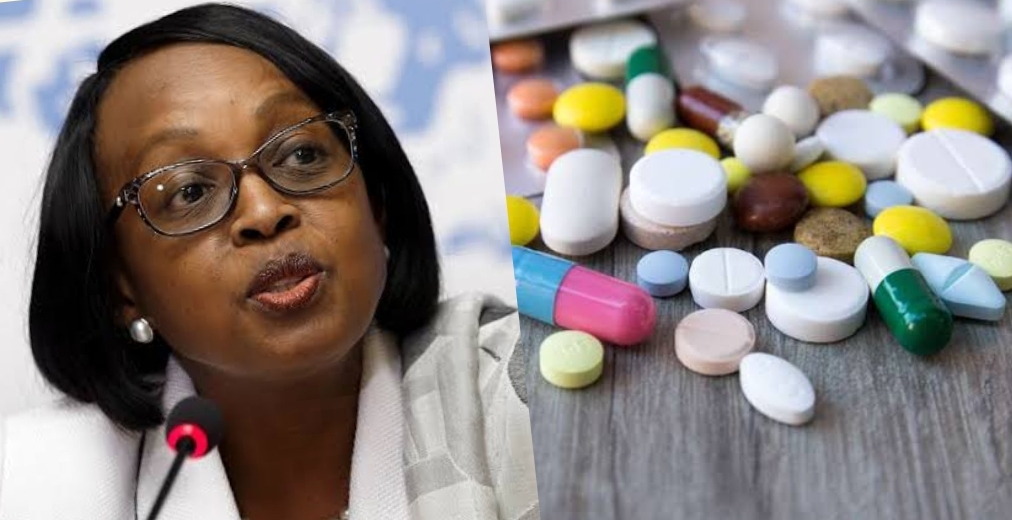
The World Health Organisation has lamented medication errors which it says contribute to more than three million deaths globally every year.
WHO Regional Director for Africa, Dr Matshidiso Moeti, made the declaration in her message to mark the 2022 World Patient Safety Day.
The day is observed annually on September 17 to raise global awareness about patient safety and to call for solidarity and united action by all countries and international partners to reduce patients’ harm.
Ms Moeti said the day aims at raising awareness of the importance of people-centred care and preventing harm to patients.
She noted that medication errors were exacerbated by overwhelmed health systems during the COVID-19 pandemic.
According to her, about one in every four cases of preventable medication harm is clinically severe, or life-threatening.
“While there is limited data for the African continent, it is generally acknowledged that there is a high magnitude of unsafe medication practices,” she noted.
The world patient safety day focuses on three primary areas – high-risk situations, transitions of care and ‘polypharmacy’, which is the use of multiple medicines at once, Ms Moeti noted.
“Poly pharmacies are particularly common amongst older people with chronic health diseases.
“Medication errors occur because of weaknesses in medication systems and are aggravated by shortages of well-trained health staff and poor working and environmental conditions for delivery of quality healthcare.
“Among low and medium-income countries, the African region has the highest prevalence of substandard and counterfeit medicines of about 18.7 per cent,” she said.
The WHO chief condemned the administration of surplus medication at home; the purchase of medication from pharmacies on the advice of friends and relatives rather than on prescription by trained professionals.
Ms Moeti stressed that the use of old prescriptions to buy medication to treat current ailment is a common practice that should be stopped.
“One study done in 2021 showed that as many as one in every three respondents admitted to self-medication to prevent COVID-19.
“This is unacceptably high because such unguided practices lead to dangerous consequences as a result of drug interactions.
“It also leads to incorrect administration, dosage or choice of treatment. Consequences include delays in treating diseases, dependence and abuse, disability, and even death,” she lamented.
Ms Moeti noted that medication systems and human factors were major contributory factors to unsafe practices.
She noted also that many countries lacked the capacity to detect, evaluate and prevent medicine safety issues.
Illiteracy, language difficulties, as well as socio-cultural and religious beliefs, were also identified as exacerbating medication errors.
“Based on current estimates, 42 billion dollars of total health expenditure worldwide could be averted if medication errors are addressed.
“Medication without harm aims to reduce severe avoidable medication-related harm by 50 per cent globally in the next five years,
“This will be done through focused activities and interventions targeting three areas – patients and the public; health care professionals and medicines and systems and medication practices,” she added.
Ms Moeti said that WHO was working with member states to implement the Global Patient Safety Action Plan 2021 – 2030.
“A regional patient safety strategy and road map are currently being developed to guide its implementation.
“Some notable highlights include support to establish and strengthen National Medicine Regulatory Authorities (NRAs), by building regulatory capacity and promoting regulatory harmonisation.
“Strengthened regulatory systems serve to eliminate barriers which impede access to safe, effective and quality-assured medical products.
“WHO already developed tools to assist member states in benchmarking NRAs to identify strengths and implement plans to address weaknesses.
“Ghana, Nigeria and Tanzania have already attained Maturity Level 3, indicating their regulatory systems are functioning well, and integrating the requisite elements to guarantee stable performance.
“This reduces their vulnerability to substandard and falsified medical products,’’ she stressed.
Ms Moeti said that 39 WHO member states had developed essential medicines lists linked to standard treatment guidelines.
According to her, 25 member states have also developed national medicine formularies that guide the selection of medicines for procurement, prescription and dispensing practices.
Ms Moeti encouraged healthcare to take a more active role in ensuring safer medication practices, and medication-use processes.
(NAN)

We have recently deactivated our website's comment provider in favour of other channels of distribution and commentary. We encourage you to join the conversation on our stories via our Facebook, Twitter and other social media pages.

More from Peoples Gazette

Agriculture
FG tasks ECOWAS on leveraging financing strategies for agroecology
The federal government has urged stakeholders in the agriculture and finance sectors in the West Africa region to leverage financing strategies to enhance agroecology practices

Politics
Katsina youths pledge to deliver over 2 million votes to Atiku
“Katsina State is Atiku’s political base because it is his second home.”

NationWide
2027: Group cautions ADC over reported Atiku-Amaechi ticket
It expressed the view that the ADC should prioritise candidates capable of withstanding legal scrutiny to avoid post-election disputes.

States
Ogun APC governorship candidate Solomon Adeola begins reelectrification of over 50 communities in Ogun Waterside
The senator said the intervention was aimed at restoring electricity to communities that had been in darkness for over a decade.

States
Oyo APC raises reconciliation committee to reconcile aggrieved members after primaries
Mr Sadare said, “It is hoped that this effort will bring about the desired peace and unity for our great party to win big at the polls next year.”

Sport
Nigerian athletes win 14 medals at CAA Region II championships
He said Nigeria’s dominance was most evident on the track, as sprinters swept several titles across the U-18 and U-20 categories.

States
Former deputy governor of Bauchi loses two children in auto crash
Mr Tela, also a former senator, lost two of his children in an accident along the Bauchi-Azare road on Saturday.

Health
Gynaecologist warns against misuse of pregnancy prevention drugs
He explained that while contraceptives effectively prevent pregnancy, each method has potential side effects and requires appropriate medical guidance.


