


SMEDAN tasks West African MSMEs on global competitiveness
The Small and Medium Enterprises Development Agency of Nigeria (SMEDAN) says West African countries must create export-ready MSMEs to compete with exports from other countries.
Olawale Fasanya, the Director-General/Chief Executive Officer of SMEDAN, said this at the ongoing 1st edition of the Gambia-Nigeria trade fair in Banjul, Gambia.
The fair has as its theme: “Ahead of AfCFTA: Strengthening West African Micro Small and Medium Enterprises (MSMEs) Capacity to Boost Intra-Regional Trade”.
According to a statement issued on Saturday by Ibrahim Mohammed, Head of Corporate Communications, SMEDAN, Mr Fasanya emphasised the need for an enabling environment for MSMEs in West Africa to grow.
He said the trade fair was aimed at challenging institutions of governments in both countries to provide the enabling environment for MSMEs to thrive locally and globally.
“My expectation is to see more of our products in markets beyond our continent.
“I am confident that we will very soon begin to witness significant growth within our MSMEs space as a direct benefit of this fair.
“The fair will, no doubt, provide the needed platform for future business-to-business, business and government and government to government co-operation.
“This, I know, will help reduce impeding issues such as insecurity, corruption and other socio-political crises that have significantly not allowed our MSMEs space to be fully developed,” Mr Fasanya said.
The SMEDAN boss said that the African Continental Free Trade Area (AfCFTA) initiative should help double intra-Africa trade by 2030.
He also projected that it would reduce reliance on imports and help create more jobs within the shortest possible time.
“When you consider the volume of trade between Nigeria and The Gambia, you will be convinced that there are opportunities that have not yet been exploited.
“The commodities of exchange are largely primary products without much value-addition. This is the narrative the fair is intended to change over time.
“We expect that Nigeria and The Gambia will be able to maximally develop our MSMEs to fully take advantage of not just the huge African markets. And also enter other economic territories of the Americas, Europe and Asia,” Mr Fasanya said.
(NAN)

We have recently deactivated our website's comment provider in favour of other channels of distribution and commentary. We encourage you to join the conversation on our stories via our Facebook, Twitter and other social media pages.

More from Peoples Gazette

Agriculture
FG tasks ECOWAS on leveraging financing strategies for agroecology
The federal government has urged stakeholders in the agriculture and finance sectors in the West Africa region to leverage financing strategies to enhance agroecology practices

Politics
Katsina youths pledge to deliver over 2 million votes to Atiku
“Katsina State is Atiku’s political base because it is his second home.”
Lagos
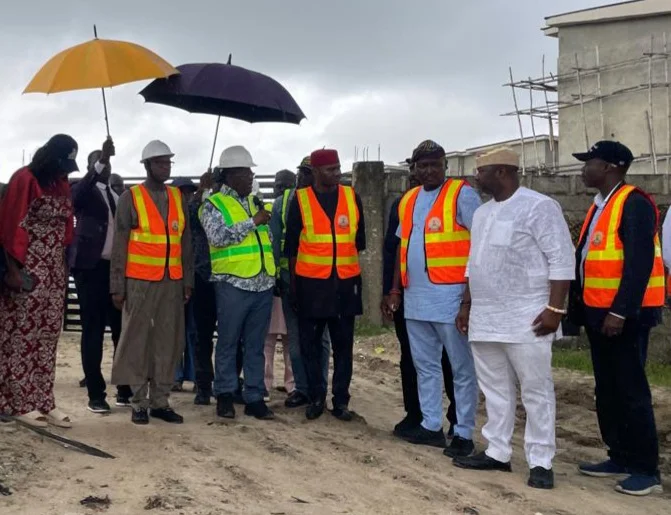
Lagos flooding started from White men’s colonisation of Nigeria, not caused by coastal highway: Senator Allwell Onyesoh
This flooding of Lagos did not begin today. It dates back to the days of the White men. So, what we are seeing today is not new,” Mr Onyesoh said.

Economy
FG to harmonise digital platforms regulations, governance frameworks
In the meantime, Mr Tijani directed that the regulatory status quo be maintained regarding internet platforms and online intermediaries.

Economy
Shettima urges Nigerian universities to create jobs, be innovative
Vice-President Kashim Shettima says Nigerian universities must become centres of innovation, enterprise and industrialisation to accelerate economic growth.

States
161 people killed in Ogun road crashes, says FRSC
The Federal Road Safety Corps says 161 persons died in 415 road crashes across the state between January and May.

Economy
Six reasons OPay’s new security features give Nigerians greater peace of mind
As digital payments become part of everyday life, keeping money safe has never been more important

NationWide
NIN: 136 million Nigerians enrolled on national identity database, says NIMC
No fewer than 136 million Nigerians have been enrolled in the National Identity Management Commission’s national identity database.


