

Why they shoot friends and spare the enemy
Her funeral rites would have begun on Wednesday, January 11, but were postponed because her family, along with the Nigerian Bar Association (NBA), is awaiting an autopsy report. As of the time of writing, the matter had faded from the headlines and a new date was yet to be announced.
Obviously, the autopsy would serve the legal purpose of demanding justice for Bolanle Raheem, given that legal subterfuge can sometimes undermine evidence and change the strongest of cases in favour of injustice.
Hopefully, Bolanle’s assailant, Drambi Vandi, will have his day in court – a right and privilege he denied her. Otherwise, no autopsy is needed to ascertain that if a loaded gun is pointed at a woman and the trigger is pulled and a bullet is fired, the target will die or at the very least, be mortally wounded.
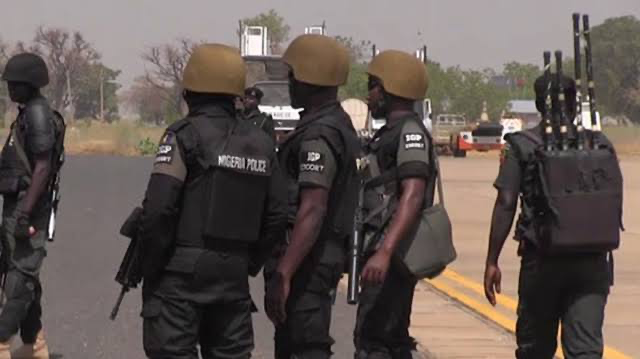
The Nigeria Police would like Nigerians to accept the farce that they are friends. But their penchant for enforcing death on the next unlucky fellow has, for ages, given Nigerians proof to the contrary.
The Christmas Day misadventure, when for the umpteenth time, a policeman allegedly terminated the life of Bolanle Raheem in Lagos left our mouths dry and turned a festive day into a sombre, tragic one.
The N5 billion the NBA is demanding as restitution for her family won’t change the fact that her life was avoidably snuffed out. Unfortunately, the amount won’t be extracted from the killer cop, but from the state – not a good price to pay for hiring, training and arming questionable characters as law enforcement agents.
Let me be clear. I have met fine policemen and have been proud of the excellent achievements of a number of them deployed in other countries to serve. Sadly, they are in the minority. How did we come to be afflicted with an armed and murderous force that shoots first and thinks afterwards – if they think at all?
Was #EndSARS of such limited value that it couldn’t dent the sordid history of years of police abuse? Or how else do we understand friends who keep their guns trained on us, spare the enemy, and shoot to kill on a murderous instinct?
It’s too short an interlude to even contemplate: Just two months after the second anniversary of #EndSARS and yet another policeman lets loose another canon on a fellow citizen – confirming that, as was feared all along, nothing has really changed. Whether it’s SARS (Special Anti-Robbery Squad) or SWAT (Special Weapons and Tactics Squad), the chameleon by another colour, is still a chameleon!
The Nigeria Police seem to have a shorter memory than its notorious short fuse – a tendency and reputation for letting fly bullets at anyone gutsy or just merely disagreeing with a policeman holding a firearm. Otherwise, the national outrage from October 2020 was more than enough to have tamed the sadistic instinct to release the safety catch and pull the trigger on soft targets.
But why should members of the public be targets of police harassment, let alone murder, when the law – policemen are officers of the law and get a basic training to that effect – recognises even suspects as innocent and deserving of their rights and liberties until otherwise determined through a competent trial?
The police in Nigeria are seldom bothered about the law or its letters. They are empowered and enamoured by a uniform, which over time, has become a license for impunity, and a passport to get away with infractions privately and publicly. This appears to cut across all uniformed organisations in Nigeria.
A good number of Nigerians have a story to tell about the police. Often, the accounts are unpleasant and a debit charge on the credibility of the force. They have in more cases than can be counted, been public enemies despite the pretences to the latter.
The general public perception towards them is that of scorn and disdain and they are deemed to be more in alliance with crime and malevolence than they pretend about morality or justice. Just travel by road or mill around busy places in town – or indeed, walk into a police station in the backstreets.
The public remonstration against the police anti robbery squad in October 2020 turned global attention on Africa’s largest economy and led to the scrapping of the squad – or more appropriately, its change of designation.
But the police haven’t been shy of letting the public know, that like they say in the streets, nothing dey happen! – a Nigerian parlance also used for expressing defiance or indifference.
And because nothing dey happen with the police, something happened on Christmas Day. A mother and her unborn child became the victims of a “known gunman” – to remind the President that security agents armed with assault weapons and live cartridges either have poor training in weapons handling, or disregard caution altogether.
The public outcry, once again, is because the tragedy happened in Lagos – a megacity with cameras, citizen journalists and media houses within hearing distance.
Callous murders and extortions by policemen have continued after EndSARS in far flung places across the country without media reportage and therefore remaining unknown and uncounted.
Nigerians travelling by road, especially commercial drivers, are daily compelled to add settlement charges to the police on passenger fares – if passengers and drivers wish to get to their destinations with minimal molestation from officers of the law – trained and paid to protect citizens from harassment and molestation.
As Nigeria struggles to raise its police-civilian population ratio from an abysmal 1:600, it’s fair to say that quantity alone does not guarantee fewer abuses, as we have seen from the US and, in fact, South Africa, just to name two countries with higher police numbers.
An important difference between these countries and Nigeria, however, is that while they are making deliberate efforts to improve the standards of police conduct by punishing infractions when they occur, we have specialised in sweeping police brutality under the rug, while keeping the door open for the worst police recruits.
A member of the Police Service Commission (PSC), which supervises staff recruitment, welfare and discipline, Austin Buraimoh, said last February, for example, that criminals were being recruited into the force. And the power play over who does what between the Commission and the top police hierarchy will ensure that this dangerous scandal continues.
In the aftermath of Bolanle Raheem’s deadly shooting, a senior advocate of Nigeria, Adeyinka Olumide-Fusika, on a live TV programme was obliged to recommend the outsourcing of the force.
While that may sound extreme, only few would argue that the quality and structure of the force is serving anyone other than a privileged few who pay for special police protection and their bosses who profit not just from this elite indulgence but also from other sordid purposes in which they deploy policemen.
Until the police force is sufficiently decentralised to the point where states and local communities have significant control over recruitment, funding, training and deployment, quality and performance will continue to suffer. I’m often amused by the trope that states or local communities can’t be trusted to manage local police forces.
It’s an argument that ignores the evidence of our own history; it is, quite frankly, a hangover from the crooked unitarist thinking that while it is OK for the federal government to use the police as it pleases, the states and local communities cannot be trusted not to misuse the force.
This view conveniently ignores that even in unitarist countries, there are levels of control, inter-agency regulations and mechanisms that set boundaries and define areas of collaboration. Trusting the benevolence of an overwhelmed federal government to manage local policing and security has proved to be a disaster costing too many lives.
As long as Nigeria insists on the present broken system, rogue policemen and their bosses up the food chain will continue to fester with deadly consequences. And it doesn’t matter what President Muhammadu Buhari says about justice for Bolanle Raheem, if the system doesn’t change fundamentally, there would sadly be another Drambi Vandi.
The only question is, when.
Ishiekwene is Editor-In-Chief LEADERSHIP

We have recently deactivated our website's comment provider in favour of other channels of distribution and commentary. We encourage you to join the conversation on our stories via our Facebook, Twitter and other social media pages.

More from Peoples Gazette

Agriculture
FG tasks ECOWAS on leveraging financing strategies for agroecology
The federal government has urged stakeholders in the agriculture and finance sectors in the West Africa region to leverage financing strategies to enhance agroecology practices

Politics
Katsina youths pledge to deliver over 2 million votes to Atiku
“Katsina State is Atiku’s political base because it is his second home.”

Africa
APC, Ethiopia’s Prosperity Party youths inaugurate joint tree-planting campaign
The initiative is part of the second round of the “Plant African Fraternity” aimed at deepening pan-African youth solidarity and promoting environmental sustainability.

States
Three killed, 20 injured in Osun road crash: FRSC
The Federal Road Safety Corps (FRSC) says three people lost their lives, while 20 others were injured in an accident in Tonkere, Osun State.

Heading 2
EPL: Aston Villa extend goalless run after 0-0 draw with Hull City
Villa missed goal-scoring opportunities in the opening minutes of the game, with chances from Nicolas Jackson, Ross Barkley and George Hemmings.
Heading 5
Rights activists, labour leaders seek security, living wage reforms
Rights activists, labour leaders and civil society organisations called for urgent reforms to address insecurity and economic hardship.

Heading 3
FG rebranding livestock sector to attract youths: Maiha
“Now, the agriculture sector is beckoning the youths. We are rebranding the sector,” the minister said.

States
Gov Makinde cautions traditional rulers against partisan politics
Mr Makinde advised traditional rulers to steer clear of politics and embrace all political actors without bias.


