

An overview of our failings on subnational elections
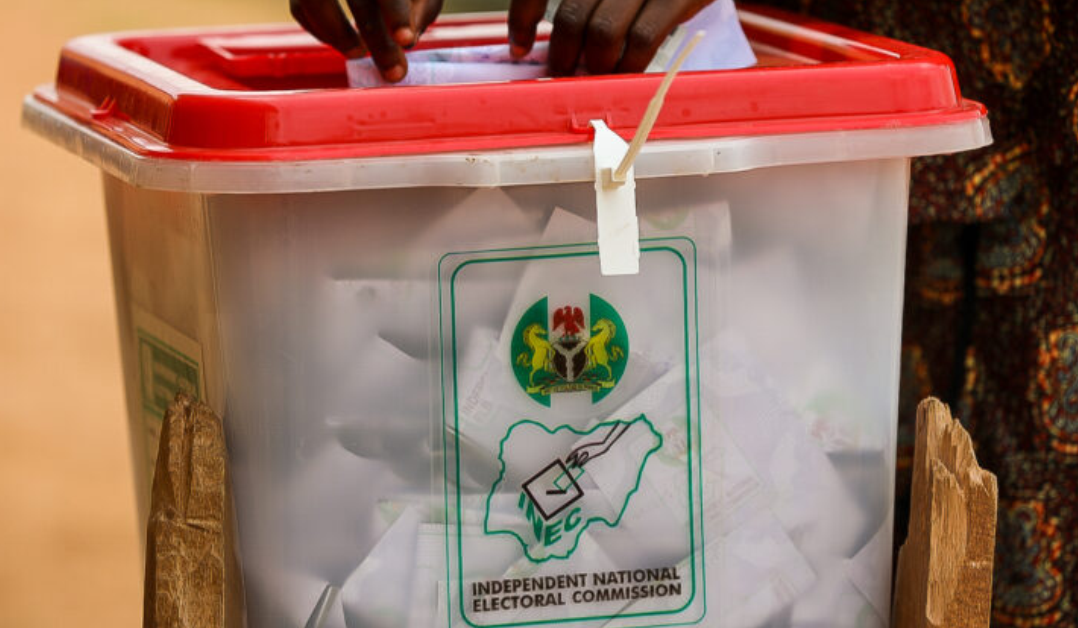
One of my friends who had come to monitor the 2023 elections told me before any vote was cast that I should be grateful as a Nigerian, that no matter what happens, we still get to change our leaders at most in eight years.
Whilst I have always been aware of that fact, hearing a foreigner say that helped to centre my attention on something I had taken for granted; the fact that our country has gone through many waters over the decades and, amid all its challenges, we are comfortably in a place where we can change our leaders at every turn. But today’s piece is not about the most viable minimal outcomes but about asking the best of us.
In 2013, a governor led the campaign against one of his opponents by branding said opponent a ‘Yoruba candidate’ in a southeastern state. On the back of his approval, the governor’s party went the extra mile of printing posters of said candidate with photos of Chief Obafemi Awolowo to buttress the point whilst contrasting that with posters of his own candidate with photos of Dr Nnamdi Azikiwe and Ikemba Odumegwu-Ojukwu.
A decade on, it was shocking and sad to see some voters in Lagos disenfranchised by thugs who prevented them from voting on suspicion they were Igbo. Along with reports of violence and other forms of electoral malpractice across the country, including states like Rivers, Enugu, Delta, Abia, Anambra, Bayelsa etc., you would expect much better from INEC and some Nigerians by now.
This is not to say ‘nothing has changed’ as some people want us to believe. But we should be doing much better than we generally did these 2023 elections. There should be no place for the violence seen across several states during the subnational elections.
If controversies invalidated election results, all the previous presidential elections from 1999 to date would be deemed invalid. The same would go for most of the subnational elections. It is not impossible to admit shortcomings whilst still accounting for progress. It is particularly shocking when some people insist on claiming that just because an election was conducted amidst some form of violence, the results are invalid, without consideration for the depth and spread of such violence and their effect on the total votes cast. That said, all and sundry must condemn every form of violence and electoral malpractice. The authorities must prosecute everyone arrested for carrying out such crimes. That ought to be the minimum expectation.
The biometric reforms introduced to voter accreditation have ensured that election results no longer return the ‘millions’ of votes they used to return across the country. When you compare the numbers since the advent of biometric accreditation against the elections of the noughties, it could not be clearer that numbers were bumped for most of those elections.
INEC performed below par in 2023 based on the expectations of Nigerians and the standards it asked to be judged against, this should not be confused with claims that these elections are worse off than those with no forms of electronic auditing.
Elections that ought to bring us together appear to have further divided us. This is what happens when playing on the fault lines of our differences, be it religion or ethnicity. This is not even limited to differences in religion: politicians have run campaigns on the differences between sects and denominations, even in states that are large of one religion. We have also seen such divisive politics played among people of the same ethnic group, with politicians exploring differences even amongst people of the same ethnic origin and religion.
Those of us who know better must do better. Nigeria has played around the borderlines of mediocrity for too long. Whilst INEC, for instance, deserves all the blames it is getting, the outcomes that warranted those issues should not be seen in isolation. We have a behavioural challenge that’s got nothing to do with INEC. You could hire a new Chairman for INEC who would do a better job, but this would only be incremental or marginal change at best. You’d have to look at the root of the matter to see some sort of discontinuous change from organisations like INEC.
Now that the elections are over, we look to the Judiciary to live up to expectations. If we organised better elections, the Judiciary would have less to do, and endless election petitions would not overburden its packed schedule. In the end, our shortcomings at every turn have a way of costing us at every turn immediately after. We keep carrying gaps from one level of governance to the other.
One used to think that the more power devolves to the states, the less agitation for power we’d see at the centre. Unless we address the root of the matter, it now appears that we’d, at best, be transferring the unwholesome obsession with power at the centre to the states. That’d make an already bad situation worse. It is the same issue with state policing.
Whilst one believes states should have their police and be truly in charge of their security, without addressing the root of the issues that make the federal police what it is, we’d only be spreading those issues across the states, this time, in the different colours of their various prospective uniforms.
The Washington Post, in its editorial whilst taking a rounded view of Nigeria’s just concluded elections, wrote, ‘even a flawed election in Nigeria can set a standard in a part of Africa where staging a coup is more common than canvassing for votes.’
it is our responsibility to go from organising elections just to say we have done it to organising one that would be the standard, not just for a region still battling with the challenges of coups, but the standard for democratic governments across the continent. Let’s be the African standard for a start.
© Joshua J. Omojuwa

We have recently deactivated our website's comment provider in favour of other channels of distribution and commentary. We encourage you to join the conversation on our stories via our Facebook, Twitter and other social media pages.

More from Peoples Gazette

Agriculture
FG tasks ECOWAS on leveraging financing strategies for agroecology
The federal government has urged stakeholders in the agriculture and finance sectors in the West Africa region to leverage financing strategies to enhance agroecology practices

Politics
Katsina youths pledge to deliver over 2 million votes to Atiku
“Katsina State is Atiku’s political base because it is his second home.”
Sport
Fortune FA remain unbeaten as Idowu U-16 League records 19 goals
The victory lifted Heritage out of the relegation zone and boosted their hopes of turning around their campaign.

Agriculture
Kwara targets 1,000 cattle for artificial insemination Pub
The Director of TGB Farms, Ishola Peace, commended the government for extending the programme to the farmers.
Education
NLC opposes concession of King’s College, unity colleges
Mr Ajaero said the NLC endorsed protests against concessioning King’s College and other unity colleges.
States
So-Safe corps nabs interstate tricycle thief in Ogun
The state commander, Soji Ganzallo, commended the operatives of the corps for their persistence, professionalism and tactical efficiency.
Economy
Refinery IPO investors are at no risk; they will reap bountiful returns, says Dangote VP
Mr Devakumar said, “The Dangote Refinery is one of the most significant industrial investments ever undertaken on the African continent.”
Hot news Home top
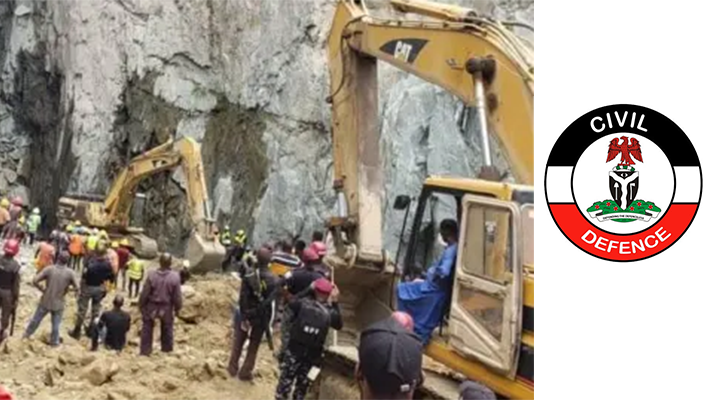
NSCDC names 23 officers detained over Niger miners’ deaths; orders corps’ flag to fly at half-mast across commands
Mr Afolabi noted that Mr Audi pledged on behalf of the service to continue to keep the public abreast on the outcome of the investigation.


