

Oyo princes fault Makinde’s ‘dictatorial’ chieftaincy reform
The Alaafin of Oyo ruling family has faulted the proposed amendment of the Chiefs Law of Oyo, cautioning against passing such an amendment into law.
The ruling family made its position known in a memorandum presented at the public hearing organised by the state House of Assembly on the proposed amendment.
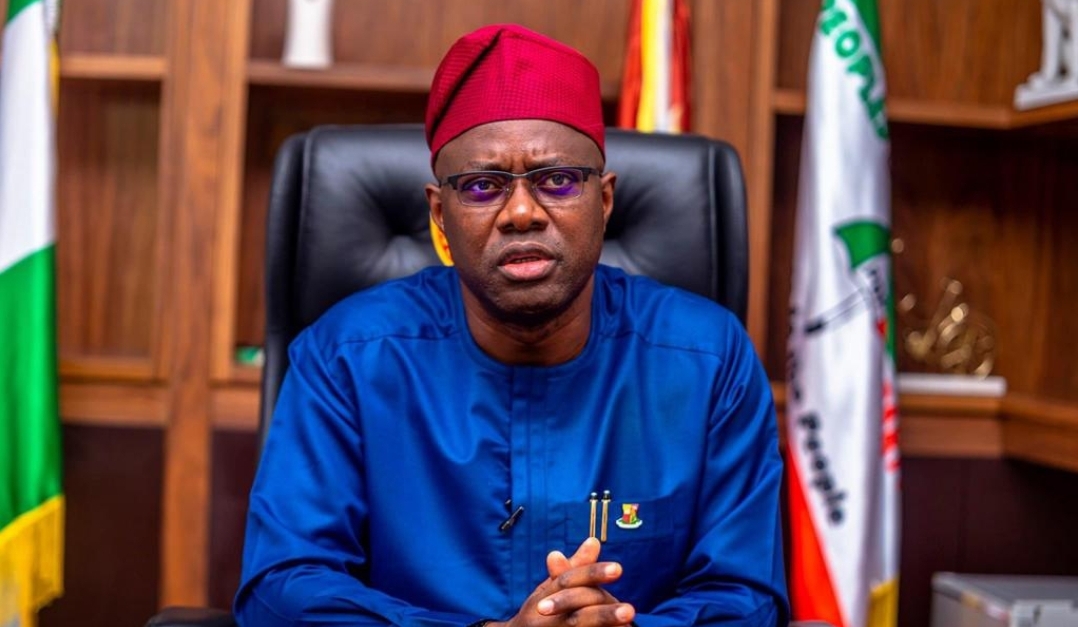
The reform, initiated by Governor Seyi Makinde, seeking to amend section 28 of the State Chiefs Law, has passed second reading at the assembly.
The initial law gave the governor the right to approve beaded crowns for deserving chiefs but could only exercise this discretion after consulting the council of obas and chiefs.
However, the ongoing amendment will give the governor right to approve and elevate some chiefs to beaded crown-wearing Obas without consultation with the council of obas and chiefs.
But the Alaafin ruling family faulted the governor on the request, cautioning the assembly against passing the proposed amendment into law in its current form.
The memorandum, which was read by the Bashorun of Oyo, Yusuf Ayoola, at the public hearing, was jointly signed by all the Oyo royal titleholders (oloye omooba), led by the Babayaji, Mukaila Afonja. Others were the Onasokun of Oyo, Olusami of Oyo, Arole Oba of Oyo and Agunpopo of Oyo.
“The amendment is perceived in many quarters as being targeted at whittling the influence of the Alaafin and the Soun of Ogbomoso by transferring their consenting authorities over many chieftaincies to the governor,” the family said.
The princes noted that it would be better for the governor to dissolve the council than subject it to public ridicule and render it “toothless and irrelevant.”
Entitled ‘Memorandum on Chiefs Amendment Law, 2023, section 28’, the memo described the government’s attempt “to clip the wings of the state council of obas and chiefs” as a dangerous trend.
They said such a trend would bastardise the age-long traditional and customary administrative system that had sustained the civilisation and heritage at the grassroots level of governance.
It added that the conferment of beaded crowns might be turned into trophies for political servitude and awards to the highest bidders or the best connected.
Describing the proposed amendment as “dictatorial and usurpative,” the princes faulted the government’s justification for the move, saying it was to regulate chieftaincies in line with the dictates of modern society.
“Our understanding of this clause of the law is that the governor is the nominator, the specifier, the approving officer and the donor of the beaded crown to whomsoever His Excellency decides to favour,” they stated. “Royal fathers in Yoruba land are fathers of all their subjects, including those in governance. But by this new law, the tail will be wagging the dog.”
The family said that the innovation was strange to Yoruba custom and culture since most recognised chieftaincies provide for the following steps: family nomination, kingmakers’ recommendations, including community acceptance and support, and government scrutiny, approval and pronouncement.
“We plead with the governor and house of assembly to avoid giving room to the popular suspicion of seeking to donate compensatory crowns and chieftaincy titles,” the princes added. “They (lawmakers) should not donate compensatory crowns and chieftaincy titles to some well-known title holders who recently lost their well-publicised crowns to the ascension of a prominent traditional ruler.”
They urged the government to leave the kings and chiefs to perform their statutory duties under the traditions and customs of each city and community, as approved by the law.
(NAN)

We have recently deactivated our website's comment provider in favour of other channels of distribution and commentary. We encourage you to join the conversation on our stories via our Facebook, Twitter and other social media pages.

More from Peoples Gazette

States
Independence: NBA urges Nigerians to expect better future
The NBA said that ordinary Nigerians should be deriving benefit from the subsidy removal rather than hardship.

Agriculture
FG tasks ECOWAS on leveraging financing strategies for agroecology
The federal government has urged stakeholders in the agriculture and finance sectors in the West Africa region to leverage financing strategies to enhance agroecology practices

Politics
Katsina youths pledge to deliver over 2 million votes to Atiku
“Katsina State is Atiku’s political base because it is his second home.”

NationWide
FG says infrastructure, market access crucial to unlocking Nigeria’s gas resources
The minister said gas must increasingly support productive sectors and expand domestic energy access.

World
Ex-Australian Catholic bishop bags six-year jail term for sexually abusing young men
Six years ago, amid allegations against him in 2020, Mr Saunders resigned as Bishop of Broome.

Health
FG seeks responsible pet ownership, vaccination to prevent human deaths from dog-triggered rabies
The statement noted that the WHO would support Nigeria in rabies investigations and response coordination.

Economy
AHIN @30: NGX chairman seeks stronger collaboration among capital market stakeholders
The NGX Group chairman said Nigeria’s economic ambitions required a capital market capable of mobilising long term funding.

Heading 1
Uba Sani tells northern elite to develop blueprint to tackle region’s problems
Mr Sani decried the maternal and child mortality rates in Northern Nigeria.

Heading 2
Ireland considers EU-Nigeria migration deal to return undocumented migrants
Mr Burke stated that the agreement would remain in force for five years.


