

Economists advise Buhari on curbing Nigeria’s rising inflation

Economists have called on President Muhammadu Buhari’s regime to implement complementary fiscal measures to boost the food supply and address the rising inflation in the country.
They made the suggestions in separate interviews in Lagos while reacting to the April inflation figure released by the National Bureau of Statistics (NBS).
They noted that the Central Bank of Nigeria’s monetary policy’s tightening stance alone would not address the challenge.
A professor of Finance and Capital market at Nasarawa State University, Keffi, Uche Uwaleke, said the apex bank’s continuous rate hike since May 2022 had not kept the inflation rate under check.
Mr Uwaleke said the continuous rate hike by the CBN had not yielded the desired results because of the domestic structural factors in the country.
“It’s worth mentioning that the NBS, in its April Consumer Price Index report, provided a clue as to the major items driving the inflationary pressure in Nigeria to include food, electricity, housing and transport,” Mr Uwaleke explained. “In the light of this revelation, what becomes clear is that the monetary policy tightening stance of the CBN alone may not address the challenge.”
The economic expert urged the regime to implement complementary fiscal measures to boost the food supply and reduce production costs occasioned by high energy and transport costs. He added that inflationary pressure had continued to be driven by the food index at over 24 per cent, reflecting legacy factors such as transport challenges.
He said this partly explained why food inflation was reportedly highest in Kogi at over 29 per cent and lowest in Sokoto at about 19 per cent, a difference of about 10 per cent.
Mr Uwaleke also stressed the need for the government to tackle the country’s intractable security challenge and invest more in mechanised agriculture to increase food output and bring down food inflation.
Ndubisi Nwokoma, the director of the Centre for Economic Policy Analysis and Research (CEPAR), University of Lagos, stressed that inflation figures going up despite the efforts of the CBN “is clearly indicative of the fact that Nigeria’s inflation is currently driven by cost-push factors primarily.”
He explained, “The monetary causative factors may not be that significant. There have been supply chain disruptions with the cost of goods rising with some expectations of more increases in the near future, particularly with the dire fiscal sustainability challenges of the government.”
The CEPAR director added that another cost-push factor is the high exchange rate which spirals the price increase.
“The other is the lingering effect of the naira redesign and cash withdrawal limit policies of CBN which exacerbated the increase in prices, particularly for food items,” Mr Nwokoma said.
The CEPAR boss, however, expressed optimism that prices would moderate to some extent in the coming months with cash availability.
Mr Nwokoma also urged the apex bank to continue with the cash squeeze by maintaining the Monetary Policy Rate at its current level of 17.5 per cent.
He added that the CBN should stabilise the exchange rate and address supply chain disruptions such as insecurity, energy supply deficits, etc.
Sheriffdeen Tella, a professor of Economics at Olabisi Onabanjo University, Ago-Iwoye, Ogun, said, “The CBN has always been wrong to assume that inflation was caused by too much money in the economy.”
“Inflation has always been caused by the high cost of production, including high-interest rates and energy costs, badly depreciated naira and serious cum continuous fall in output generally and imported inflation from other countries where we import,” Mr Tella added. “So, these are the things we should address.”
Nigeria’s headline inflation rate increased to 22.22 per cent on a year-on-year basis in April 2023.
(NAN)

We have recently deactivated our website's comment provider in favour of other channels of distribution and commentary. We encourage you to join the conversation on our stories via our Facebook, Twitter and other social media pages.

More from Peoples Gazette

Agriculture
FG tasks ECOWAS on leveraging financing strategies for agroecology
The federal government has urged stakeholders in the agriculture and finance sectors in the West Africa region to leverage financing strategies to enhance agroecology practices

Politics
Katsina youths pledge to deliver over 2 million votes to Atiku
“Katsina State is Atiku’s political base because it is his second home.”

States
Navy rescues two kidnap victims, recovers stolen engines in Akwa Ibom
The commander urged owners of the recovered outboard engines to provide proof of ownership in order to reclaim their property.

States
NEMA donates relief materials to Ebonyi flood victims
The governor described the recurring flood disasters in parts of the state as devastating.

Heading 4
Trump administration revokes over 250,000 visas of foreigners over crimes, immigration violations
The State Department spokesperson said the U.S. was carrying out rigorous visa vetting on a scale never seen before.
Africa
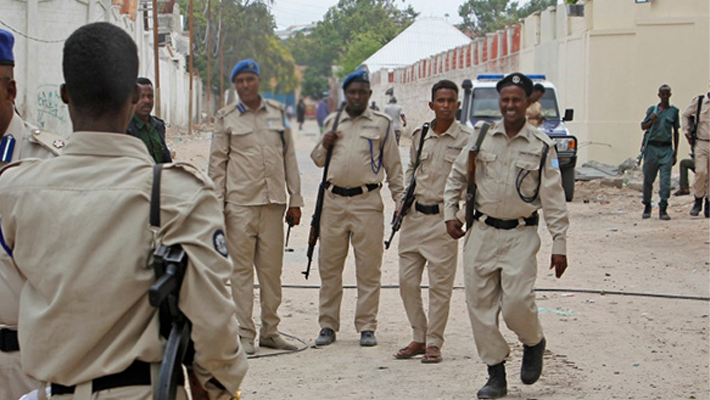
Fresh clashes in Somalia leave children dead, others injured
The fresh clashes began on Monday.

NationWide
CIoD seeks stronger board leadership amid AI, economic shifts
Mr Nolas-Alausa said the new economy presented both opportunities and responsibilities.
Heading 1
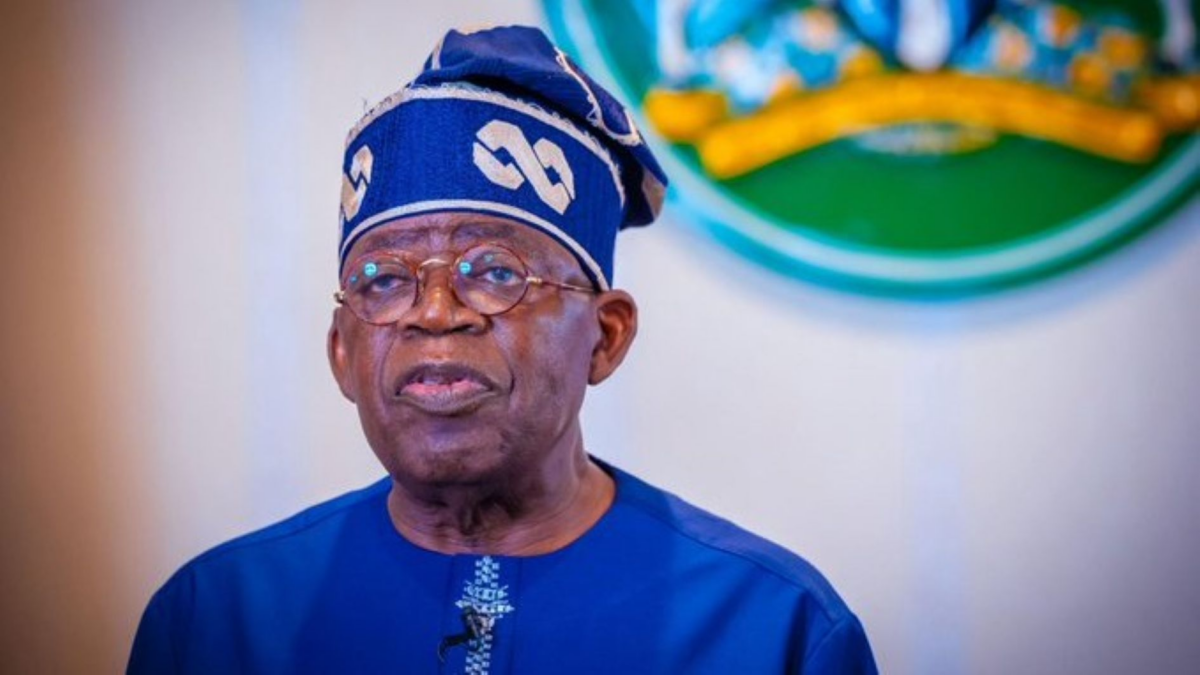
Tinubu extends 2025 budget implementation to December
The extension gives ministries, departments and agencies (MDAs) additional time to complete ongoing capital projects.


