

Headline inflation risen above South African Reserve Bank’s target range: IMF

IMF Executive Board Concludes 2023 Article IV Consultation with South Africa
Washington, DC – June 6, 2023: On May 22, the Executive Board of the International Monetary Fund (IMF) concluded the Article IV consultation with South Africa.
South Africa’s economy is facing mounting economic and social challenges. Growth moderated from 4.9 percent in 2021 to 2.0 percent in 2022 as the country was buffeted by Russia’s war in Ukraine, global monetary policy tightening, severe floods, and an unprecedented energy crisis. Business and consumer confidence and investor sentiment remain weak, and the sovereign spread for South Africa remains higher than the pre pandemic level. The average employment level in 2022 was still about 5 percent lower than in 2019, threatening social cohesion.
Headline inflation has risen above the South African Reserve Bank (SARB)’s 3–6 percent target range amid higher food and energy prices. Inflation expectations have inched up but remained within the target range. In 2022, the current account balance decreased to a -0.5% GDP deficit from a 3.7% GDP surplus in 2021, due to lower commodity prices and logistical bottlenecks. This, together with tighter global financial conditions, shifts in investors sentiment, and increased domestic political uncertainty have weakened the rand.
The fiscal deficit has continued to narrow, reaching 4.2 percent of GDP in FY2022/23, from 4.8 percent in FY2021/22, thanks to buoyant revenue and expenditure restraint. Despite this improvement, the government debt-to-GDP ratio is estimated to have increased to 70 percent. The SARB has proactively raised interest rates to bring down inflation within the target range and anchor inflation expectations, continuing the removal of monetary accommodation.
Looking ahead real GDP growth is projected at 0.1 percent in 2023, reflecting a significant increase in the intensity of power outages, and weaker commodity prices and external environment. Annual growth is expected at about 1½ percent over the medium term, as longstanding structural impediments, such as product and labor market rigidities and human capital constraints offset expected improvements in energy supply, higher private spending on energy-related infrastructure, and a more supportive external environment. The growth level would be too low to create enough jobs to absorb the new labor market entrants.
The fiscal position is projected to deteriorate due to weakening mineral revenue, the Eskom debt relief arrangement, wage bill pressures, and rising debt service. As a result, public debt is not expected to stabilize. Headline inflation would return to the midpoint of the target range by end 2024. The current account deficit is projected to deteriorate to about 2½ percent of GDP in the near term. The outlook is subject to significant uncertainty related to the pace of reform domestically and the challenging external environment.
Executive Board Assessment
While recognizing South Africa’s strong fundamentals, Directors noted that the post-pandemic recovery is petering out amid several shocks, exacerbating economic and social challenges in a context of elevated poverty and inequality. They stressed the urgency of reforms to promote the sustained and inclusive growth needed to address these challenges.
Directors commended the South African Reserve Bank’s commitment to price stability and endorsed the pace of monetary policy normalization, which should bring inflation back within the target. They recommended maintaining a data dependent approach to monetary policy decisions. Directors supported enhancing the inflation targeting framework by formalizing the current focus on the midpoint of the target range and lowering the inflation target, as conditions allow and with adequate communication.
Directors praised the recent reduction in the fiscal deficit, reflecting efforts to contain public spending and improve revenue administration. They encouraged stronger fiscal consolidation under a credible medium-term framework to put public debt on a firmly declining path while protecting productive investment and well-targeted social spending. This should be supported by reforms to the fiscal framework, procurement system, and public investment management.
Directors welcomed the resilience of the financial sector, particularly amid the recent global financial market volatility. They called for continued implementation of the FSAP recommendations to strengthen the financial safety net and supervision. Directors acknowledged that while advancing fiscal consolidation will mitigate risks from the sovereign financial nexus, carefully calibrated and communicated prudential measures could play a complementary role while being mindful of procyclicality and potential unintended consequences on financial institutions’ balance sheets.
Directors emphasized that promoting a sustainable, inclusive, and green recovery requires reforms that foster private investment, a balanced energy transition, and good governance. They recommended further measures to reform SOEs, open key network industries to private sector participation, reduce the regulatory burden, and enhance labor market flexibility and the quality of education to tackle high structural unemployment. Directors recognized that resolving the ongoing energy crisis remains the top priority, providing an opportunity to accelerate the rollout of renewables.
They supported steadfast implementation of the government’s energy transition plan and emphasized the importance of well-targeted fiscal support for affected communities and workers. Directors also recommended to forcefully tackle governance weaknesses and corruption. They noted that timely implementation of the Financial Action Task Force’s action plan is crucial to exit its grey list swiftly.

We have recently deactivated our website's comment provider in favour of other channels of distribution and commentary. We encourage you to join the conversation on our stories via our Facebook, Twitter and other social media pages.

More from Peoples Gazette

States
Independence: NBA urges Nigerians to expect better future
The NBA said that ordinary Nigerians should be deriving benefit from the subsidy removal rather than hardship.

Agriculture
FG tasks ECOWAS on leveraging financing strategies for agroecology
The federal government has urged stakeholders in the agriculture and finance sectors in the West Africa region to leverage financing strategies to enhance agroecology practices

Politics
Katsina youths pledge to deliver over 2 million votes to Atiku
“Katsina State is Atiku’s political base because it is his second home.”
Heading 5
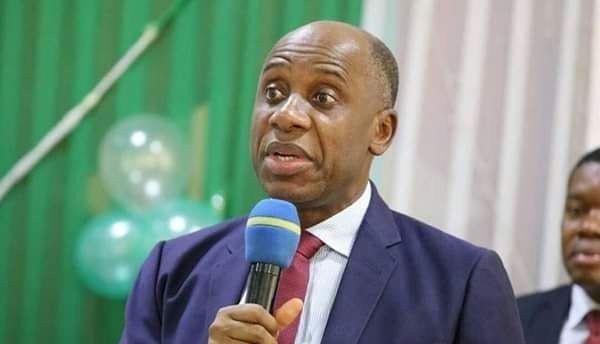
Number of votes Tinubu gets in 2027 will show number of mad people in Nigeria: Rotimi Amaechi
Mr Amaechi had recently blamed the economic hardship under Mr Tinubu for the deaths of many Nigerians, including his mother.
World
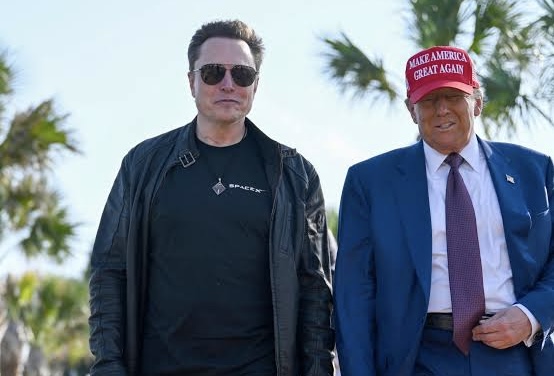
Trump awards Elon Musk National Medal of Science; calls him modern-day Thomas Edison
Lauding Mr Elon as a modern-day Thomas Edison, Mr Trump highlighted the impact of his innovations in different human endeavours.

Heading 1
NLC gives Tinubu govt two-week ultimatum to cut petrol price, renegotiate minimum wage
Mr Ajaero demanded that the federal government commence renegotiation of the minimum wage before the end of October.
Heading 4
Power generation utilisation hit 81% in September: NERC
NERC said that average hourly generation stood at 4,089MW, representing an average load factor of 81 per cent of the available generation capacity.
States
Gov Oyebanji presents N490.74 billion 2027 budget proposal to Ekiti assembly
Mr Oyebanji presented the appropriation bill, christened the ‘Budget of Sustained Progress and Prosperity’, at the assembly chamber.

World
U.S. accuses Venezuela’s Maduro of torturing U.S. citizens in revised indictment
The Trump administration accused Mr Maduro and his wife of partnering with narcoterrorists to flood the U.S. with cocaine.


