

Nigeria’s foreign policy would be persuasive under Bola Tinubu

Events in the past weeks betoken a pristine approach to Nigeria’s foreign policy utility. There are indications that the nation’s foreign policy plank will follow a clear and unconfused trajectory. And it is apparent that Nigeria will play a purposive role in the affairs of West Africa and Africa under President Bola Ahmed Tinubu.
A firm, decisive and progressive leadership at home, commands global attention and respect for the country. Essentially, a clear direction on the domestic front reflects on the utterly transactional and anarchical international front. Global or continental leadership, as it is with every other aspect of leadership, begins and succeeds with a personal example. Evidently, Nigeria is beginning to show leadership in its internal affairs. That is the utility of personal example.
In the past, Nigeria was bogged down by domestic problems such that it could not extend itself a bit more robustly. Insecurity across the country meant previous administrations had to look exceptionally inwards. But there was also the problem of lack of interest or capacity, and policy direction. Although Nigeria did try to maintain some presence within Africa, its leadership was not all too palpable.
At times of internal upheavals, most states tend to be more nationalistic and protectionist. Between 1937 (Era of the Great Depression) and 1944, the United States, battling its own domestic problems, exercised the Doctrine of Isolationism, which advocated non-involvement in external wars and politics. But the U.S. joined the Second World War at the twilight when its territorial interest was threatened. And with it came the Truman Doctrine in 1947 — by President Harry S. Truman which states that ‘’the United States would provide political, military, and economic assistance to all democratic nations under threat from external or internal authoritarian forces’’.
The vacuum in pilotage on the continent is conspicuous. Nigeria is, by the conspiracy of history, geography, size, and economy, a default leader of Africa – and, as such, it should exercise this leadership.
The concept of Africa as the centrepiece of Nigeria’s foreign policy was ideated and articulated in the 1960s during the administration of Prime Minister Tafawa Balewa. The abstraction has been adopted and iterated by successive administrations. The spirit of the idea, which was a dominating motif of the de-colonisation era, is that Africa must come first in Nigeria’s foreign policy formulation. And true to the objective, Nigeria has, over the decades, played a decisive role in Africa.
President Tinubu has shown a clear understanding of the leadership example and imperativeness of Nigeria in Africa. At every turn in his foreign engagements, he has centred Nigeria and Africa as the denominators of his blueprint.
At a meeting with President Patrice Talon of Benin Republic at the New Global Financing Pact Summit in France recently, President Tinubu reaffirmed Africa as the centrepiece of Nigeria’s foreign policy. He said: “We are ready to improve relations. Africa has been the centrepiece of Nigeria’s foreign policy. I believe in Africa. We have the necessity to grow the continent. The world’s economy is wobbling, and Africa has been left behind. On risk factors, Africa is always placed high, with higher interest rates on borrowing. We are always classified as high-risk. We must work together for systematic recovery and growth.”
At the ECOWAS summit in Guinea-Bissau, where he was elected as the chairman of the sub-regional group, President Tinubu made an impassioned and audacious declaration on the fundamentals of defending, protecting, and nurturing democracy in the zone. The President said: “We must stand firm on democracy. There is no governance, freedom, and rule of law without democracy.
We will not accept coup after coup in West Africa again. Democracy is very difficult to manage, but it is the best form of government. There is no one here among us who did not campaign to be a leader. We didn’t give our soldiers resources; we didn’t invest in them, in their boots, in their training to violate the freedom of the people. To turn their guns against civil authorities is a violation of the principles upon which they were hired, which is to defend the sovereignty of their nations. We must not sit in ECOWAS as toothless bulldogs.”
This patently demonstrates a keen sense of duty, obligation, and responsibility – which I encapsulate as Tinubu’s Doctrine of Responsibility, of duty. It is a bounden duty and an unrelenting obligation for Africans and Africa to work together for ‘’systematic recovery and growth’’, and to protect and defend democracy.
Africa and Africans are afflicted by the same problems and are connected by the umbilicus of poverty, political, instability, unstable economy, and the like. So, it is important that African states deal with their shared challenges as partners. The fallout of the chaos in Libya and how it imperilled the security of some African countries, including Nigeria, points to why cohesion, partnership and mutual trust are a desideratum for the continent.
The Doctrine of Responsibility, as it relates to transnational relations, establishes patriotism, loyalty and commitment to African ethos, values, survival, success, and future. It evokes a sense of duty to the fatherland and Africa.
However, it is important that while Nigeria retakes its place as the lodestar of Africa, it must evolve and not stay fastened to the old ways of “big-brother diplomacy.” but adopt more mutualism, diplomacy of reciprocity. International relations is governed by an anarchy of interests, and as such, Nigeria must protect its own domestic interest.
With vibrant national leadership and a defining presence in West Africa and Africa, Nigeria is well on its way to status redemption.
Fredrick Nwabufo, Nwabufo a.k.a Mr OneNigeria, is a writer and journalist

We have recently deactivated our website's comment provider in favour of other channels of distribution and commentary. We encourage you to join the conversation on our stories via our Facebook, Twitter and other social media pages.

More from Peoples Gazette

Agriculture
FG tasks ECOWAS on leveraging financing strategies for agroecology
The federal government has urged stakeholders in the agriculture and finance sectors in the West Africa region to leverage financing strategies to enhance agroecology practices

Politics
Katsina youths pledge to deliver over 2 million votes to Atiku
“Katsina State is Atiku’s political base because it is his second home.”
Africa
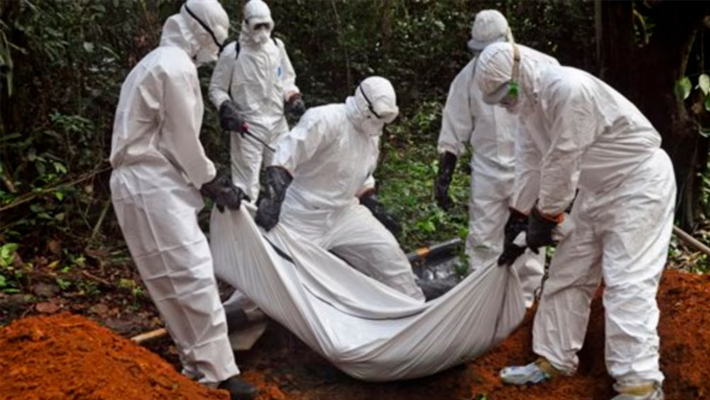
Ebola deaths in DR Congo hit 3,200
Ebola virus continues to spread in the eastern provinces of the DRC, with more than 3,200 deaths reported, the UN said.
Education
NOUN appoints Ramatu Ibrahim as acting bursar
NOUN said Ms Ibrahim’s appointment took effect from Tuesday, September 8, 2026, and would remain in force until further notice.
States
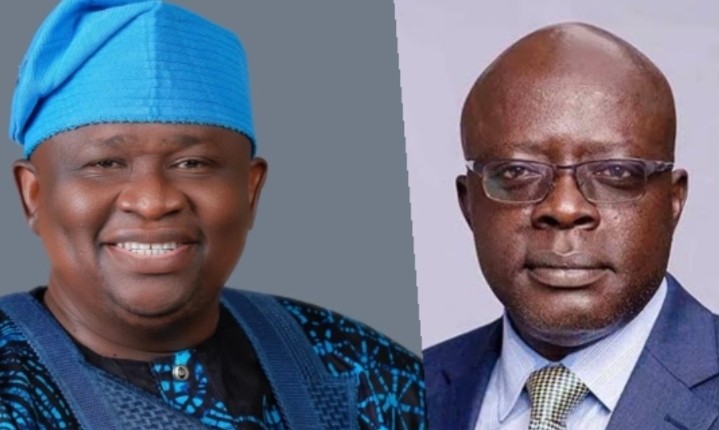
Yayi can’t win Ogun election, he is Sulaimon Ogunleye from Ekiti: Wale Adedayo
Mr Adedayo alleged that Mr Adeola was originally Sulaimon Ogunleye from Ekiti State but now falsely claims Ogun State ancestry for political gains.
World
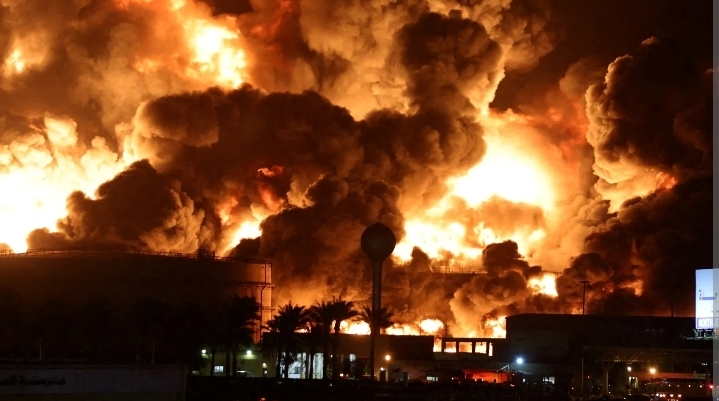
FG condemns fresh Houthi attacks on Saudi Arabia
“Nigeria regards the fresh hostilities as a serious threat not only to the security and sovereignty of Saudi Arabia but also to regional stability in the Middle East,” he said.
Education
NOUN declares three-day mourning for slain bursar
The university said, “The mourning period commenced on Monday, September 7 and would end on Wednesday, September 9, 2026.

States
Nasarawa varsity seeks assembly intervention to end ASUU strike
Nasarawa State University, Keffi (NSUK), has appealed to the House of Assembly to intervene in the ongoing ASUU strike.


