

Begging for a seat at the table

Following the G20 summit held in India, I have been amused by the debate about whether or not Nigeria should be more than a guest again at the next G20 meeting in Rio, Brazil. If South Africa is a member, why not Nigeria?
How do you offer Africa’s largest economy only a complimentary ticket every time to such an important global event, leaving it with the rather humiliating option of begging for a place?
I thought that we had outgrown the belief that respect is earned by size or by simply hanging out with the right crowd, regardless of performance. If it’s not just another boost for the testosterone of a few African leaders who attend such meetings, it’s difficult to understand why they cannot see that they would have to put their house in order first to earn respect on the outside.
I don’t know what President Cyril Ramaphosa’s membership is doing for South Africa or what the AU membership of the G20 is doing for the continent. Nigeria’s President Bola Ahmed Tinubu obviously feels that if Ramaphosa can be on the stage at this pageant of global powers, then so can he.
But I frankly think that both of them and others on the continent have barely paid enough attention to the opportunities that come with building truly vibrant regional and continental institutions. African leaders must pay attention to what is happening back home, in their own backyard. It’s the sheer force of their record of performance that would compel the world to notice and take them seriously.
Lesson from EU
The EU, one of the world’s most prosperous trading blocs today, started as a trading community of six European countries with a combined population of 170 million at the time. Today, it has grown to 27 members with an economy of approximately €16 trillion.
Apart from the EU’s institutional membership of the G20, three EU countries – Germany, France and Italy – are also members of the group in their own rights because of the sheer size of their economies. They didn’t have to beg for membership.
Consider, for example, how shabbily Africa has so far treated the African Continental Free Trade Agreement (AfCFTA), perhaps its single biggest opportunity in decades to remove trade barriers amongst members, lift millions out of poverty and earn a significant spot on the world stage.
Five years into AfCFTA, the continent still pays lip service to free movement of people, with Africans requiring visas to travel to at least 60 per cent of the 54 countries, never mind the monumental obstacles to free trade.
Compared to India, for example, where only three compulsory documents are required for import-export processing, Nigeria’s Customs requires nearly 12 to process intra-African goods and services, and you’re just getting started.
While Africa’s population has grown to double that of Europe, intra-African trade accounts for about 11 per cent or $170 billion, which is merely five per cent of intra-European trade. Intra-African trade also lags intra-Asian trade.
Missed opportunities
Nigeria is not even among the eight countries currently participating in AfCFTA’s Guided Trade Initiative (GTI), a platform that is supposed to boost the region’s trade policy framework. How can Nigeria, which ought to be at the forefront of turning this state of affairs around but which is sadly one of the laggards in AfCFTA commitments, covet a table at the G-20? And on what terms when, like most of the continent, Nigeria is still largely a market for primary commodities with the inherent disadvantages?
In The Looting Machine, Tom Burgis said, “In Africa, the outflows (as of 2011) amounted to five to seven per cent of GDP, the highest proportion in any region and growing at a rate of 20 per cent a year. African losses from trade mispricing alone are roughly the equivalent to the continent’s income from aid.”
To add insult to injury, Nigeria, Ghana, and Chad were listed by Burgis as first, sixth and ninth, respectively, among the countries that suffered the worst illicit outflows from 2005. This sounds more like a continent that needs to look after itself than one whose leaders should be hankering for a courtesy ticket for a front-row seat outside.
If you add the current state of political turmoil across a number of countries on the continent, especially the so-called coup belt, the situation becomes even more deserving of serious homework and introspection.
Whereas the OAU of those days challenged apartheid and fought against minority rule and oppression in Zimbabwe and Namibia while supporting more African states to attain political independence, its successor, the AU, is sleep-walking through multiple conflicts, content to make only perfunctory noises.
Meanwhile, the new crop of military rulers from Chad to Mali and from Burkina Faso to Gabon continue to dig in, sparking a dangerous wave of copycats and self-doubt about the value and use of democratic rule.
Africa’s 1.3 billion population is perennially a source of cheap labour for developed and middle-income countries in a manner reminiscent of the slave trade; while its landmass of 30 million square kilometres has remained a booty for external forces to exploit, loot and cart away as the continent slumbers.
Instead of trying to cross seven seas to join the G-20, Nigeria should be more concerned that even though it was also a guest at the BRICS meeting in Johannesburg in August, it was not among the six countries that would get membership from January 2024, with the two new spots in Africa going to Ethiopia and Egypt.
Indo-China love
What’s more? In an increasingly multipolar world, the unspoken message by absent Chinese President Xi Jinping to the last G20 meeting was that his country was no longer happy to play second fiddle to US hegemony. Rather than coveting that same company, Nigeria and other African countries should do more to chart their own course. And they can do so without holding out the begging bowl.
The ambition to play in the big league is not a bad thing in itself. A spot on the big stage, however, requires more than a large ego, more than an extravagant claim of untapped potential, and certainly, much more than a sense of entitlement.
For a start, since Nigeria’s president obviously loved what he saw at the G20 in Delhi, he should have asked Indian Prime Minister Narendra Modi to share the story of India’s journey to the G20 with him. As of 2005/2006, more than 640 million people across India were in multidimensional poverty.
A 2019 UNDP report on multidimensional poverty, however, found that in about six years, the number of multidimensionally poor had fallen from 640 to 365 million. And in just nine years of Modi, access to electricity has increased from 70 per cent to 93 per cent, while states with basic sanitation coverage across India are over 90 per cent.
That is the sort of record that makes a country both an eligible and inevitable member of the G20 or any other respectable global platform, not covetousness, begging or a sense of entitlement.
Ishiekwene is Editor-in-Chief of LEADERSHIP

We have recently deactivated our website's comment provider in favour of other channels of distribution and commentary. We encourage you to join the conversation on our stories via our Facebook, Twitter and other social media pages.

More from Peoples Gazette

States
Independence: NBA urges Nigerians to expect better future
The NBA said that ordinary Nigerians should be deriving benefit from the subsidy removal rather than hardship.

Agriculture
FG tasks ECOWAS on leveraging financing strategies for agroecology
The federal government has urged stakeholders in the agriculture and finance sectors in the West Africa region to leverage financing strategies to enhance agroecology practices

Politics
Katsina youths pledge to deliver over 2 million votes to Atiku
“Katsina State is Atiku’s political base because it is his second home.”
Health
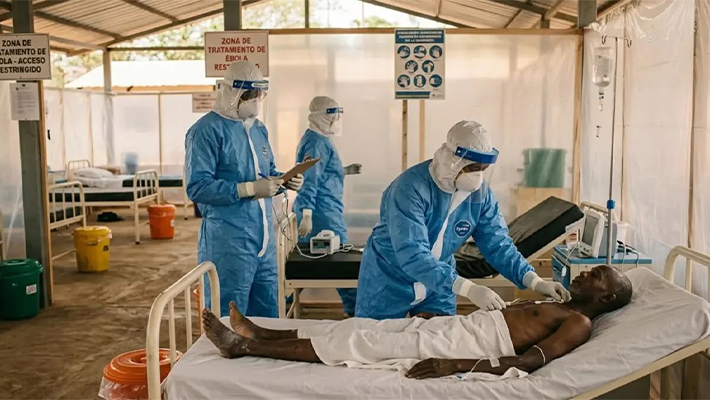
Deaths from Ebola rise to 5,198 in DR Congo
The WHO said in a statement on Saturday that the figure recorded was as of November 3, representing a case fatality ratio of 48.7 per cent.
Health
WHO urges Nigeria to make health services accessible to all
WHO said that health programmes often fail to identify people who are left out of services.

Sport
AFCON 2027 Qualifier: Chelle releases 24-man Super Eagles list for double-header against Tanzania
Nigeria will host the Taifa Stars at the Godswill Akpabio Stadium in Uyo on November 13.

NationWide
Tinubu accuses Atiku of using public funds to build university
Mr Abubakar was yet to respond to the allegation as of the time of filing this report.
Education
Court restrains KASU unions from embarking on strike
The court also ordered the unions to cease and desist from giving effect to any strike action pending the hearing.

Hot news Home top
Tinubu’s campaign DG says only lazy Nigerians are crying of hunger
However, Mr Tinubu has admitted that economic hardships in the country are a necessary sacrifice for a better future.


