

Nigeria, other nations’ development boat leaking, consequences devastating: AfDB
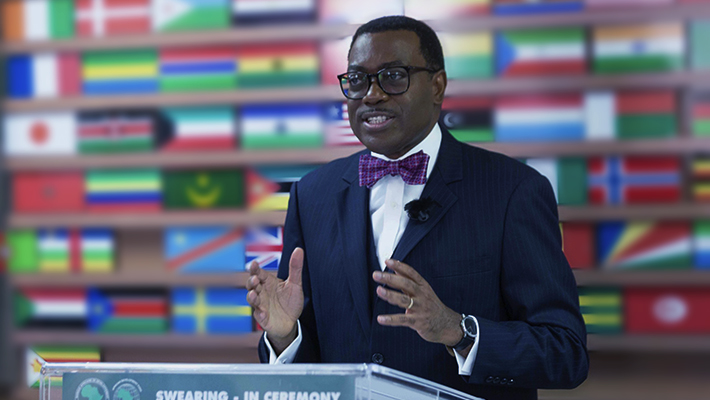
“The global development boat is leaking and the consequences will be devastating, unless we seal the leaking areas,” warns the African Development Bank president, Akinwumi Adesina.
Mr Adesina said this in a statement during the 2023 Kofi Annan Eminent Speakers’ Lecture.
He said the challenges of the COVID-19 pandemic, climate change, rising debt, food insecurity, and conflicts were keeping the lid on development globally, pointing out that climate change is at the top of the leakage, posing existential risks for the world.
“We must do all we can to keep global warming to no more than 1.5 degrees Celsius. We need innovations to power the world better with renewable energy. There is too much hunger in the world. It is not acceptable that over 2.3 billion people in the world go hungry. God did not create stomachs to go empty,” stated Mr Adesina. “He created them to be filled. There must be a hunger-free world.”
According to Mr Adesina, the inability to cope with global health pandemics. The COVID-19 pandemic has taught us how important it is to have global pandemic preparedness.
The AfDB president said it had also taught us to ensure no one was left behind in access to affordable health care.
“After all, all lives matter, for the rich and poor,” he said.
Mr Adesina said the challenge was that the resources were highly concentrated in developed countries, with few extremely rich, while the world’s development boat was leaking.
“The international community has a critical role to play to change this, yet as Kofi Annan once said. The international community allows nearly three billion people, almost half of all humanity to subsist on two dollars or less a day in a world of unprecedented wealth,” Mr Adesina explained.
According to the AfDB boss, development financing needs in Africa are huge and widening.
He said the AfDB estimated that Africa faced a financing gap of $1.2 trillion through 2030 to finance the SDGs and adapt to climate change.
”For example, the financing requirements for Africa’s Nationally Determined Contributions under the Paris Climate Agreement are estimated at $277 billion annually until 2030. Current flows of climate finance to Africa are far short of that, at just $30 billion in 2019 to 2020.
“Much of the available climate finance is concentrated in a few developed countries, and very little is available to support adaptation, which is Africa’s most urgent need,” he said.
Mr Adesina said there was no doubt that the global financial architecture was failing development as it faced multiple global challenges. According to him, the global financial architecture needs to be reformed and transformed to tackle more effectively global challenges and accelerate SDGs achievement.
“We must ensure equal opportunities for all. Regardless of one’s economic, social, or racial background, we must create a level playing field for a more just, fair, and equitable world. Multilateral Development Banks play a unique role of tackling global development challenges,” noted the AfDB chief. “By their nature, they are positioned to respond to global economic shocks, finance the needs of SDGs, address rising fragility, and mobilise funding required to address climate change.”
Mr Adesina added, “It is estimated that the new global challenges will require a tripling of financing from MDBs, a doubling of bilateral aid, a significant increase in concessional lending and a massive rise in the flow of private capital.”
Therefore, he said the clarion call was to move from billions of dollars to trillions of dollars.
“The G20 has called for significantly raising the ambition of the multilateral development banks, expanding resources for them to do more, improving their ability to take risks. Optimising their balance sheets, deploying more financial innovations, and leveraging the private sector,” Mr Adesina pointed out, adding that “they need to work collectively as a system to effectively deploy knowledge, risk mitigation instruments and concessional financing at scale.”
He stated, “That is why we have selected the theme of the 2023 Kofi Annan Eminent Speakers’ Lecture to be ‘The changing global finance architecture: Implications for multilateral development Banks post-COVID’.”
(NAN)

We have recently deactivated our website's comment provider in favour of other channels of distribution and commentary. We encourage you to join the conversation on our stories via our Facebook, Twitter and other social media pages.

More from Peoples Gazette

States
Independence: NBA urges Nigerians to expect better future
The NBA said that ordinary Nigerians should be deriving benefit from the subsidy removal rather than hardship.

Agriculture
FG tasks ECOWAS on leveraging financing strategies for agroecology
The federal government has urged stakeholders in the agriculture and finance sectors in the West Africa region to leverage financing strategies to enhance agroecology practices

Politics
Katsina youths pledge to deliver over 2 million votes to Atiku
“Katsina State is Atiku’s political base because it is his second home.”
States
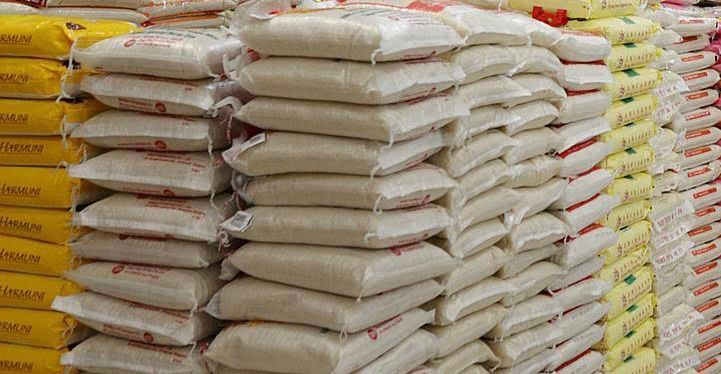
Rice price drop brings relief to some Lagos consumers, hikes hit others
Traders and consumers, who spoke to journalists in separate interviews on Sunday in Lagos, reported mixed price movements across markets.

Economy
Nigeria needs $7.1 billion investment for sugar self-sufficiency, says council
Mr Bakrin said the investment would support existing sugar estates.
Politics
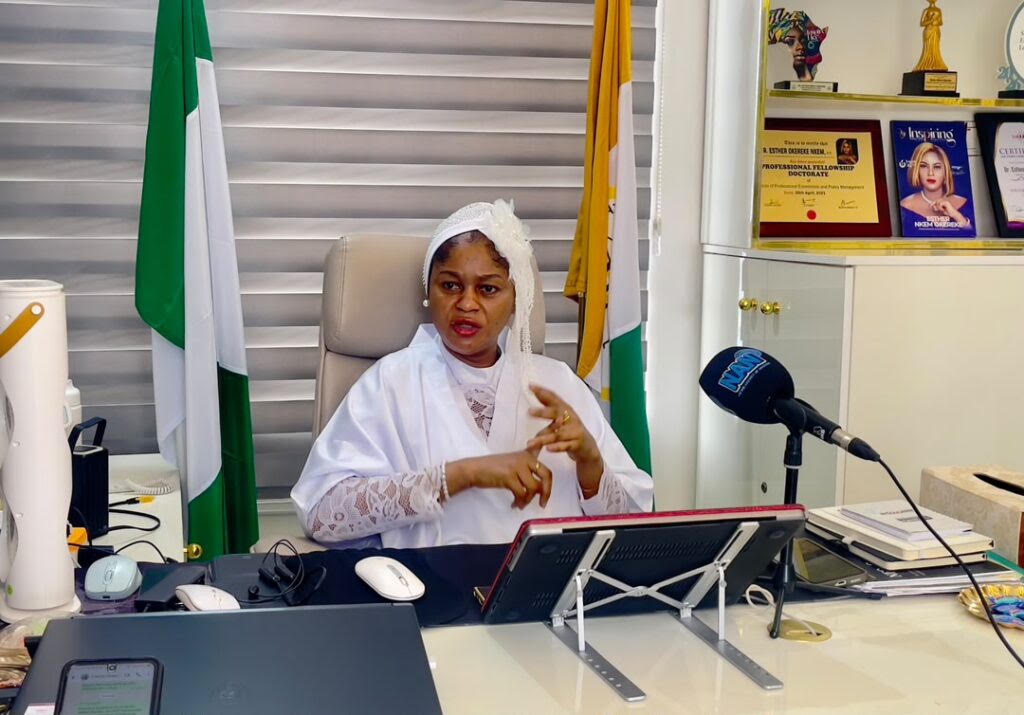
2027: I’m not intimidated by Tinubu, Atiku, Obi, says NRM presidential candidate
Ms Okereke expressed confidence in her capacity and the party’s vision to rebuild the country.
Hot news Home top
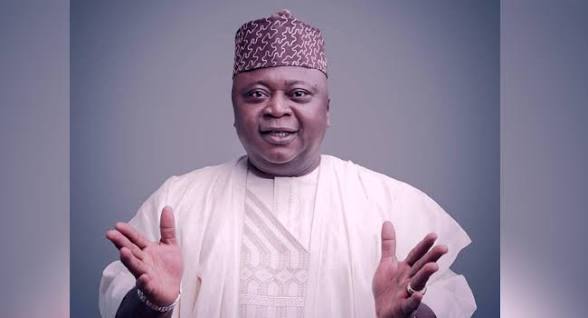
Ladi Adebutu assures supporters of contesting 2027 election, says APC influenced INEC omission
INEC removed the name of Mr Adebutu from its final list of governorship candidates published on Saturday.
Heading 2
2027: 241 candidates to contest 36 positions in Cross River
According to INEC’s final list of candidates, eight candidates are vying for the governorship seat.

Heading 4
NSDC targets over two million tonnes of sugar production through 13 projects
The projects comprised three existing operators and 10 proposed new sugar estates across eight states.


