

Chiamaka Adinnu: How Guided Trade Initiative is boosting African Continental Free Trade Agreement

On July 26, 2022, the African Continental Free Trade Area (AfCFTA) Secretary-General, H.E. Wamkele Mene, announced in his keynote at the 9th Meeting of the Council of Ministers the AfCFTA Secretariat Guided Trade Initiative (GTI). The Secretary-General described the GTI as a solution-based approach to achieve its goal by matching businesses and products for export and import between interested state parties.
In its pilot phase, eight countries have been selected to trade under the AfCFTA Guided Trade Initiative. These eight countries include Cameroon, Egypt, Ghana, Kenya, Mauritius, Rwanda, Tanzania and Tunisia, representing the five regions in Africa. The initiative aims to test and develop the basis for trade, legal and environmental policy in Africa with a view to identifying businesses, goods, customs procedures and logistics practices which are essential for an effective trading relationship.
Other countries can participate upon meeting the requirements by deploying the AfCFTA E-Tariff Book, the Rules of Origin Manual, and by publishing their tariff rates for approval by the Secretariat. These requirements were established to harmonise regulations and standards and reduce non-tariff barriers to trade.
In line with the AfCFTA approach to value chain developments, products identified for trade in this initiative include ceramics tiles, batteries, tea, coffee, processed meat products, maize starch, sugar, pasta, glucose syrup, dried fruits and sisal fibres. During this pilot phase, the selected countries can access some markets at preferential rates for these products.
However, in time, at least 96 products will be traded under the GTI, and the initiative will be reviewed annually to expand the list of countries. In the framework of the AfCFTA, up to 90 per cent of liberalised goods will have their tariffs reduced by the latest 2030, 7 per cent of goods will be liberalised by 2035, and countries will be allowed to tax the remaining three per cent of produced goods.
The Guided Trade Initiative through the African Continental Free Trade Area (AfCFTA) represents a significant step forward, offering the promise of increasing intra-African trade, boosting economic growth, and reducing poverty across the continent. Although some African countries have recognised the potential benefits of the Guided Trade Initiative and are actively seizing the trading opportunities that abound under it, the number of nations taking proactive steps remains relatively few. It is essential for African countries to collectively and individually redouble their efforts to fully embrace and implement this transformative initiative.
Guided Trade Initiative
The Guided Trade Initiative aims to improve the operationalisation and implementation of the AfCFTA for increased intra-African trade, which is expected to increase economic development in the continent. For the year 2023, the AfCFTA Guided Trade has placed a particular emphasis on enhancing trade in services within five priority areas. These include tourism, transport, business services, communication services, and financial services. African countries with potential in these five priority areas can leverage this guided trade initiative for national economic growth.
For instance, Ethiopia, a country with immense tourism potential, can greatly benefit from the promotion of tourism and travel-related services under the AfCFTA. By streamlining visa processes and removing travel-related barriers through the guided trade initiative, Ethiopia can attract more international visitors, leading to increased revenues, employment opportunities, and economic growth. Such national benefits translate to regional and continental economic integration and demonstrate the potential of the AfCFTA Guided Trade Initiative to transform African economies through job creation and diversified economic activities.
Furthermore, the development of the AfCFTA Guided Trade Initiative to connect businesses and products for export and import between interested state parties is a step in the right direction to uptick trade under the AfCFTA. African countries with export goods can maximise the initiative to export certified goods to other countries and increase their trade volume.
Countries like Kenya have leveraged the Guided Trade Initiative to export two AfCFTA-certified batches of car and truck batteries to Ghana—with a value of about $60,000 per container—as well as a consignment of Kenyan-grown tea. In addition, Igire Coffee, a women-led Rwandan company, shipped locally processed arabica coffee beans to Ghana within the first six months of the establishment of the Guided Trade Initiative.
The AfCFTA Guided Trade Initiative is a trade policy tool that African countries can leverage to tackle trade barriers that have long prevented the continent from achieving economic development and prosperity.
While Kenya and Rwanda are leading the way in harnessing the potential of the Guided Trade Initiative to foster intra-African trade and tap into the immense economic opportunities present on the continent, however, it is imperative for more African nations to follow in their footsteps and propel the initiative’s objectives. By following in these footsteps, African nations can jointly contribute to the economic development and integration of the continent.
Chiamaka Adinnu is a trade fellow at the Ominira Initiative for Economic Advancement. She is currently studying for a master’s degree in food safety and quality engineering.

We have recently deactivated our website's comment provider in favour of other channels of distribution and commentary. We encourage you to join the conversation on our stories via our Facebook, Twitter and other social media pages.

More from Peoples Gazette

Agriculture
FG tasks ECOWAS on leveraging financing strategies for agroecology
The federal government has urged stakeholders in the agriculture and finance sectors in the West Africa region to leverage financing strategies to enhance agroecology practices

Politics
Katsina youths pledge to deliver over 2 million votes to Atiku
“Katsina State is Atiku’s political base because it is his second home.”

Heading 5
More than 40 officers dismissed over corruption, financial fraud: EFCC Chair
He highlighted his efforts to sanitise the EFCC and rid it of corrupt staff over the past three years.
Africa
Senegal, Liberia join FEDA as Angola, Zimbabwe ratify agreement
Senegal and Liberia joined the Fund for Export Development in Africa (FEDA), expanding its membership to 24 countries.

Economy
UK appoints new trade commissioner for Africa
Mr Long replaces John Humphrey, who has held the role since June 2022.

World
Iran to announce restricted zone outside Strait of Hormuz
Mr Rezaei said any ship attempting to pass through the zone would be placed on Tehran’s sanctions list.
Uncategorized
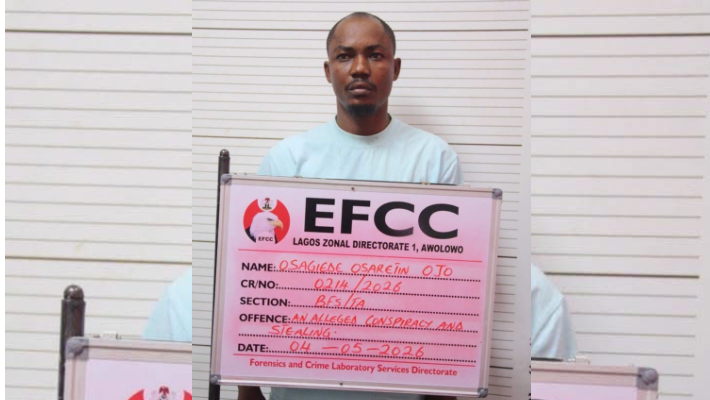
EFCC arraigns man over alleged N700 million fraud
The court adjourned the case until September 16, 2026, for hearing.

Abuja
Parents urge Wike to address infrastructure shortage, rising school-supply costs in FCT
Parents appealed to FCT Minister Nyesom Wike to address infrastructural shortages in schools.


