

Germany: Tension as conservatives pick Chancellor Merkel’s replacement

Two centre-right candidates hoping to succeed German Chancellor Angela Merkel sought the party lawmakers’ support, with the governing conservative bloc under pressure to decide who should lead its charge in elections later this year.
Armin Laschet from Merkel’s Christian Democrats (CDU) and Markus Soeder from the Christian Social Union (CSU) are colleagues in the CDU/CSU bloc, but also rivals for Merkel’s throne.
The two parties traditionally field just one candidate to be their chancellor candidate in national elections, but this year they face a difficult choice.
Mr Laschet has the early backing of the leadership of the much larger CDU.
But Mr Soeder, the state premier of Bavaria, has a huge lead in popularity among the electorate in national opinion polls.
The CDU/CSU faction, numbering some 250 members of the Bundestag, met for four hours Tuesday afternoon, with the leading contenders both attending and sharing their views in sometimes heated exchanges.
Officials from both parties called for unity and a speedy decision amid fears of a potentially bruising power struggle.
Ms Merkel’s party is coming off two historic state election losses last month and nervously eyeing the environmentalist Greens, whose support has been steadily growing.
Some conservatives feared that their internal squabbling would only serve to benefit the Greens, who sit just a few points behind the CDU/CSU alliance in recent surveys.
While there is no fixed process for the bloc to find consensus on the issue, the two contenders said the question of who should be the candidate should be settled as soon as this week, participants at the talks told dpa.
Mr Laschet, the state premier of North-Rhine Westphalia, seen as a political moderate and consensus-builder, said at one point, “We do not need a one-man show,” in an apparent reference to Mr Soeder’s recent seizing of the national stage.
The latter pointed out that elections were personality-driven and that television debates played an important role.
“We need a good team, but top is also crucial,” Mr Soeder said, seemingly alluding to his much higher personal poll ratings.
According to participants, Mr Soeder said that the conservative bloc must “do everything to be as strong as possible and get as many seats as possible into the Bundestag.”
Although they are separate parties, the CSU is often regarded as the Bavarian wing of the CDU.
The CSU is active only in Bavaria, while the CDU does not put any candidates up for election in the southern state.
To eventually become chancellor, Mr Soeder or Mr Laschet would need to ensure victory for the CDU/CSU in the September elections and most likely form a coalition with one or two other parties.
The CDU/CSU is currently governing in coalition with the Social Democrats.
Both men said they were pleased with how the question-and-answer session with lawmakers went but did not say what the next steps would be.
It had been right to go to the parliamentary group, Soeder said afterwards.
“We are both firmly convinced that in the end, we will come to a very good result, which will establish unity and at the same time bring the best election chances,” the Bavarian leader said.
Ms Merkel attended but stayed in the background at Tuesday’s session, making it clear she did not want to interfere in the drama.
When asked whether she feared that the power struggle could lead to the conservative alliance losing the chancellery in the end, she said, “I wanted and will stay out of it.”
(dpa/NAN)

We have recently deactivated our website's comment provider in favour of other channels of distribution and commentary. We encourage you to join the conversation on our stories via our Facebook, Twitter and other social media pages.

More from Peoples Gazette

States
Independence: NBA urges Nigerians to expect better future
The NBA said that ordinary Nigerians should be deriving benefit from the subsidy removal rather than hardship.

Agriculture
FG tasks ECOWAS on leveraging financing strategies for agroecology
The federal government has urged stakeholders in the agriculture and finance sectors in the West Africa region to leverage financing strategies to enhance agroecology practices

Politics
Katsina youths pledge to deliver over 2 million votes to Atiku
“Katsina State is Atiku’s political base because it is his second home.”
Education
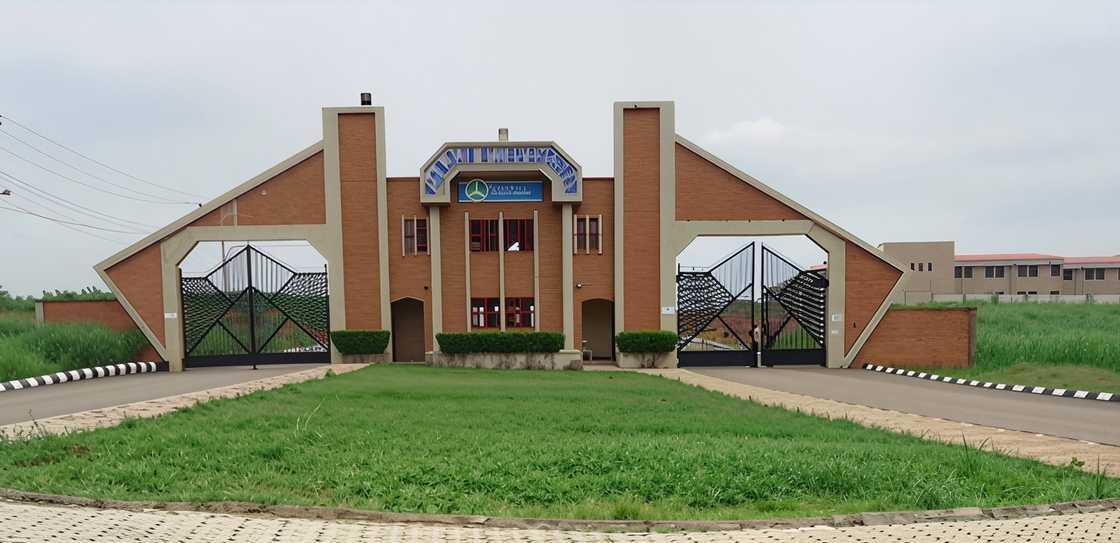
Caleb University graduates pioneer law students
According to the university, the college recorded a 94.6 per cent compliance rating from the Council of Legal Education (CLE).
Economy
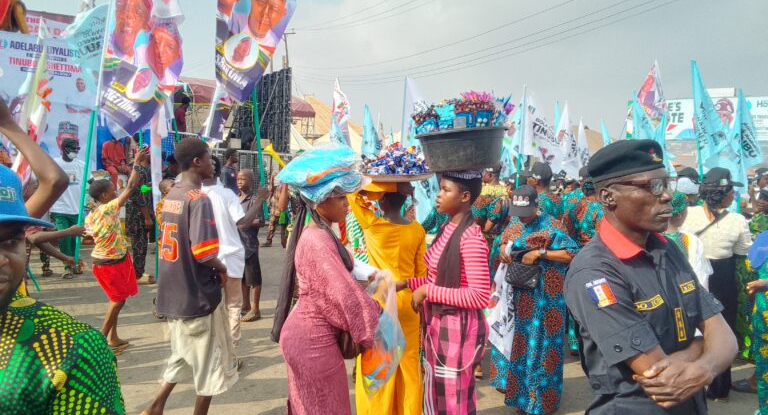
Business booms for Ibadan traders as residents prepare for Tinubu’s arrival
Traders made brisk business on Saturday ahead of President Bola Tinubu’s arrival for the APC presidential campaign at the historic Mapo Hall in Ibadan.

States
Shanono, Soba bridge, road projects to link 30 communities: KADRA
The Kaduna government has completed a bridge and embarked on road construction in Tudun Wada, connecting 30 communities.

Politics
Akpabio, APC leaders rally support for Tinubu’s re-election
Mr Akpabio cautioned members against violence and political provocation, insisting that opposition criticisms should be addressed at the ballot box.
Anti-Corruption
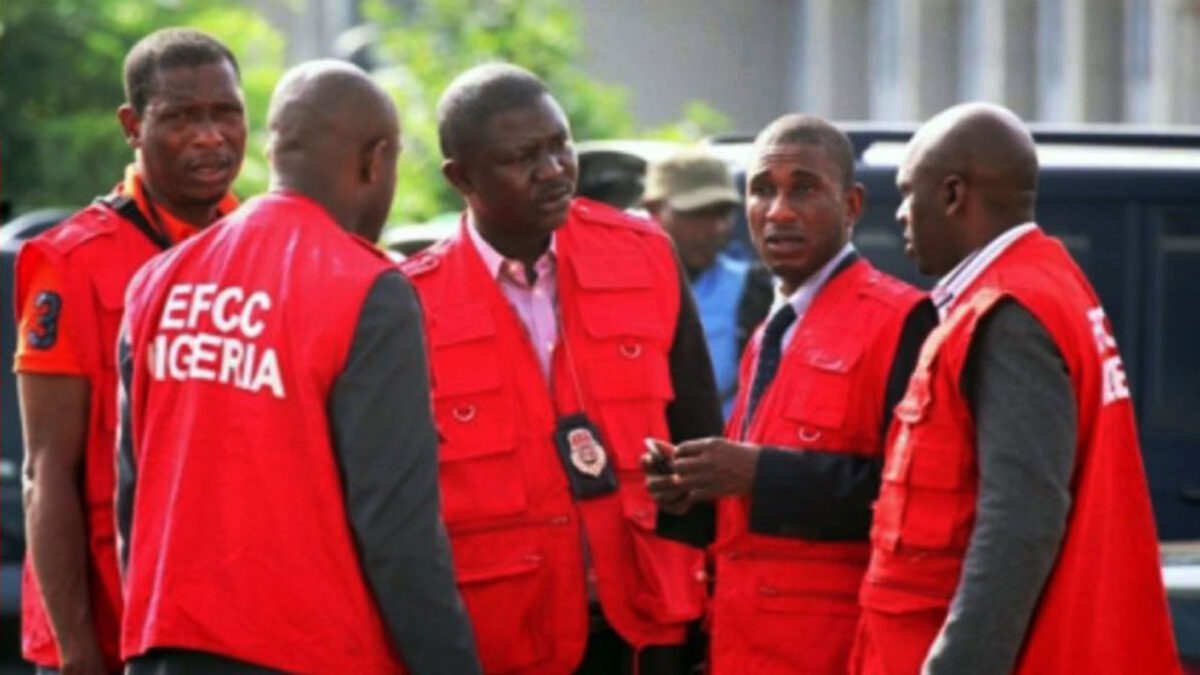
EFCC’s ₦26 billion meter contract forfeiture case against Ziklagsis adjourned
The court adjourned proceedings in a final forfeiture case involving ₦26 billion linked to an allegedly unexecuted electricity meter contract awarded to Ziklagsis Networks Limited.

NationWide
AI should complement teachers not replace them: FUEP
FUEP concluded its maiden international conference with a resolution that AI must complement, not replace, teachers’ professional judgement, empathy, and initiative.


