

Energy stakeholders project rapid economic growth for Nigeria in 2024
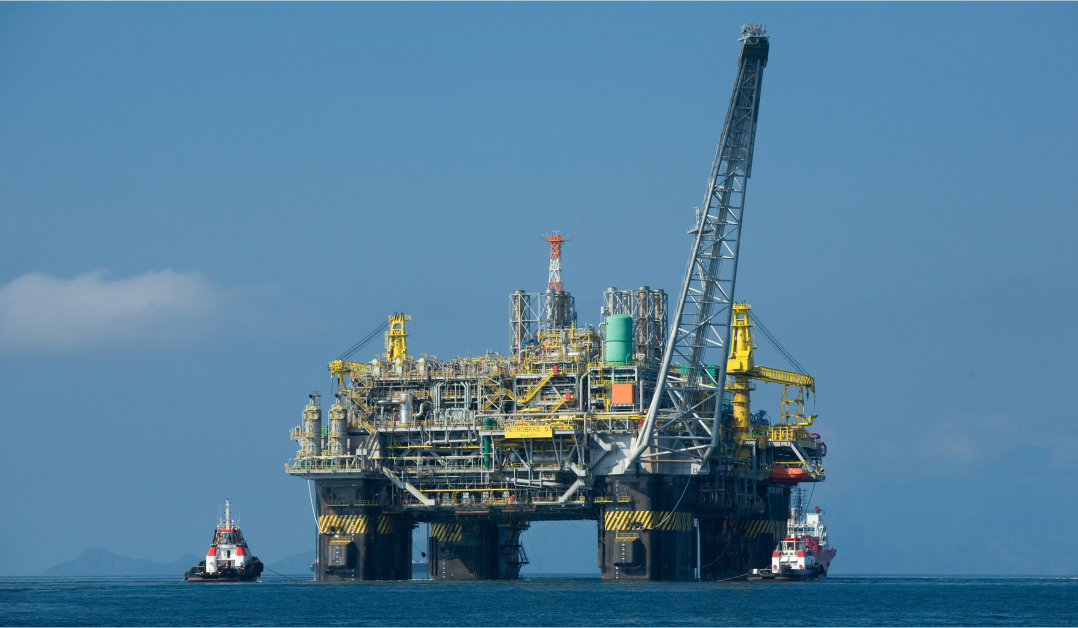
Some oil and gas industry stakeholders have projected rapid economic growth for Nigeria in 2024 based on increased oil production.
The stakeholders shared their views and expectations for this year in separate interviews on Tuesday in Lagos.
The stakeholders explained that Nigeria will exceed its crude oil production target of 1.7 million barrels per day during the period.
Ayodele Oni, a partner at Bloomfield Law Practice, said the oil and gas industry was one of the most impactful sectors in 2023.
However, Mr Oni said the sector elapsed around mid-year in 2023, largely because of the decline in petroleum production, political uncertainty and theft.
According to him, there was a significant improvement in the fourth quarter of 2023 for the oil and gas sector.
“In terms of infrastructure, it has been a good year with projects like the AKK, Dangote Refinery, and marginal field production being witnessed. No doubt, 2024 will be very exciting for the petroleum industry,” he said.
The expert attributed the inability to meet the petroleum production quota in the year under review to theft and lack of key infrastructure. To address these challenges, he advised the government to incentivise crude oil production and foreign investment in the sector and reduce petroleum theft and pipeline vandalism.
Mr Oni noted that the government could also create a proactive business environment for investors and develop key infrastructure within the industry. He also said that in the period under review, the government made significant improvements in petroleum refining.
“Similarly, in terms of gas policies, the government has continued to show its commitment to develop Nigeria not just as an oil-rich country but as a gas superpower. Policies and activism have been demonstrated in developing the gas sector as much as the oil sector.
“In terms of the applicable law and deregulation, steps have been taken to ensure the enforcement of key provisions of the Petroleum Industry Act. Steps are actively being taken by key regulators to ensure that the oil and gas sector continue to have the right regulatory structure to support the growth being projected,” Mr Oni explained.
He added, “The Compressed Natural Gas project has been initiated by the federal government in recognition of the enormous gas potential of the country and the significant benefits offered by gas when compared to other fuel source.
“Whereas the key gas/CNG projects are currently in the incubation stage, significant progress is envisioned.”
Joe Nwakwue, a Zera Advisory and Consulting Ltd. partner, described the overall business environment as challenging. He, however, said the development had stalled sectoral investment and activity levels.
Mr Nwakwue said PIA’s anticipated gains are slow mainly due to slow and tentative implementation of the law and issues around regulatory uncertainty.
Mr Nwakwue, a former chairman of the Nigerian Association of Petroleum Explorationists (NAPE), said, “I expect a better 2024. We have started to see increasing rig counts and enhanced pipeline security, and one hopes that the new sheriffs in charge of the sector will settle down to drive the growth of the industry.
“We need to pay attention to upstream gas development. The market is presently under-supplied, and that would impact our gas-based industrialisation aspirations. We also need to ramp up some greenfield and brownfield redevelopment. I expect that the industry should be able to deliver the budget benchmark volumes at a minimum rate.”
The expert noted that there are many ways one could look at sectoral performance, contribution to GDP, output level and activity level, among others.
He said, “I would say the 2023 performance is a mixed bag. Output levels have remained low, investments levels were low but picking up lately, sectoral GDP contribution remains low at under six per cent. In analysing this, we must also factor in the fact that 2023 was an election year, and we saw heightened political and economic uncertainty.
“The 2023 performance is less than cheery, in my view. The streaming of refineries is behind schedule. PIA implementation has been slow and painful, and the CNG roll-out has been more about media attention and bargaining chips with labour, etc. One bright spot is the subsidy removal, even when I feel it could have been better done.”
Bamidele Adesina, an oil and gas analyst, said factors would limit this growth, including high inflation and interest rates.
Mr Adesina said the reversal of economic reforms and potential security issues in the oil-producing Niger Delta region may pose challenges.
“The economy is forecast to grow at a faster pace in 2024 relative to this year’s projected expansion on the back of higher oil output. That said, elevated inflation and interest rates will keep a lid on growth.
“The reversal of economic reforms and potential insecurity in the oil-producing Niger Delta. Focus-economics see GDP expanding 3.2 per cent in 2024 and expanding 3.6 per cent in 2025,” stated Mr Adesina.
Mr Adesina noted that the recent weakening of the Naira and the increase in petrol prices led to higher consumer prices in July and August 2023. He said that the rise in prices had put pressure on private consumption.
“To address the rising cost of living and social unrest, the government announced a temporary minimum wage increase for the next six months in early October 2023. Additionally, in an effort to tackle the surging transportation costs, the government revealed plans to introduce buses powered by Compressed Natural Gas.
“The combination of a weaker Naira and the removal of fuel subsidy will likely result in continued inflation in the upcoming quarters. It pointed out that monetary policy and fuel prices will be critical factors to monitor,” he said.
According to him, consumer prices are expected to increase by an average of 22 per cent in 2024, an increase of 0.9 percentage points from the previous month.
“In 2025, consumer prices are projected to rise by an average of 14.9 per cent. The increased crude oil output, particularly with the Dangote Refinery scaling up production, will contribute to much-needed fuel supplies for Nigeria.
“However, the persisting instability in the Niger Delta region poses a significant downside risk to the overall economic outlook “while it also anticipated an average daily oil production of 1.35 million barrels in 2024,” he added.
Heineken Lokpobiri, the Minister of State for Petroleum Resources (oil) on December 12, said the federal government was trying to remove all bottlenecks that will limit the country from meeting and surpassing the projection.
Mr Lokpobiri said, “As a government, we are willing to sustain that engagement with the stakeholders so that in 2024 and beyond. We will ensure that we produce not just 1.7 million barrels per day that we need for our budget but ensure that we produce what is needed to meet the local demand.”
He highlighted the sector’s growth trajectory since the current administration took office, revealing that the country’s oil production has steadily increased from about 1 million bpd to 1.4 million bpd.
The minister said his goal is to continue this upward trajectory, adding that the government was committed to creating an enabling environment for stakeholders to thrive.
(NAN)

We have recently deactivated our website's comment provider in favour of other channels of distribution and commentary. We encourage you to join the conversation on our stories via our Facebook, Twitter and other social media pages.

More from Peoples Gazette

States
Independence: NBA urges Nigerians to expect better future
The NBA said that ordinary Nigerians should be deriving benefit from the subsidy removal rather than hardship.

Agriculture
FG tasks ECOWAS on leveraging financing strategies for agroecology
The federal government has urged stakeholders in the agriculture and finance sectors in the West Africa region to leverage financing strategies to enhance agroecology practices

Politics
Katsina youths pledge to deliver over 2 million votes to Atiku
“Katsina State is Atiku’s political base because it is his second home.”
States
NDLEA arrests South African woman, U.S.-based grandmother over drug trafficking
Mr Babafemi said the NDLEA operatives recovered 5,820 pills of diazepam, 780 tablets of tramadol, 3.7kg of skunk, and 230.25 litres of skuchies.

Abuja
Tiler arrested for allegedly killing hotel worker in Abuja
The police boss urged residents to shun violence and self-help during disagreement.
States
Ogun police arrest suspected railway vandal, recover 16 stolen iron rods, gas cylinders
The 36-year-old suspect was apprehended after operatives intensified surveillance in the area on Friday.

States
Katsina to deploy 7,000 teams for polio vaccination campaign
The director said the campaign would prioritise high-risk communities.

World
Carnegie Mellon didn’t discipline me for my anti-white hate, call to violence: Uju Anya
Ms Anya earned a reputation for mocking white people and celebrating their deaths.


