

Unlike Buhari, Idriss Deby led his country from the frontline
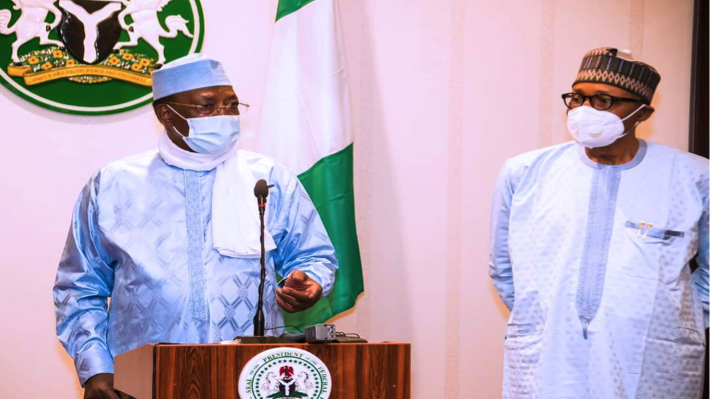
The news of the death of Chad’s longtime President Idriss Deby Itno, on April 20, 2021, reminded me of yet another failed promise of Nigeria’s President Muhammadu Buhari.
In the countless fights against armed groups during his tenure, Mr Deby led his men from the front; something that Buhari has shown to be only good at mouthing from prepared speeches.
But first, a bit of background to the circumstance leading to Deby’s death.
Described by some as the Super General, Deby, in what was considered a controversial election, had been re-elected Chad’s president barely a day before his death. Held on April 11, the election commission had declared Mr Deby the winner with 79.32 per cent of the vote. Coming a distant second was former prime minister Albert Pahimi Padacke at 10.32 per cent. Notwithstanding that it was boycotted by the opposition, the election had roughly 65 per cent turnout.
Deby, 68, campaigned on the promise of bringing peace and security to not just the country, but the surrounding Lake Chad region. Over the years he had amassed for himself a reputation as a hands-on war president for leading the Chadian army, considered one of the most effective on the African continent, in the fight against Nigeria’s Boko Haram terrorists.
In opposing Deby’s bid for a sixth term in office, the rebel group, Front for Change and Concord in Chad (FACT) attacked a border post in the provinces of Tibesti and Kanem on election day. The rebels were fast advancing on the capital, N’Djamena. Deby who was scheduled to give a victory speech, would not allow the rebel incursion to put a question mark on his campaign promise and celebration. He decided to join the country’s security forces in battle.
Speaking to his supporters, Deby’s campaign director, Mahamat Zen Bada, said, “the candidate would have liked to have been here to celebrate, but right now, he is alongside our valiant defence and security forces to fight the terrorists threatening our territory.”
The army spokesperson would later announce that he had died on the battlefield from injuries.
Now, back to Nigeria’s President Buhari. Few weeks into the 2015 presidential election, Buhari had in a speech at London’s Chatham House, promised that if Nigerians elected him their president, he would “lead from the front” in the fight against Boko Haram.
Mr Buhari said that “the world will have no cause to worry about Nigeria”, stating that, “I, Muhammadu Buhari, will always lead from the front and return Nigeria to its leadership role in regional and international efforts to combat terrorism.”
He assured the audience at Chatham House to change the fortune of Nigeria’s soldiers, whom he claimed had neither received the necessary support nor the required incentive to tackle the Boko Haram problem. “We will give them adequate modern arms and ammunition.”
Since becoming president in 2015, Mr Buhari has failed to lead from the front. Instead, for his failure in decisively dealing with the Boko Haram terrorists, he’s resorted to blaming everyone but himself. He’s blamed everyone and everything from the United States to traditional rulers, instability in Libya, and even a telecommunications company.
In 2015 he criticised the United States application of the Leahy Law, a policy that prohibits America from selling weapons to countries found in gross violation of human rights. Buhari said the U.S. refusal to sell arms to Nigeria “aided and abetted” Boko Haram.
Fast forward to March 2016. At a joint press conference with then South Africa President Jacob Zuma, Mr Buhari accused Nigeria’s largest telecommunications company, MTN Nigeria, of contributing to attacks by the Boko Haram insurgents since 2009.
“You know how the unregistered SIM cards are being used by terrorists, and between 2009 and today, at least 10,000 Nigerians were killed by Boko Haram,” the president said.
During a bilateral meeting with Cote d’Ivoire’s President Alhassan Ouattara, on the margins of the 56th ordinary session of the Economic Community of West African States (ECOWAS), Buhari was quoted as saying, “the Libyan fighters, who were trained for the 43 years of Muammar Gaddafi ruled the country were armed with deadly weapons and had been roaming the Sahel and Sub-Saharan region with no other skills for survival ‘but to shoot and kill.’”
And then last year, when he visited Borno after Boko Haram insurgents massacred over 30 stranded travellers at Auno village, he said, “this Boko Haram or whoever they are, cannot come up to Maiduguri or its environs to attack without the local leadership knowing,” in response to comments made by Governor Babagana Zulum and the Shehu of Borno.
Unlike Nigeria’s Buhari, the late Deby was a man of his word. When he said he’ll lead from the front, he meant it. He led his men into battle countless times and earned the right to be referred to as the Super General. On occasions when he could have blamed anyone, and excused himself over some urgent official engagements (of course a president is always busy); rather than issuing orders from the comfort of the presidential villa, Mr Deby would always take the bull by the horn and join Chad’s forces at the battlefield to fight off armed rebel groups.
Buhari on the other hand has failed to “always lead from the front”. Even his service chiefs have been reluctant to lead. In June 2015, a Vanguard headline read, “Military bows to Buhari, moves Command, control centre to Maiduguri”. Two years later, Vice-president Yemi Osinbajo (then acting president) again had to compel them to relocate to Maiduguri.
While the world debates the wisdom in a president leading his country’s forces at the frontline against armed rebels, especially seeing how this bravado has led to the death of Chad’s Deby, it must be said that a president who has no intention of leading from the front, should not say what he cannot do. Better a dead president than one who promises and fails.
Ojo Maduekwe is a journalist and political analyst. Twitter: @Ojo_Maduekwe. Email: mrmaduekwe@gmail.com.

We have recently deactivated our website's comment provider in favour of other channels of distribution and commentary. We encourage you to join the conversation on our stories via our Facebook, Twitter and other social media pages.

More from Peoples Gazette

Agriculture
FG tasks ECOWAS on leveraging financing strategies for agroecology
The federal government has urged stakeholders in the agriculture and finance sectors in the West Africa region to leverage financing strategies to enhance agroecology practices

Politics
Katsina youths pledge to deliver over 2 million votes to Atiku
“Katsina State is Atiku’s political base because it is his second home.”

States
L-PRES urges shift to modern livestock practices in Borno
Mr Ali said interventions in 2025 prioritised crop and animal production.
States
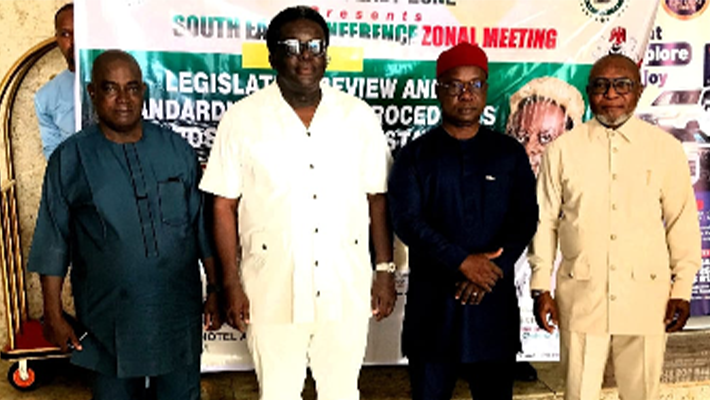
South-East speakers seek regional legislative collaboration, harmonisation
Mr Udeze said that legislative cooperation in the region should move beyond periodic consultations.

States
Police commend peaceful conduct of Bauchi by-elections
The police boss expressed satisfaction with the level of security deployment.

States
Police nab alleged vigilante for armed robbery in Cross River
Mr Ordue directed that the suspect be subjected to due process.

States
Group urges voluntary blood donation in Kano
Ms Tofa said the blood drive, sustained for 13 years, was part of efforts to address blood shortages.
Lagos
Lagos: APC Agege candidate holds interfaith prayer for 2027 election victory
Mr Abiola urged members to remain united, work tirelessly for victory and continue to pray for all APC candidates.


