

CBAAC seeks more exploration of African culture for economic growth

The Centre for Black and African Arts and Civilisation (CBAAC) has called on Africans to deliberate in exploring the continent’s arts and cultural potential for improved economic growth.
CBAAC’s director-general, Oluwabunmi Amao, made the call during the centre’s annual international conference held on Thursday in Lagos.
Ms Amao said the United Nations Sustainable Development Goals Document recognises arts, culture and creative economy as one of the major areas that can foster rapid economic development for any nation desirous of eradicating poverty.
She said that with the consciousness that Africa had large arrays of unexplored rich cultural resources under-utilised, the continent must consciously explore the potential in the sector further.
CBAAC boss explained, “The creative economy is one of the most rapidly growing sectors in the global economy, offering new and high-growth opportunities, especially for developing and emerging countries.
“It contributes to meeting the sustainable development goals by generating income and export earnings and creating jobs, as outlined in the United Nations Creative Economy Report for 2020. Creative goods and services boost economies and contribute to inclusive social development.”
He noted that for Africa, arts and culture “represent creativity, and they remain critical” to advancing the creative economy in Africa.
“At a time when the rate of unemployment is alarming and the youthful population continues to grow geometrically, arts, culture and the creative sector hold the key to channelling such youthful energies to productive use,” she said.
Duro Oni, a professor of Creative Arts, said that the Millennium Development Goals (MDGs) could be achieved by properly exploring the economic potential of African arts and culture.
According to him, African artistic and cultural productions have much to contribute to actualising the MDGs and the continent’s development.
Mr Oni said African arts and culture could contribute to reducing extreme poverty and hunger by creating employment opportunities, thereby achieving the MDG objective of poverty eradication.
He noted that these employment opportunities would not just be for the professionals in the various fields of arts and culture on the African continent but also the teeming youths of the continent.
(NAN)

We have recently deactivated our website's comment provider in favour of other channels of distribution and commentary. We encourage you to join the conversation on our stories via our Facebook, Twitter and other social media pages.

More from Peoples Gazette

Agriculture
FG tasks ECOWAS on leveraging financing strategies for agroecology
The federal government has urged stakeholders in the agriculture and finance sectors in the West Africa region to leverage financing strategies to enhance agroecology practices

Politics
Katsina youths pledge to deliver over 2 million votes to Atiku
“Katsina State is Atiku’s political base because it is his second home.”

Education
Gov. Uzodimma inaugurates 6,030 teachers, 345 non-teaching staff in Imo
The governor said the recruitment was designed to address the acute shortage of teachers.
NationWide
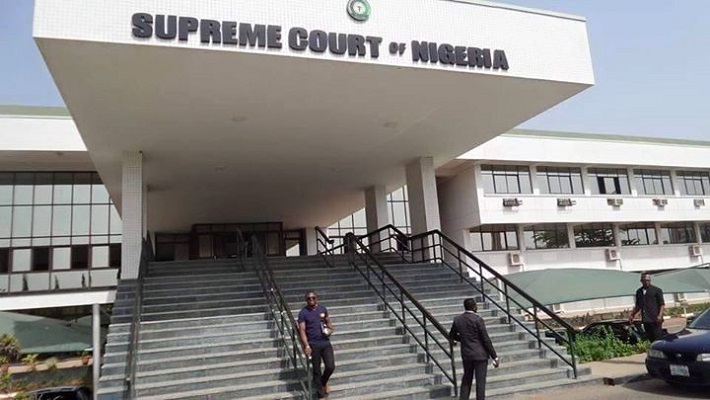
Supreme Court upholds INEC appeal, validates Electoral Act provisions on party primaries
Justice Mohammed Umar had, on May 5, initially dismissed the ZLP’s suit for lacking merit.

States
Army arrests two soldiers over alleged ammunition racketeering
Troops recovered four mobile phones, two empty magazines, an ATM card, a motorcycle and other items.
Heading 4
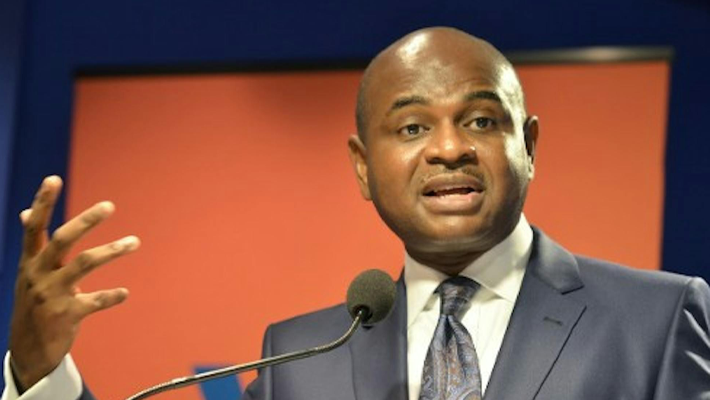
Moghalu rejects Atiku’s campaign council appointment, says he’s quit partisan politics
Mr Abubakar unveiled his council on Thursday, listing Mr Moghalu as a member of its policy team.

Heading 2
Jigawa establishes 135 learning spaces for out-of-school children
He said that 270 facilitators and 20 supervisors had been engaged to provide learning opportunities for children.
Economy
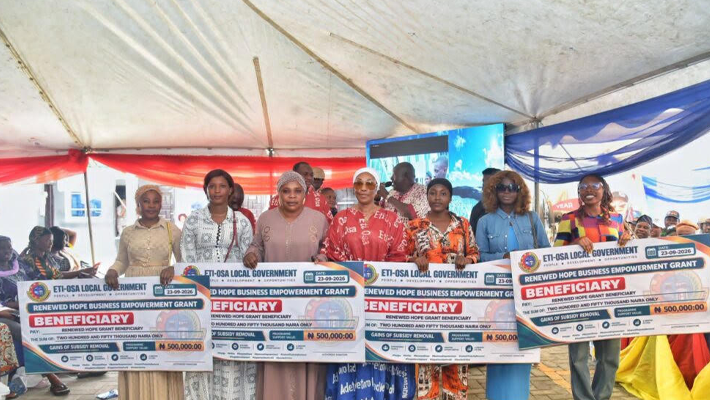
Lagos: Eti-Osa council awards N50 million business grants to 150 residents
Ms Adetoro said the beneficiaries included traders, artisans, small business owners, women, youths and vulnerable residents.


