

U.S. vetoes UN resolution seeking ceasefire in Gaza

A draft resolution calling for an immediate ceasefire in the Gaza Strip failed in the UN Security Council on Tuesday after the U.S. again vetoed the text tabled by council member Algeria.
Given concerns about a possible major Israeli offensive on the crowded city of Rafah in southern Gaza, the proposal was widely supported by 13 of the 15 council members. Britain abstained.
Following the vote, Israel again strongly rejected calls for a truce.
This “absurd notion of a ceasefire” was constantly being thrown around within the Security Council and the UN General Assembly as if it was “a silver bullet, a magical solution to all of the region’s problems,” Israel’s ambassador to the United Nations, Gilad Erdan, told the most powerful UN body.
“A ceasefire today means immunity for baby killers and rapists. It’s an easy way to make this problem an issue for another day,” he said.
“Hamas is not going to even read your resolutions.”
Israeli Prime Minister Benjamin Netanyahu also reiterated that his country was determined not to be deterred by criticism of how it was handling the war in the Gaza Strip.
“There is considerable pressure on Israel at home and abroad to stop the war before we achieve all of its goals,” Mr Netanyahu said during a visit to troops near the border with Gaza on Tuesday.
“There is no pressure, none, that can change this – we are not prepared to pay any price, certainly not the delusional prices that Hamas is demanding of us.”
US Ambassador Linda Thomas-Greenfield had declared ahead of time that the U.S. would once again use its veto power in the Security Council should a vote be held.
The five permanent members of the most powerful UN body, the U.S., China, Russia, France, and Britain, all have the power to do so.
The U.S. said it wanted to prevent a vote in order not to jeopardise important negotiations between Israel and the Palestinian extremist organisation Hamas, which along with other Islamist groups attacked Israel on October 7 and killed over 1,200 people.
“We believe that the resolution on the table right now would, in fact, negatively impact those negotiations. Instead, it could extend the fighting between Hamas and Israel,” Thomas-Greenfield said before the vote in reference to talks mainly about freeing hostages.
“Sometimes hard diplomacy takes more time than any of us might like. Believe me, I understand the desire for the council to act urgently to positively shape the situation in line with the Security Council’s mandate.”
The veto was seen by observers as a complicated plot by Washington as it does not want to be seen as an enabler of the Jewish state’s war tactics, which have increasingly come in for international criticism as the Gaza Health Authority figures confirm 29,195 Palestinians have been killed during the Israeli military campaign in Gaza so far.
In recent months, the U.S. has already used three vetoes to protect Israel from Security Council resolutions.
Security Council resolutions are binding under international law.
If countries defy them, the council can impose sanctions and, in extreme cases, even consider military intervention – but this is highly unlikely in the case of Israel.
According to a high-ranking Security Council representative, the negotiations this time on the veto became much more emotional behind closed doors.
The U.S. would have to “take responsibility for everything that happens afterwards,” added the official, who asked to remain anonymous.
“If Rafah happens, there is no going back.”
Around 1.5 million Gazans are crowded into Rafah, the southernmost city that sits on the border with Egypt.
The Israeli government has been preparing to launch a full-scale ground offensive into the city despite international fears it will lead to massive civilian casualties.
Israel says the operation is necessary to eliminate remaining Hamas fighters sheltering there as well as to free hostages abducted from Israel on October 7.
Israeli war Cabinet Minister Benny Gantz on Sunday said that, “The world must know, and Hamas leaders must know – if by Ramadan our hostages are not home, the fighting will continue to the Rafah area.”
However, it is uncertain whether international mediators will be able to negotiate a ceasefire and the release of hostages by the start of the Muslim fasting month on March 10.
(dpa/NAN)

We have recently deactivated our website's comment provider in favour of other channels of distribution and commentary. We encourage you to join the conversation on our stories via our Facebook, Twitter and other social media pages.

More from Peoples Gazette

Agriculture
FG tasks ECOWAS on leveraging financing strategies for agroecology
The federal government has urged stakeholders in the agriculture and finance sectors in the West Africa region to leverage financing strategies to enhance agroecology practices

Politics
Katsina youths pledge to deliver over 2 million votes to Atiku
“Katsina State is Atiku’s political base because it is his second home.”

NationWide
Nigerians demand broader public engagement on constitutional review
The stakeholders said such engagement was imperative to enable the citizens to make informed contributions on the constitution review.

World
Crew flees container ship after fire in latest Hormuz attack
The crew members had moved to a rescue ship, UKMTO said, citing a ship security officer and military authorities.
Hot news Home top
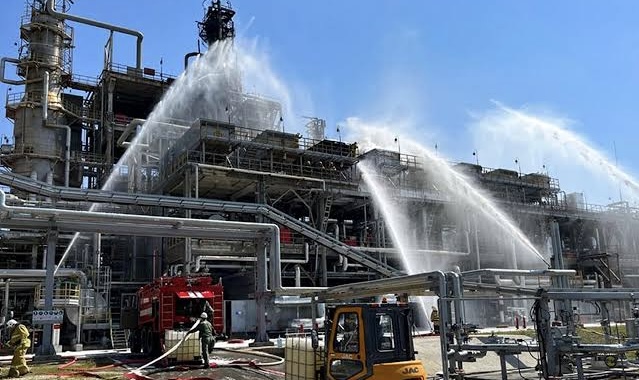
Ukrainian drone attacks kill one, set Russian refinery ablaze
Residential buildings and an industrial facility were damaged in the attacks, Mr Fedorishchev said on Telegram, without providing further details.

Economy
Experts urge improved electricity, vocational training as Nigeria’s textile output rises 45%
They urged the federal government to sustain the momentum through modern production facilities, affordable financing, and stable electricity.
Hot news Home top
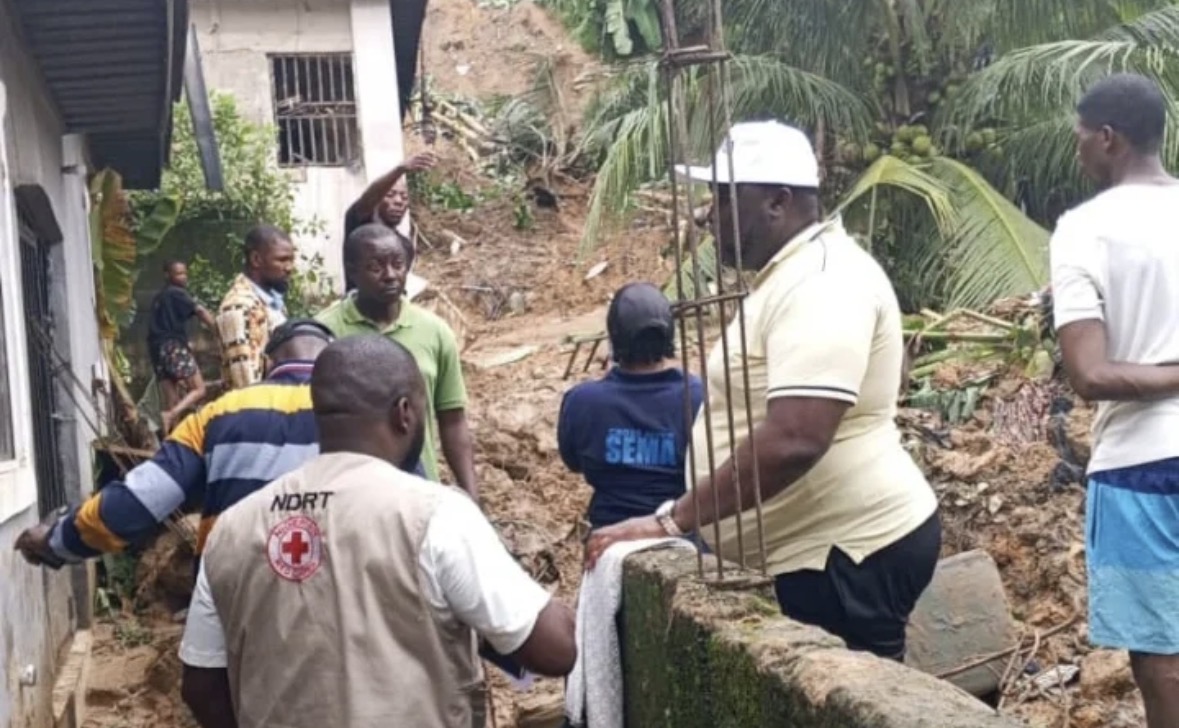
Four children, one other die in Cross River landslide
CR-SEMA confirmed the casualties during a rapid assessment of the affected community on Saturday.

States
Gov Bago inaugurates school projects in Niger
Mr Bago described the intervention as critical, saying it complemented his administration’s commitment to expanding access to quality education.


