

GIABA emphasises role of judiciary in preventing terrorism financing, other crimes

The Intergovernmental Action Group against Money Laundering in West Africa (GIABA) says the judiciary has a crucial role in preventing terrorism financing and other criminal activities.
Edwin Harris Jr., the director-general of GIABA, a sub-regional body established to fight against money laundering, terrorism financing, and proliferation financing (ML/TF/PF), said this at the opening of a five-day seminar on the development of training modules for ECOWAS member states on Monday in Abuja.
Mr Harris expressed concern over the impact of money laundering and the financing of terrorism on the socio-economic development, peace, and security of ECOWAS member states and beyond.
According to him, since the past decade, the ECOWAS community has experienced increased levels of terrorism, radicalisation and violent extremism at an alarming rate.
He applauded Nigeria’s efforts in the fight against transnational organised crimes and called on international experts to allow the judiciary to develop training modules.
“The judiciary should be more responsive in the adjudication of cases of terrorism and terrorist financing to deprive criminals of proceeds of crime, recover stolen assets wherever they are located, and dismantle criminal enterprises,” said Mr Harris.
He also urged the private sector to collaborate on implementing preventive measures against terrorism and other crimes.
The GIABA chief decried Burkina Faso, Mali, and Niger’s inability to counter terrorism financing, describing it as a problem owing to the latest political developments in the countries.
He said GIABA would pursue counter-terrorism financing as a regional fight.
Mohammed Jiya, the associate director of analysis and compliance at the Nigerian Financial Intelligence Unit (NFIU), described terrorism in West Africa as a major security challenge.
“Regional cooperation, intelligence-sharing and capacity-building efforts are also crucial in addressing the transnational nature of the threat posed by terrorism in West Africa.
“Among the top 10 countries in the Global Terrorism Index (GTI) 2023 of the impact of terrorism in countries around the world, there are four (4) West African countries. This workshop stands as a testament to our collective commitment to learning, growth, and innovation,” Mr Jiya said.
Rear-Admiral Yaminu Musa, coordinator of the National Counter-Terrorism Coordination Centre in the Office of the National Security Adviser (NCTC-ONSA), attributed the spread of terrorism in the sub-region to the role played by finance.
Mr Musa said, “Terrorist organisations require money to run their camps, feed their members, conduct campaigns and plan and carry out attacks on their targets.
“Countering the financing of terrorism (CFT) is a highly complex endeavour that involves many different actors, including violent non-state armed groups and their supporters.”
He added, “There is the need to provide specialised training on special investigation techniques, freezing, seizing and confiscation of terrorist assets, and strengthening regional and international cooperation to counter the financing of terrorism.”
(NAN)

We have recently deactivated our website's comment provider in favour of other channels of distribution and commentary. We encourage you to join the conversation on our stories via our Facebook, Twitter and other social media pages.

More from Peoples Gazette

States
Independence: NBA urges Nigerians to expect better future
The NBA said that ordinary Nigerians should be deriving benefit from the subsidy removal rather than hardship.

Agriculture
FG tasks ECOWAS on leveraging financing strategies for agroecology
The federal government has urged stakeholders in the agriculture and finance sectors in the West Africa region to leverage financing strategies to enhance agroecology practices

Politics
Katsina youths pledge to deliver over 2 million votes to Atiku
“Katsina State is Atiku’s political base because it is his second home.”
States
Kebbi Attacks: Gov. Idris vows stronger security, donates N200 million to victims
Mr Idris said the killing of citizens would not be tolerated by either the state or the federal government.
Heading 4
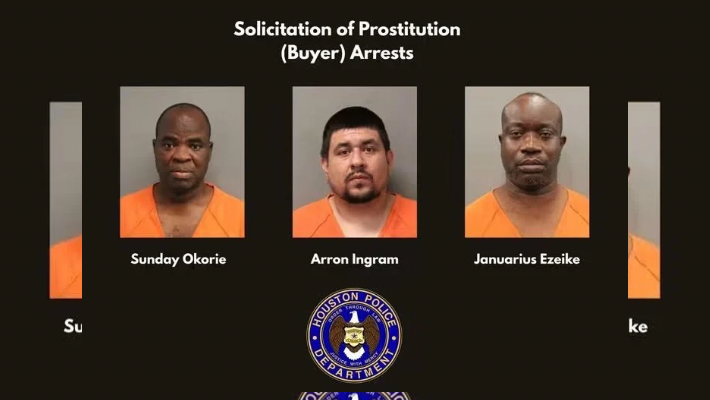
Nigerians Sunday Okerie, Januarous Ezeikwe arrested for solicitation of prostitution in U.S.
Messrs Okerie and Ezeikwe were arrested alongside one other non-Nigerian on September 28 over involvement in a prostitution felony.
Heading 4
Wike challenges Amaechi to account for $39 million hospital, N68 billion monorail, other spending
The minister said he would vote for Mr Amaechi if the former governor could account for the funds spent on the project.
Heading 3
2027: Labour Party youth leaders begin talks on backing APC, Tinubu
Several Labour Party youth decried the “inadequate recognition, total negligence and lack of engagement.”

States
Plateau govt suspends VIO checkpoints over rising disagreements with motorists
Mr Jatau noted that recurring assaults on officers violate constitutional rights and threaten the hard-earned peace in the state.
Africa
Lai Mohammed urges African govts to turn MICE into $1.3 trillion deal-making engine
Mr Mohammed said the global MICE industry was worth about $1.3 trillion, while Africa accounted for only four per cent.


