


WTO’s $1.2 million programme will tackle Nigeria’s agric export challenges: Okonjo-Iweala
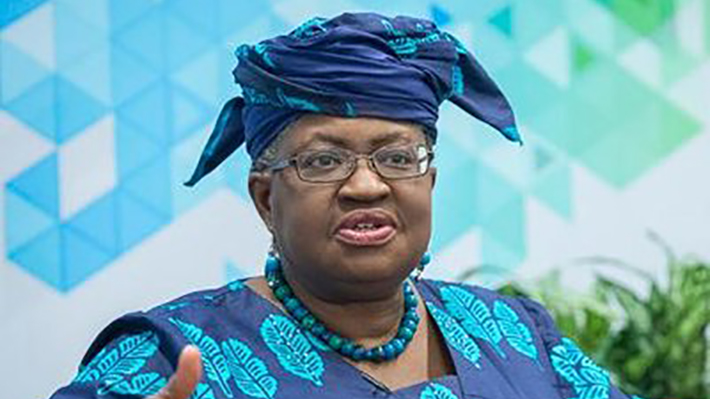
The World Trade Organisation has inaugurated a 1.2 million dollar programme to improve export standards of Nigeria’s sesame and cowpea products.
The WTO Director-General, Dr Ngozi Okonjo-Iweala, said this at the inauguration of the Seven Trade support programmes for Nigeria initiated by the WTO, World Bank and ITC on Tuesday in Abuja.
Mrs Okonjo-Iweala said the project was aimed at tackling cases of rejection of Nigeria’s products at the international market.
She said the project was inaugurated with the Standards Trade Development Facility, International Trade Centre, and the Nigeria Export Promotion Council.
According to her, the project will support international safety and quality certification for sesame and cowpeas in Nigeria.
She said Nigeria’s agriculture sector had the potential to be a major driver of export diversification and job creation, but too much of this potential remained unrealised due to barriers.
“We all know the story about Nigeria being a significant exporter of palm kernel, groundnuts, palm oil, cotton and cocoa, but the country has since become a net importer of many of these goods.
“In fact, Nigeria has not only lost out in agricultural export markets, it is a net food importer spending about billions a year for goods, many of which we can also produce here.
“Nigeria used to be a formidable agricultural exporter. Up to the mid-1960s, the country’s share of world agricultural exports was more than one per cent.
“However, agricultural exports collapsed as the economy shifted towards petroleum exploitation, and by the mid-1980s Nigeria’s world market share for agricultural products had dwindled to less than 0.1 per cent, ” she said.
According to the director-general, some of Nigeria’s unrealised potential has to do with trade-related problems on the supply side, and is what the project is seeking to rectify.
She said Nigeria was the world’s largest producer and consumer of cowpeas and the world’s producer of sesame, exporting to the EU, Türkiye, Japan, South Korea, and other Asian markets.
She said Nigerian cowpea and sesame exports had increasingly faced rejections in several destination markets due to non-compliance with international Standard Phytosanitary Measures requirements.
According to Mrs Okonjo-Iweala, this new project aims to build the capacities of stakeholders across the sesame and cowpeas value chains to better understand market access requirements.
She said it would improve agricultural practices such as pesticide application, hygiene techniques, harvest and post-harvest methods, and food safety.
She said, “The project which will kick off with an initial amount of 1.2 million dollars of which nearly a million comes from STDF will also be used to train local food safety advisers.
“This type of project is one I term a low expenditure, high impact project. The WTO is not a financing agency like the World Bank or IMF, but it has a wonderful secret that I find attractive.
“It spends small sums of money to make big impact. You cannot imagine how a million-dollar intervention can earn Nigeria hundreds of millions of dollars if not billions in increased agricultural exports.
“Supporting improved incomes for farmers, exporters, businesses and others once agriculture producers and exporters follow the correct sanitary and phytosanitary standards.”
Meanwhile, the NEPC Executive- Director, Nonye Ayeni, reiterated the challenges of rejection faced by Nigerian food exports, including sesame and cowpea.
She said the challenges were mainly due to poor quality, inefficient procedures and documentation, sanitary and phyto-sanitary issues, and improper packaging and labelling, among others.
She said, “A good number of these factors led to the decision of WTO/ITC to sponsor the STDF project, which will be backed by expected 30 per cent counterpart funding from NEPC.
“This project, STDF 845, will therefore enhance the quality and standard of sesame and cowpea through the institution of good sanitary and phyto-sanitary conducts, good agricultural and warehousing practices, packaging/labelling and excellent storage systems.
“All these are expected to forestall frequent contract cancellations and loss of business opportunities, while allowing significant increase of global acceptance of the items and for better quality of these products consumed locally.’’
Ms Ayeni further said the project was designed to last for three years with the objective of enhancing the integrity of cowpea and the sesame value chain from Nigeria.
“Therefore, the focus lies on improved practices that will enable Nigerian stakeholders to comply with maximum residue levels of selected pesticides used in cowpeas and Sesame and microbiological contamination with salmonella (Sesame).
“Overall, it will improve the regulatory and control system as well as farming and processing practices applied for cowpea and sesame” Ms Ayeni stated.
Also, Minister of Industry Trade and Investment, Dr Doris Uzoka-Anite, commended the WTO and the ITC for the inauguration of the STDF programme.
She said this would complement President Bola Tinubu’s led administration’s endeavours to leverage trade for economic expansion and unlock economic prospects for the Nigerian populace.
“We also heartily welcome today’s launch of the STDF, a global partnership which works to strengthen food safety, animal, and plant health capacity in developing countries.
“This focus empowers us to put the best of Nigeria on the global market, boosting safety and security for our people and opening doors for our businesses,” she said.
Ms Uzoka-Anite expressed confidence that the programmes would support the Federal Government’s efforts towards ensuring the safety, integrity, and marketability of Nigeria’s goods and services.
(NAN)

We have recently deactivated our website's comment provider in favour of other channels of distribution and commentary. We encourage you to join the conversation on our stories via our Facebook, Twitter and other social media pages.

More from Peoples Gazette

Agriculture
FG tasks ECOWAS on leveraging financing strategies for agroecology
The federal government has urged stakeholders in the agriculture and finance sectors in the West Africa region to leverage financing strategies to enhance agroecology practices

Politics
Katsina youths pledge to deliver over 2 million votes to Atiku
“Katsina State is Atiku’s political base because it is his second home.”
States
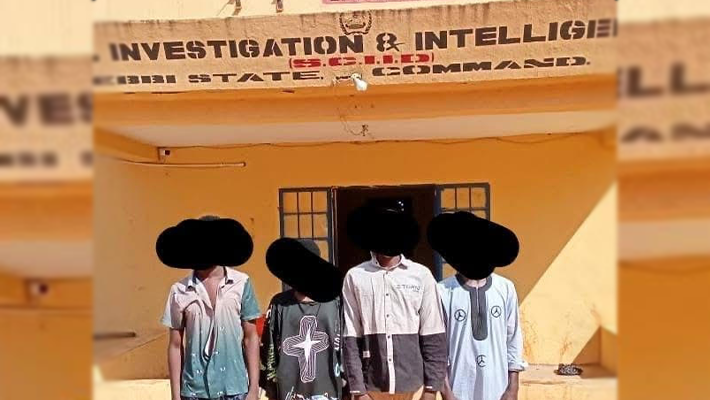
Police arrest suspects in Kebbi over kidnap threat, N30 million ransom demand
The police said the suspects were arrested following a complaint by Aminu Garba, who reported receiving anonymous phone calls demanding N30 million.

NationWide
Nigeria lost about N2.4 trillion to grid underutilisation since 2015: NISO
The NISO boss said Nigeria has lost about N2.4 trillion in capacity payments due to underutilisation of the power sector grid since 2015.

NationWide
Our new digital platforms will allow Nigerians to track govt spending, demand accountability: FG
Mr Arabi said the platforms will strengthen transparency, accountability, knowledge management and evidence-based implementation of public service reforms.

NationWide
Information minister tasks media on ethical, balanced journalism
According to him, the media remains one of the most powerful forces for shaping public opinion.
Sport
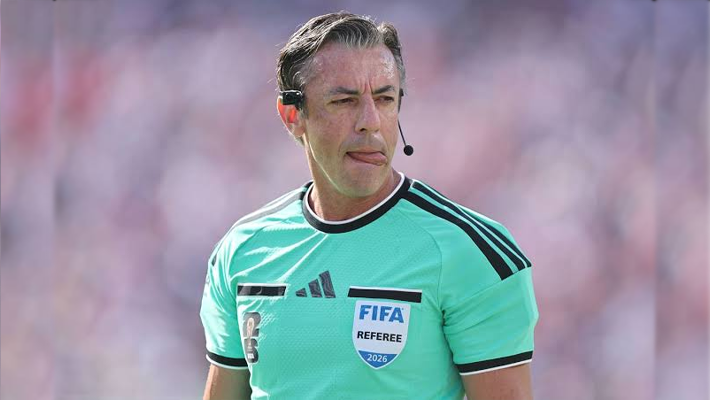
2026 World Cup: Who is FIFA referee Trump called ‘a little suspect’?
In his refereeing career spanning over two decades, Claus has officiated 318 professional football matches.

States
Ogun lawyers boycott court over N100,000 virtual hearing fee, oath administration hike
Lawyers in Abeokuta, Sagamu, and Ota commenced a three-day boycott of court proceedings to protest new policies introduced by the state judiciary.


