

Taiwan’s new President Lai Ching-te sworn into office

Lai Ching-te of Taiwan’s ruling Democratic Progressive Party (DPP) was sworn in and took office as the president of the island’s self-governing party on Monday.
According to Taiwan’s Foreign Ministry, more than 500 foreign guests from 51 delegations attended the inauguration ceremony and related activities, including the national leaders of eight countries which maintain diplomatic relations with Taiwan.
Mr Lai, 64, the son of a coal miner and a trained physician, took over from Tsai Ing-wen, 67, to lead the democracy amid increasing threats from China, which claims the self-governing island of over 23 million people as its territory.
Taiwan has had an independent government since 1949.
Ms Tsai could not run again after completing the maximum of two terms.
Her eight years in office aimed to maintain the status quo between Taiwan and China and augment Taiwan’s international visibility amid a complex geopolitical situation.
Vice-President Hsiao Bi-khim, 52, was also officially sworn in.
She was Taiwan’s de facto ambassador to the United States from 2020 to 2023 and formerly served as a DPP lawmaker for several terms.
The Chinese Communist Party considers the DPP to be a separatist organisation and has threatened to invade Taiwan if the party makes any formal moves towards independence.
The DPP says Taiwan already functions as an independent state and does not need to make any formal declaration.
Given China’s threats, Ms Tsai’s administration adopted strategies to strengthen Taiwan’s defensive military capabilities and cooperate with like-minded countries to form a collective deterrence in the region.
Since his January victory, Mr Lai reiterated that his administration will continue to strengthen the foundations laid by Ms Tsai to safeguard the status quo, let Taiwan continue playing an indispensable role in the global economy, and maintain geopolitical stability.
The United States maintains a certain amount of strategic ambiguity regarding Taiwan, officially recognising only the Beijing government, but it is legally bound to support Taiwan’s defence capabilities through the 1979 Taiwan Relations Act.
(dpa/NAN)

We have recently deactivated our website's comment provider in favour of other channels of distribution and commentary. We encourage you to join the conversation on our stories via our Facebook, Twitter and other social media pages.

More from Peoples Gazette

Agriculture
FG tasks ECOWAS on leveraging financing strategies for agroecology
The federal government has urged stakeholders in the agriculture and finance sectors in the West Africa region to leverage financing strategies to enhance agroecology practices

Politics
Katsina youths pledge to deliver over 2 million votes to Atiku
“Katsina State is Atiku’s political base because it is his second home.”
Africa
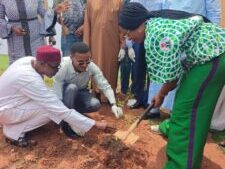
APC, Ethiopia’s Prosperity Party youths inaugurate joint tree-planting campaign
The initiative is part of the second round of the “Plant African Fraternity” aimed at deepening pan-African youth solidarity and promoting environmental sustainability.
States
Three killed, 20 injured in Osun road crash: FRSC
The Federal Road Safety Corps (FRSC) says three people lost their lives, while 20 others were injured in an accident in Tonkere, Osun State.

Heading 2
EPL: Aston Villa extend goalless run after 0-0 draw with Hull City
Villa missed goal-scoring opportunities in the opening minutes of the game, with chances from Nicolas Jackson, Ross Barkley and George Hemmings.
Heading 5
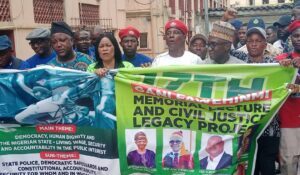
Rights activists, labour leaders seek security, living wage reforms
Rights activists, labour leaders and civil society organisations called for urgent reforms to address insecurity and economic hardship.

Heading 3
FG rebranding livestock sector to attract youths: Maiha
“Now, the agriculture sector is beckoning the youths. We are rebranding the sector,” the minister said.

States
Gov Makinde cautions traditional rulers against partisan politics
Mr Makinde advised traditional rulers to steer clear of politics and embrace all political actors without bias.


