

Prateek Suri: Generative AI and the Future of Africa: Challenges, potentials, and sovereignty

Generative AI, particularly in the form of Large Language Models (LLMs), has emerged as a transformative technology with the potential to revolutionise industries, education, and governance worldwide. However, the dominance of Western and Asian technology firms and governments in the development and deployment of these models has raised significant concerns about data sovereignty, cultural representation, and equitable access. For Africa, the development of sovereign AI solutions is not just a matter of technological advancement but a crucial step towards digital independence and cultural preservation.
Several countries, including the UAE, China, Sweden, and the Netherlands, are actively developing their own LLMs to ensure sovereignty over their AI capabilities. This trend highlights a growing recognition of the strategic importance of AI and the need for control over the underlying technologies and data. Prominent generative AI tools, such as OpenAI’s ChatGPT, are controlled by enterprises that typically do not disclose the specifics of the data used to train their models. This lack of transparency poses risks related to data privacy, security, and cultural bias.
In a significant move towards sovereign AI, Nigeria recently launched its first multilingual LLM through a partnership between Awarri, DataDotOrg, NITDA Nigeria, and NCAIR Nigeria. This model is designed to be trained on five low-resource languages and accented English, ensuring stronger language representation in existing datasets for the development of AI solutions. Supported by over 7,000 fellows from the 3MTT Nigeria programme, this initiative represents a substantial step towards creating AI that resonates with local contexts and cultural nuances.
Like the UAE’s recent $1.5 billion investment by Microsoft in G42, a UAE-based AI tech holding company, Nigeria’s efforts signify a strategic commitment to developing localised AI capabilities. Microsoft’s $13 billion investment in OpenAI, which led to the launch of ChatGPT, underscores the transformative impact such investments can have. Africa’s own AI projects, adept at capturing the subtleties within various indigenous dialects, promise to be more precise and contextually pertinent compared to other models.
The development of LLMs in Africa holds immense potential across multiple sectors, including education, finance, energy, climate, and healthcare. For instance, AI-powered personalised learning support and tutoring assistants for students in primary, secondary, and tertiary institutions could transform Africa’s educational landscape. In healthcare, AI can aid in diagnosing diseases, managing patient records, and providing telemedicine services, significantly improving access to medical care.
The inclusion of billions of African indigenous tokens alongside billions of English tokens in these models is crucial. As these models expand with more indigenous content, they will become more robust, offering better language comprehension, context, and cultural relevance. This progress could empower smartphones and other consumer electronics devices in Africa, unleashing a new age of AI-powered commerce from rural areas to global cities.
Despite the promising potential, significant challenges remain. Collecting and synthesising indigenous African data from offline sources and translating existing English content into African indigenous languages are formidable tasks. However, these efforts are achievable with the right strategies and collaborations. Initiatives to gather more indigenous data and develop novel methods for content synthesis are essential.
Furthermore, African LLMs must embed robust safety checks to ensure responsible use. Extensive testing is necessary to eliminate harmful or sensitive content and to ensure that outputs align with African values. This approach will help mitigate the risks of inappropriate or offensive outputs, promoting the responsible use of AI technologies.
To fully realise the potential of AI, African nations must mobilise their global diaspora talents and capital. Exploring open-source LLMs and developing a governance infrastructure primed for the AI age will be crucial. This strategy will not only enhance Africa’s technological capabilities but also position it as a significant player in the global AI landscape.
For instance, countries like Saudi Arabia have rolled out AceGPT to ensure cultural sensitivity while adhering to local values. African nations should pursue similar initiatives, ensuring that their AI models reflect local cultures and values. Moreover, developing AI applications tailored to African enterprises and individual use cases will be critical in reducing dependency on U.S. and Asain-based offerings.
In conclusion, the development of locally tailored LLMs in Africa is a strategic step towards sovereign AI. By capturing the nuances of African cultures and languages, these models can transform commerce, education, healthcare, and more. As global tech giants recognise the potential of African AI models, significant investments are likely to follow, further boosting the continent’s technological advancements. With the right strategies and collaborations, Africa can shape the evolution of AI, driving digital prosperity and innovation across the continent.
Prateek Suri is the Founder/CEO Maser Group and MDR Investment.

We have recently deactivated our website's comment provider in favour of other channels of distribution and commentary. We encourage you to join the conversation on our stories via our Facebook, Twitter and other social media pages.

More from Peoples Gazette

States
Independence: NBA urges Nigerians to expect better future
The NBA said that ordinary Nigerians should be deriving benefit from the subsidy removal rather than hardship.

Agriculture
FG tasks ECOWAS on leveraging financing strategies for agroecology
The federal government has urged stakeholders in the agriculture and finance sectors in the West Africa region to leverage financing strategies to enhance agroecology practices

Politics
Katsina youths pledge to deliver over 2 million votes to Atiku
“Katsina State is Atiku’s political base because it is his second home.”

Heading 4
Longest-serving Republican speaker Dennis Hastert, soiled by allegations of molesting high school athletes, dies at 84
The deceased, who was speaker from 1999 until 2007, was sentenced in 2016 to more than a year behind bars.
Anti-Corruption
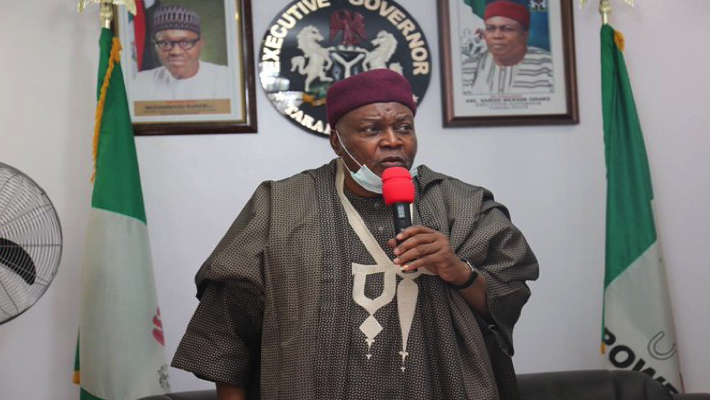
Witness reveals how funds were moved to private accounts in ex-Taraba governor’s trial
The judge adjourned the matter till October 6, 2026, for continuation of the evidence of PW3.

Education
JAMB moves to adopt UTME centre in Canada for 2027
The board said the centre would enable eligible Nigerians living in Canada to sit for the UTME without travelling to Nigeria.

States
No survivors yet in Ondo military helicopter crash, says Gov. Aiyedatiwa
Mr Aiyedatiwa said he got the information about the crash at about 10:30 a.m. on Monday.

Hot news Home top
I don’t want migrants from other countries to turn UK into nation of ‘little ghettos’: Kemi Badenoch
The Tory leader argued that immigrants must respect the culture and values of the UK.

States
Religious leaders laud Governor Sani’s inclusive governance
The religious leaders pointed out that Kaduna State now enjoys relative peace and harmony.


