

Nigerians bearing ‘overwhelming burden’ of medical costs, says health ministry

The Coordinating Ministry of Health and Social Welfare has revealed that Nigerian households are bearing “an overwhelming burden” of the nation’s health expenditure.
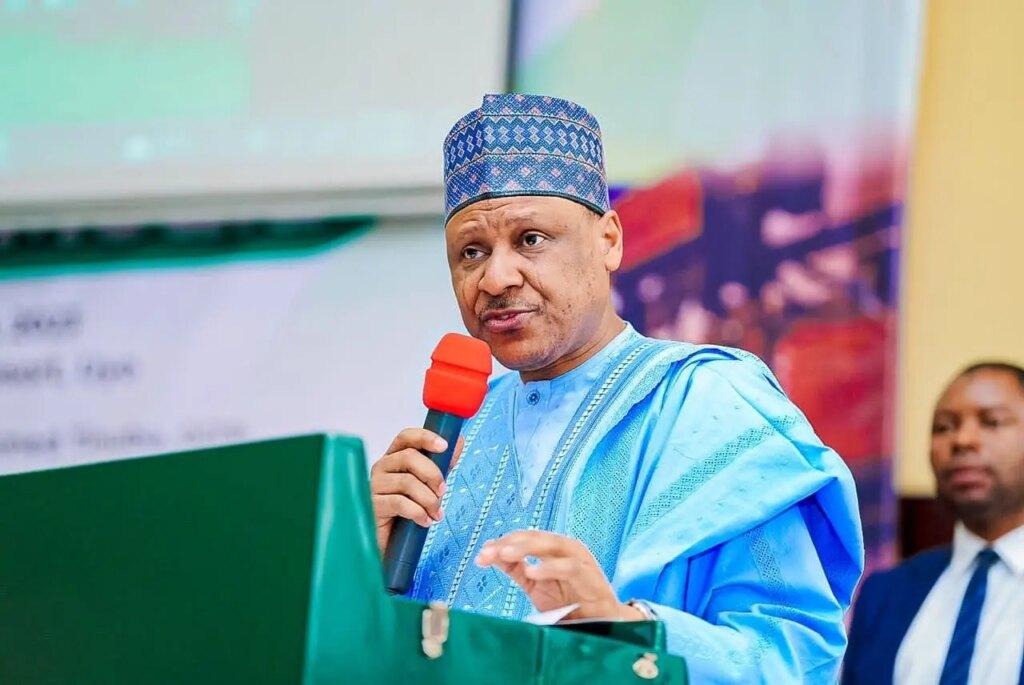
The Director of Health Planning, Research, and Statistics, Dr Kamil Soretire, stated during an interview on Friday in Abuja.
Mr Soretire explained that in 2022, healthcare spending accounted for 4.6 per cent of Nigeria’s Gross Domestic Product, with government contributions only amounting to 0.8 per cent.
He said that approximately 70 per cent to 80 per cent of the funding came from the private sector and household contributions.
According to him, there is a need for improved legislative stewardship and accountability to achieve universal health coverage.
“Households bore over 70 per cent of healthcare costs in 2022, while government schemes covered just 13 per cent,” he said.
The director urged legislators to expand social insurance coverage to alleviate the financial burden on households.
He said that primary healthcare centres received minimal funding, indicating a critical area requiring legislative support and integration with social health insurance programmes.
He noted the dominance of healthcare spending on diseases such as malaria and non-communicable diseases, underscoring the need for enhanced state-level initiatives and legislative action to improve healthcare delivery.
He said, “The 72.4 per cent of the total health expenditure contributed by households in 2022, amounted to N6.8 trillion (16 billion dollars), far exceeding the recommended 30 per cent to 40 per cent threshold. This stark figure underscores the financial strain on families and the gaps in health insurance coverage in the country. The total health expenditure (THE) for 2022 stood at N9.19 trillion (21.71 billion dollars), representing 4.6 per cent of Nigeria’s GDP. This marks an increase from 3.7 per cent and 4.3 per cent of GDP in 2020 and 2021, respectively.’’
According to him, on a per capita basis, health spending rose to 100 dollars, up from 76.3 dollars in 2020, and 88.8 dollars in 2021.
“Despite these increases, the reliance on private spending remains alarmingly high,” he said.
Speaking of public donor contribution, he said that public funds, encompassing federal, state, and local government contributions, accounted for only 14.4 per cent of the total health expenditure (N1.3 trillion or 3.14 billion dollars).
He said that the donor contributions constituted 11.6 per cent (N1.06 trillion or 2.51 billion dollars).
“This disparity highlights the heavy dependence on private funds to finance healthcare services. Government schemes contributed a mere 10.6 per cent of the revenue for financing schemes, with households providing a staggering 72.4 per cent. Other sources of financing included donor funds managed by their agencies, 9.1 per cent, social insurance revenues, 1.4 per cent, and voluntary insurance revenues, 1.1 per cent.
“In terms of expenditure type, current expenditure dominated at 96.3 per cent (N8.85 trillion or 20.90 billion dollars), while capital expenditure accounted for just 3.7 per cent (N342.8 billion or 0.81 billion dollars),” he said.
He said that secondary hospitals accounted for the largest share of health services at 34.6 per cent, followed by pharmacies and other medical goods providers at 19.3 per cent.
“Primary Healthcare Centres in spite of their critical roles provided only 7.0 per cent of the services. This skewed distribution raises concerns about the accessibility and availability of primary care services,” he said.
He said that about 55 per cent of health expenditure was directed towards communicable diseases, with malaria incurring the highest costs.
“Expenditure on reproductive health and non-communicable diseases stood at 14.3 per cent and 14 per cent respectively, highlighting the need for balanced attention across different health priorities,” he said.
Coordinator of the Africa Health Budget Network, Dr. Aminu Magashi, also stressed the urgent need for enhanced government funding and expanded insurance coverage.
Mr Magashi, who is also a health economist, noted that high out-of-pocket spending by households underlined the necessity for policies aimed at reducing financial barriers to healthcare to improve health outcomes and reduce poverty.
He suggested that increasing government expenditure and implementing comprehensive health insurance schemes could mitigate the financial risks faced by households.
He called for immediate action, stating that the data clearly showed that Nigeria’s health financing model was unsustainable.
“We need robust policies that increase public funding and ensure that health services are accessible to all, regardless of their economic status,” he said
Some of the affected households also shared their struggles.
A resident of the FCT and a school teacher, John Okeke, said that he spent a large part of his income on healthcare, “yet it is still not enough.”
Mr Okeke noted that insurance coverage was minimal, with people left to fend for themselves.
He urged the government to address the issues to reduce the financial burden on households and improve the overall health and well-being of the population.
(NAN)

We have recently deactivated our website's comment provider in favour of other channels of distribution and commentary. We encourage you to join the conversation on our stories via our Facebook, Twitter and other social media pages.

More from Peoples Gazette

States
Independence: NBA urges Nigerians to expect better future
The NBA said that ordinary Nigerians should be deriving benefit from the subsidy removal rather than hardship.

Agriculture
FG tasks ECOWAS on leveraging financing strategies for agroecology
The federal government has urged stakeholders in the agriculture and finance sectors in the West Africa region to leverage financing strategies to enhance agroecology practices

Politics
Katsina youths pledge to deliver over 2 million votes to Atiku
“Katsina State is Atiku’s political base because it is his second home.”

Abuja
Electricity Theft: Abuja residents kick over AEDC’s night enforcement
Mr Odekina said the company’s operational activities were not restricted to conventional daytime working hours.
States
Police nab two suspected robbers in Ondo
The Ondo State CP assured residents of sustained intelligence-led policing.
States
Three men impersonating Delta governor’s aides arrested for alleged N5 million fraud
The suspects were identified as Aghogho Okpogbodu (51), Moses Exist (48) and Benjamin Owah (49).
Lagos
Doherty unveils 10-point agenda, woos Lagos youths ahead of 2027 poll
Mr Doherty stated, “The time for change is now.”
Heading 3
JUST IN: Ebola hits Nigeria as Abuja hospital confirms new case
Officials told The Gazette that a woman who just returned from Uganda had been confirmed positive for the virus at Nizamiye Hospital.
NationWide
Information minister advises leaders to rebuild public trust
Mr Masari urged participants to produce practical recommendations on improving government responsiveness and citizen participation.


