

Soyinka condemns Tinubu’s speech encouraging police brutality, warns of potential revolution

Nobel laureate Wole Soyinka has rebuked President Bola Tinubu’s Sunday broadcast for failing to address police and SSS deployment of lethal force to quell #EndHunger demonstrations, which began on August 1 and are scheduled to last 10 days.
Mr Soyinka, 90, a longtime ally of the president, said Mr Tinubu’s neglect to address the matter in his minutes-long broadcast could be seen as endorsing and empowering security agencies to continue toeing the path of impunity.
“My primary concern, quite predictably, is the continuing deterioration of the state’s seizure of protest management, an area in which the presidential address fell conspicuously short,” the celebrated literature icon said in a statement on Sunday. “Such short-changing of civic deserving, regrettably, goes to arm the security forces in the exercise of impunity and condemns the nation to a seemingly unbreakable cycle of resentment and reprisals.”
Mr Soyinka condemned the use of live rounds to disperse protesters, noting that the protest itself was not unique to Nigeria alone, recounting how similar natuonwide protests took place in France as recently as 2022 and 2023.
“Live bullets as state response to civic protest—that becomes the core issue. Even tear gas remains questionable in most circumstances, certainly an abuse in situations of clearly peaceful protest. Hunger marches constitute a universal SOS, not peculiar to the Nigerian nation,” wrote the nonagenarian.
Police and SSS operatives fired live ammunition at journalists hanging around the Moshood Abiola National Stadium Abuja to cover the protests shortly after noon on Saturday.
The rear windshield of a Toyota Sienna vehicle conveying reporters from The Punch and Cable was shattered into smithereens after getting shot by the agents.
Mr Soyinka said the nation was long overdue “to abandon, permanently, the anachronistic resort to lethal means by the security agencies of governance.”
Firing live bullets at peaceful protesters who bemoaned hunger in the land, according to Mr Soyinka, symbolises an “ominous retrogression,” the kind that precedes “upheavals” and most likely “revolutions.”
“The serving of bullets where bread is pleaded is ominous retrogression, and we know what that eventually proves—a prelude to far more desperate upheavals, not excluding revolutions,” Mr Soyinka warned.

We have recently deactivated our website's comment provider in favour of other channels of distribution and commentary. We encourage you to join the conversation on our stories via our Facebook, Twitter and other social media pages.

More from Peoples Gazette

Agriculture
FG tasks ECOWAS on leveraging financing strategies for agroecology
The federal government has urged stakeholders in the agriculture and finance sectors in the West Africa region to leverage financing strategies to enhance agroecology practices

Politics
Katsina youths pledge to deliver over 2 million votes to Atiku
“Katsina State is Atiku’s political base because it is his second home.”

Anti-Corruption
Police nab two Indians, seven others over alleged N6.2 billion internet fraud
The AIG said the NPF-NCCC was also engaging international partners as part of the ongoing investigation.

Heading 4
Independence Celebration: Abia, Imo stakeholders differ on Tinubu’s performance
Mr Ubani said the stabilisation of the naira had allowed access to forex based on market forces.
Heading 3
Tinubu to address Nigerians on Independence Day
Mr Tinubu returned from a three-week vacation to Europe on Tuesday.
States
Kano govt recruits 2,037 doctors, nurses
Mr Yusuf urged the newly employed personnel to uphold high standards of professionalism.
States
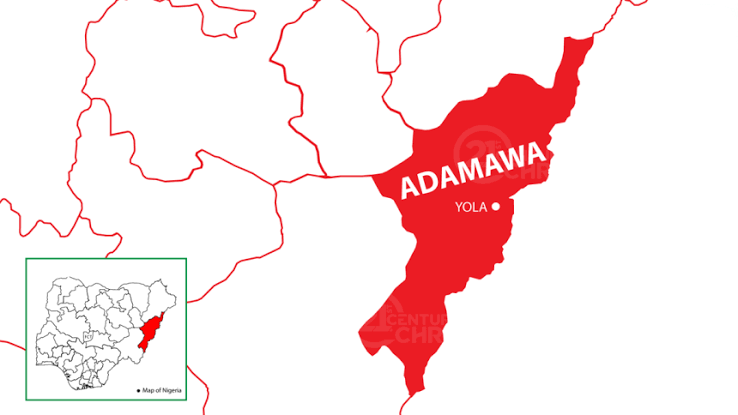
FG committed to delivering quality road projects in Adamawa: Official
The controller said that several federal government road projects in the state had been completed.
World
Three Liberians, one Ghanaian indicted for voting illegally in U.S. election
The defendants were accused of voter fraud, including making false claims of citizenship to vote and voting illegally as aliens.


