

Ginger farmers in Nigeria lost N12 billion in 2023: FG
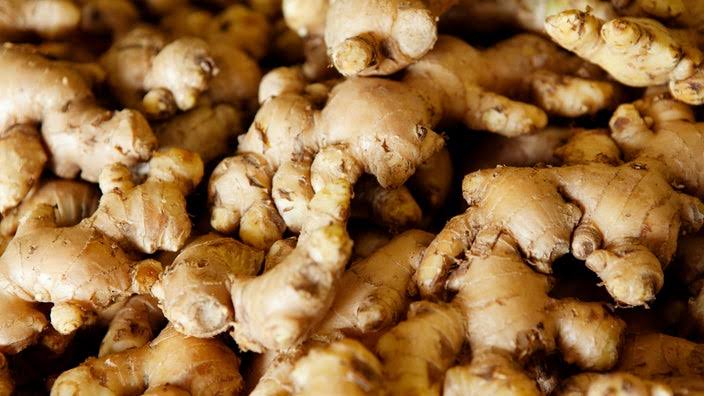
The federal government says that Nigerian Ginger farmers incurred losses amounting to N12 billion due to the disastrous disease epidemic that destroyed their crops in 2023.
Aliyu Abdullahi, Minister of State for Agriculture and Food Security, stated this at the Agricultural Insurance train – the – trainer workshop on Thursday in Abuja.
He highlighted the incidences of the 2023 wet farming season, where ginger farmers in Kaduna suffered immensely from the outbreak of the ginger blight disease.
Mr Abdullahi said that the farmers lost over 90 per cent of their total harvest for the season.
”Only a few of those ginger farmers who took our insurance protection received monetary compensation for their harvest losses. These set of farmers could boast of returning to their farms without little or no financial assistance, unlike their uninsured counterparts who had to dip into their meagre savings to be able to continue farming.
”That is some food for thought and something that we all have to bear in mind; as we are at all times one or two bad harvest seasons away from losing our food supplies,” he said.
Mr Abdullah said that the 2024 flood outlook released by the ministry of water resources and sanitation, has alerted 148 Local Government Areas (LGAs) in 31 states as high flood-risk areas.
He said that the report in the first quarter of the year, said that 249 LGAs in 36 states and the FCT fall within moderate flood-risk areas.
”In simple terms, 397 LGAs out of the total 774 LGAs in Nigeria, representing over 51 per cent of our farming areas, are at risk of flooding. We are witnessing the clear and present existential threats of climate change and its impact on our local food systems,” he said.
Mr Abdullahi said plans were on by the ministry to partner with NAIC, and PULA Advisors to incorporate Agricultural Insurance into the National Agricultural Growth Scheme Agro-Pocket (NAGS-AP) programme.
He said it was evident that climate change was real and it had become inevitable to integrate insurance as a key component of the NAGS programme, to ensure sustainability and food security.
The minister said the NAGS-AP programme which commenced in the 2023 dry season with wheat cultivation had resulted in bountiful harvest.
(NAN)

We have recently deactivated our website's comment provider in favour of other channels of distribution and commentary. We encourage you to join the conversation on our stories via our Facebook, Twitter and other social media pages.

More from Peoples Gazette

States
Independence: NBA urges Nigerians to expect better future
The NBA said that ordinary Nigerians should be deriving benefit from the subsidy removal rather than hardship.

Agriculture
FG tasks ECOWAS on leveraging financing strategies for agroecology
The federal government has urged stakeholders in the agriculture and finance sectors in the West Africa region to leverage financing strategies to enhance agroecology practices

Politics
Katsina youths pledge to deliver over 2 million votes to Atiku
“Katsina State is Atiku’s political base because it is his second home.”

States
Forum pledges support for Bago’s administration
According to the minister, the forum’s support for the governor was non-partisan

States
Imo police detain inspector, two civil guard officers over N15,000 extortion
The motorist accused the officers of extorting N15,000 from him for parking wrongly while his mechanic was test-running his vehicle.

States
Kaduna has mainstreamed mental health: Gov Uba Sani
According to Governor Uba Sani, mental health screening is now part of the normal maternal and child health services in Kaduna State.

World
South Sudan court jails soldier for killing UN worker, awards 51 cattle heads to victim’s family
The military court also demoted and expelled the soldier from the South Sudan People’s Defense Forces as part of his punishment.

States
No terrorist colony, ungoverned space in Niger: Gov Bago
Mr Bago acknowledged that there are parts of the state that are being attacked by terrorists who come in from some border states.

States
Ondo police arrest driver over death of VIO officer
The police said the victim sustained serious head injuries and was immediately rushed to hospital, where he was confirmed dead.


