

ECOWAS Standby Force will stabilise democracy in West Africa: Group

The Abuja School of Social and Political Thought has said establishing an ECOWAS Standby Force will have a pragmatic impact on the sub-region’s development.
Director of the School, Dr Sam Amadi, stated this at a policy dialogue with the theme, “Peace and Democracy in West Africa: The Need for an Effective Standby Force’’ on Friday in Abuja.
The proposed standby force being formed by ECOWAS is to consist of military, police and civilian components to address security threats within the sub-region.
Mr Amadi said that the proposal by the ECOWAS Heads of State for the force was aimed at reinforcing a stable environment for democracy to continue to thrive in West Africa.
He said. “For us, the standby force or dealing with the state of the coup in West Africa has a pragmatic impact for development. If you look at the West African region, it is probably the poorest region in the world, in terms of Gross Domestic Products growth, income-poverty, vulnerability and all levels of multidimensional poverty. If you factor that to our high standing in terms of terrorism index and state failure index, it’s really a dangerous mix of poverty, instability, and endemic fragility. That’s why the Abuja School has taken the idea of thinking on how to look for ideas that can constitute the trigger for a much more pragmatic policy for them.’’
Mr Amadi said that the dialogue was to examine the effectiveness of the ECOWAS Standby Force in addressing regional security challenges such as terrorism, internal conflict, and regime instability.
He said that the choice of the topic was important, considering recent developments in West Africa, especially cases of coups in the sub-region.
He noted that some were successful, while others were unsuccessful, with Mali, Niger and Burkina Faso no longer operating democracy.
A professor of Political Science at the Nasarawa State University, Keffi, Jideofor Adibe, in his presentation, said that the standby force was not a new concept, as it was initiated in 2001 by the African Union in five regions.
He said the aim at the time was to have 25,000 personnel from three regional economic communities and two regional mechanisms.
“At that time, it was expected to be multidisciplinary, comprising the military, the police and civilian contingents that act under the direction of the African Union,” he said.
Mr Adibe said that globally, different regions have their different attempts at establishing a standby force, but no nation had been able to have an effective standby force.
He identified corruption, inadequate equipment and technology, peculiar interests by past colonial masters as some of the challenges confronting the effectiveness of the force.
On his part, a former Commander of Operation Safe Haven, Maj.-Gen. Nicholas Rogers (retd) said that it would take time for the ECOWAS Standby Force to materialise.
He said the force was meant to be deployed whenever there is a crisis between ECOWAS member states.
He said they were meant to be deployed in a situation of internal conflict leading to humanitarian catastrophes that could also jeopardise the ECOWAS region’s peace.
He noted, “It was also meant to challenge the issue of regime change by force and when there is a major violation of human rights issues. But if you ask me today, I will tell you none of these reasons can hold fast.’’
Mr Rogers identified loopholes in the operational framework of ECOWAS, inadequate funding, instability and language barrier as some of the challenges facing the operation of the force.
He said the issue of a standby force could only work when countries have similar identities and technology, peace in about 75 per cent of the countries involved.
“It is difficult for a region that is economically poor to have a standby force, because you’re talking about equipment, technology, troops on the ground, allowance for the troops, medical programmes and air support. You don’t do standby forces with just paperwork; you must have the financial capability and technology to be able to say you want to have a standby force,’’ he said.
Mr Rogers also stressed the need to review the operational framework of ECOWAS, if the standby force must work.
Speaking on the security situation in the country, Mr Rogers urged the Nigeria government to continue to support the security agencies.
He said the support should be in terms of recruiting and training more personnel, acquiring more modern technology and equipment.
He also stressed the need for Nigerians to give the needed support to the security agencies, calling for attitudinal change among Nigerians and security officers, especially police officers.
(NAN)

We have recently deactivated our website's comment provider in favour of other channels of distribution and commentary. We encourage you to join the conversation on our stories via our Facebook, Twitter and other social media pages.

More from Peoples Gazette

Agriculture
FG tasks ECOWAS on leveraging financing strategies for agroecology
The federal government has urged stakeholders in the agriculture and finance sectors in the West Africa region to leverage financing strategies to enhance agroecology practices

Politics
Katsina youths pledge to deliver over 2 million votes to Atiku
“Katsina State is Atiku’s political base because it is his second home.”

Economy
Ogun, NNPC partner to revive Olokola LNG as $7 billion port, marine economy project shapes up
Ogun state and NNPC have started plans to revive the long-abandoned Olokola Liquefied Natural Gas (OKLNG) project in Ogun Waterside.

World
Jealous killer Christa Pike survives two lethal injections, hospitalised
Ms Pike remained conscious and was snoring loudly despite receiving two doses of lethal injections in a botched attempt by prison officials to carry out her death sentence.
Politics
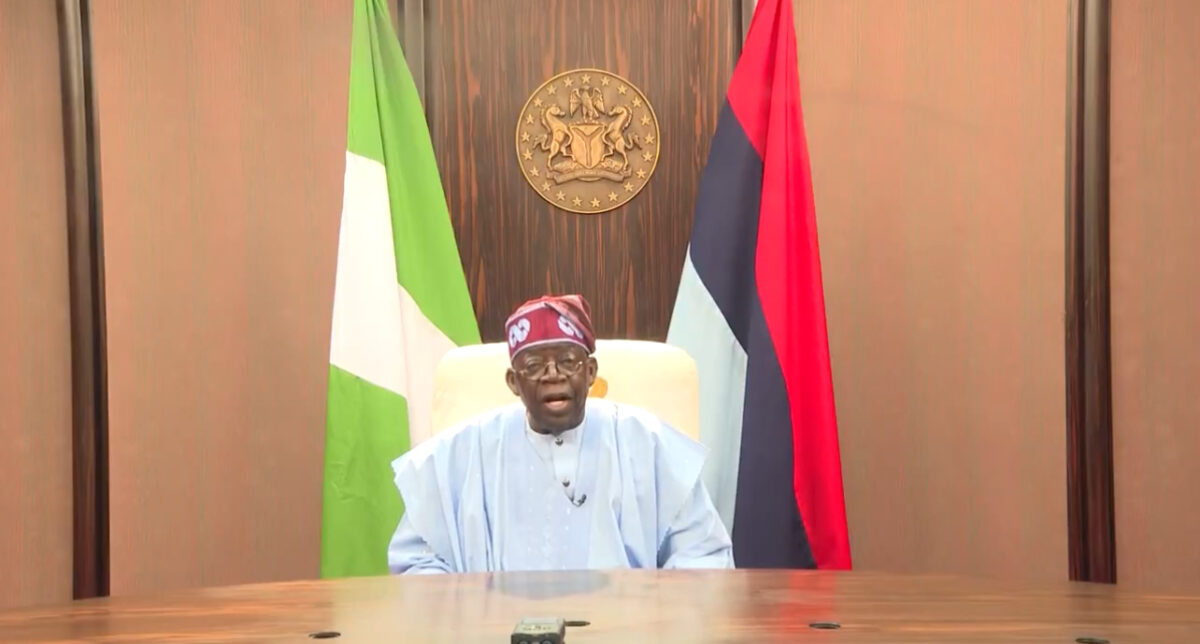
FULL TEXT: Tinubu’s October 1 Independence Day speech
Our journey has not always been easy. In truth, it has generally been too hard for too many. We have known moments of great hope and periods of profound disappointment.
Economy
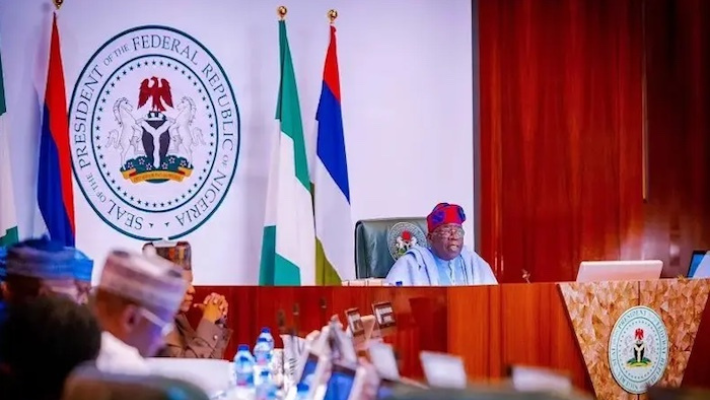
It’s time to share prosperity with Nigerians; my reforms have worked, Tinubu declares
“The emergency treatment is over,” the president declared. “The foundation has been repaired. The central economic task before us has changed.”

Economy
Tinubu shuts down ‘siren song’ of restoring fuel subsidy, says Atiku, others ‘regressive’
“Influential but regressive voices would have us abandon the treatment and return ourselves to the abuse of addictive subsidies, we must resist their siren song,” said Mr Tinubu.
World
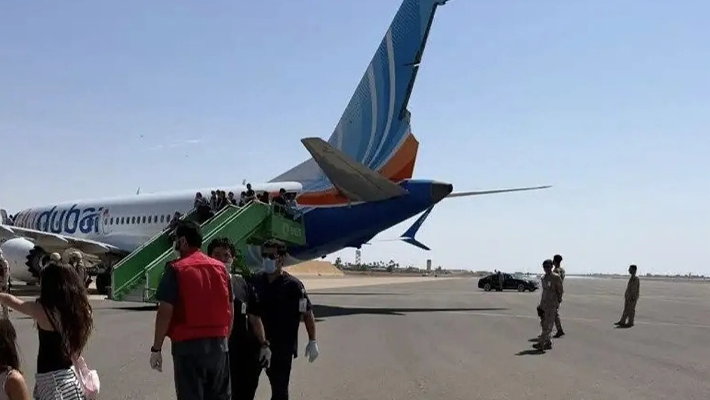
Guterres condemns Flydubai mid-air attack, says tragedy averted
The UN chief condemned actions that could endanger passengers and compromise the safety of international civil aviation.


