

32,407 mpox cases recorded with 840 deaths in 2024: CDC
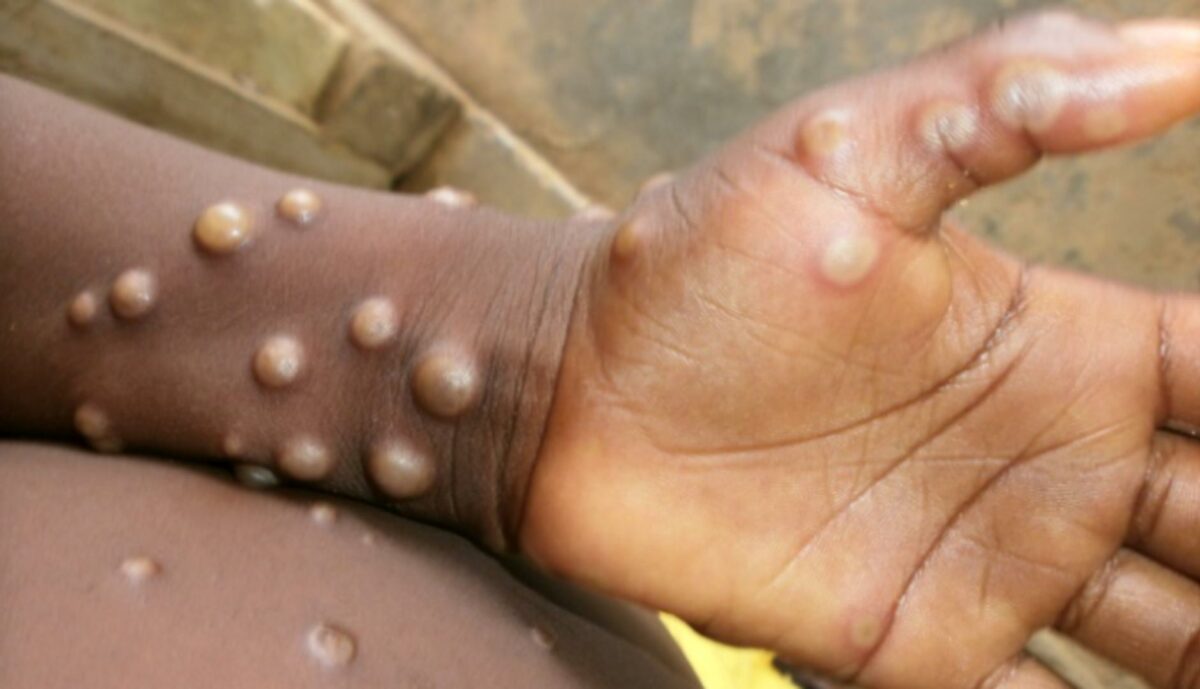
According to the Africa Centres for Disease Control and Prevention (CDC), there is over 194 per cent increase this 2024 in Mpox outbreak compared to the same time in 2023.
Since January 2024 till September, a total of 32,407 cases of Mpox have been reported, of which 6,441 were confirmed and 840 deaths have been reported.
Of these, the Central Africa Region accounts for 90 per cent of all cases reported.
The Africa CDC notes that the cases of mpox are steadily increasing across all affected countries, with gaps and challenges in surveillance, contact tracing and follow-up, and data quality.
The World Health Organisation (WHO) describes mpox as an infectious disease that can cause a painful rash, enlarged lymph nodes, fever, headache, muscle ache, back pain and low energy.
Previously known as monkeypox, mpox is a viral illness caused by the monkeypox virus, a species of the genus Orthopoxvirus.
There are two distinct clades of the virus: clade I (with subclades Ia and Ib) and clade II (with subclades IIa and IIb).
A global outbreak of Clade IIb began in 2022 and continues to this day.
There are also rising outbreaks of clades Ia and Ib affecting the Democratic Republic of the Congo and other countries in Africa, and as of August 2024, clade Ib has also been detected beyond Africa.
At present, mpox continues to be a threat with an upsurge of cases in the Democratic Republic of the Congo and other countries caused by clades Ia and Ib, thereby raising concern.
Speaking with journalists in Lagos, Bannet Ndyanabangi, Vice President of Global Programmes at VillageReach, highlighted some of the steps that African nations could take to boost resilience in their health systems.
In the face of the current mpox outbreak, he said it was important to have in place health systems that respond to the needs and preferences of underreached communities.
According to him, strong, resilient health systems can adapt to shocks and emergencies and reach hard-to-reach communities.
He said that community engagement to contain the outbreak was necessary to ensure no one was left behind, particularly those at risk.
This, he said, should prioritise access to testing, fair and equitable access to vaccines, and establishing agreements with manufacturers to ensure timely delivery during emergencies.
VillageReach transforms health care delivery to reach everyone, so that each person has the health care needed to thrive.
It develops solutions that improve equity and access to primary health care, with the work increasing access to quality health care for 70 million people in sub-Saharan Africa.
“Mpox is another wake-up call.
“The pandemic has highlighted the need for equitable distribution of vaccines; we need to look at future responses, prioritising fair access and ensuring it is not sidelined in global health strategies.
“ We need to increase vaccine uptake where available.
“ We need to do contact tracing and then care for those affected,’’ he said.
Mr Ndyanabangi highlighted the importance of digital supply chain management as well as training healthcare workers and supply chain managers to improve incident management.
According to him, there is a need for Africa to initiate its own local manufacturing.
He mentioned that to reduce dependency on international supply chains, African countries like Nigeria could spearhead local manufacturing of vaccines and essential items, based on the country’s vast capacity and resources.
“We need to initiate and support local manufacturing of vaccines, personal protective equipment (PPE), and other medical supplies to reduce dependency on international supply chains.
“Let us start with looking at really ensuring that countries can produce the PPEs, the vaccines and their testing kits.
“So, local production is what we need to look at in the medium term, that is, local manufacturing of these critical supplies.
“Before you talk of the supply chain, you need to know where to get the supplies. So, we need to accelerate local manufacturing.
“Countries like Nigeria can do this. They have the capacity and the resources. This will reduce dependency on international supply chains, reduce challenges that we observe and thereby setup sufficiency.’’
Mr Ndyanabangi also recommended public-private partnerships to optimise the distribution of essential goods and vaccines and foster collaborations between the government and private sector.
“This usually facilitates a bigger response during health emergencies.’’
He said that it was also important to adopt digital supply chain management, as utilising technology would enhance supply chain efficiency.
He said that training and capacity building are also critical.
He also noted that surveillance as well as research and development are important in containing the Mpox outbreak.
“Finally, surveillance. You need a good surveillance system to track and understand the spread of the outbreak so that the response is better targeted.
“Research, we need Africa investing in research and development and support for our researchers,’’ he said.
WHO and all entities are collaborating to stem the mpox outbreak, which the Africa CDC declared a Public Health Emergency of Continental Security on August 13.
Abdou Gueye, regional emergency director, World Health Organisation Africa Region (WHO AFRO), had earlier shared WHO’s field efforts since the declaration of the mpox outbreak.
According to him, the WHO has been working effectively and collaborating with all entities to stem the public health emergency.
He also emphasised the importance of early detection, robust health systems, and community engagement.
Mr Gueye said that some of WHO’s efforts included supporting diagnostic capabilities, treatment guidelines, and community engagement across African countries.
He said that WHO was also working to make sure that all manufacturers that could produce vaccines, diagnostic and therapeutics were being put in touch with those who could fund them.
(NAN)

We have recently deactivated our website's comment provider in favour of other channels of distribution and commentary. We encourage you to join the conversation on our stories via our Facebook, Twitter and other social media pages.

More from Peoples Gazette

States
Independence: NBA urges Nigerians to expect better future
The NBA said that ordinary Nigerians should be deriving benefit from the subsidy removal rather than hardship.

Agriculture
FG tasks ECOWAS on leveraging financing strategies for agroecology
The federal government has urged stakeholders in the agriculture and finance sectors in the West Africa region to leverage financing strategies to enhance agroecology practices

Politics
Katsina youths pledge to deliver over 2 million votes to Atiku
“Katsina State is Atiku’s political base because it is his second home.”

Heading 2
Tinubu describes Uduaghan’s death as loss to Delta, Nigeria
Mr Tinubu urged the people of Delta to draw strength from Mr Uduaghan’s years of service.

Diaspora
U.S. court sentences Chukwuemeka Amachukwu to eight years in prison over $15 million fraud
Mr Amachukwu was sentenced after pleading guilty.

States
Gov. Oyebanji inaugurates aviation fuel depot in Ado-Ekiti
The governor said the ground lighting project would cost more than N10 billion.

Anti-Corruption
FEC did not approve $6 billion Mambilla contract, former governor Imoke tells court
The former governor said he served as minister between August 2003 and November 2006.

States
Troops foil kidnapping attempt, rescue 11 passengers in Kogi
The acting spokesperson said the incident occurred on Sunday while the troops were on routine patrol.
Heading 5
2027: Amupitan assures INEC workers of improved welfare, remuneration
Mr Amupitan urged the staff to steer clear of partisan politics.


