

54 million Nigerians, other Africans to live with hearing loss by 2030: WHO

About 40 million people live with hearing loss in the African region, but the figure could rise to 54 million by 2030 if urgent measures are not take to address the problem, according to a new World Health Organisation (WHO) report.
Hearing loss has profound impact on human lives and economies, costing Africa $27 billion annually, according to the Status Report on ear and hearing care in the WHO African Region, launched today during the African Summit on Hearing Impairment in Nairobi, Kenya.
Without urgent interventions, widespread hearing loss, which disproportionately affects poor and vulnerable populations, will continue to escalate, amplifying existing inequalities in health services access across Africa.
For children, the far-reaching consequences of hearing loss include delays in language development, raising the risk of poor educational outcomes and limited future career prospects. Adults with untreated hearing loss often face isolation, loneliness and an increased risk for depression and dementia.
The report identifies multiple factors driving the surge in prevalence of hearing loss in the African region.
Primary among these is an acute shortage of ear and hearing care (EHC) specialists, as well as maldistribution of available workforce to the advantage of urban areas.
More than 56 per cent of African countries, for example, have only a single ear, nose and throat (ENT) specialist for every million people. In comparison, the European region has about 50 for every million people.
More than three-quarters of African countries, meanwhile, have fewer than one audiologist and one speech and language therapist for every one million people.
In addition, although 33 million Africans could benefit from a hearing aid, only about 10 per cent have access due to lack of EHC financing, and consequent high costs.
Data from 43 African countries show that while 36 countries provide EHC services at the tertiary level, similar services are not offered at primary care level.
This is despite the fact that the common causes of hearing loss are mostly preventable through simple public health interventions, or measures to mitigate the risk factors.
Among children living in low- and middle-income countries, the report said, up to 75 per cent of hearing loss is due to preventable causes such as infections and common ear diseases as well as birth complications.
Yet, the analysis found that most countries do not routinely conduct hearing screening of newborns.
Even in countries with EHC programmes, EHC interventions are not integrated into such priority health programmes as school health programme, and occupational health or healthy ageing programme.
This challenge, the authors said, was compounded by the lack of national policies and plans for strengthening delivery of EHC, and low implementation levels even where these plans exist.
In addition, 35 per cent of countries do not have a budget allocated to EHC activities, with patients having to bear the entire cost of any related treatment and care.
Among other things, the report recommends that countries leverage the report to galvanise action at the highest level, including advocating for policies focused on EHC and related activities.
EHC should also be urgently integrated into existing programmes to optimize use of scarce resources. public-private partnerships should be explored by governments towards strengthening EHC services.
The report also highlighted the need for dedicated financing for EHC, to equip facilities and deliver products and technologies, and to optimise EHC research and development and health workforce capacity strengthening.

We have recently deactivated our website's comment provider in favour of other channels of distribution and commentary. We encourage you to join the conversation on our stories via our Facebook, Twitter and other social media pages.

More from Peoples Gazette

States
Independence: NBA urges Nigerians to expect better future
The NBA said that ordinary Nigerians should be deriving benefit from the subsidy removal rather than hardship.

Agriculture
FG tasks ECOWAS on leveraging financing strategies for agroecology
The federal government has urged stakeholders in the agriculture and finance sectors in the West Africa region to leverage financing strategies to enhance agroecology practices

Politics
Katsina youths pledge to deliver over 2 million votes to Atiku
“Katsina State is Atiku’s political base because it is his second home.”

Hot news Home top
PDP tackles Gov Diri for snubbing Tinubu in APC campaign billboards
The party accused Mr Diri of being reluctant to identify with Mr Tinubu’s re-election campaign despite defecting to the APC.

Hot news Home top
Flamingos make history, beat Japan to win first-ever U-17 Women’s World Cup
Despite a defeat in their group opener, the Nigerian team returned to winning ways, with six consecutive victories.

Agriculture
FG targets 600 Niger farmers for N300,000 interest-free loans
The loans are under the Government Enterprise and Empowerment Programme (GEEP).
States
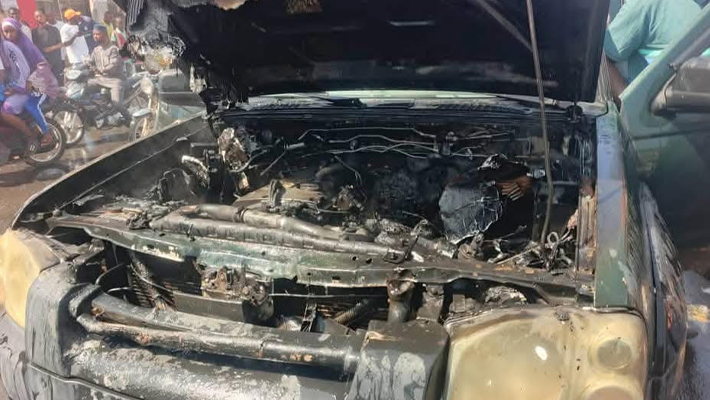
Firefighters contain vehicle fire in Ilorin
The vehicle, with registration number LAF 154 AE, caught fire while in motion on Saturday.

Sport
Man City lose to Nottingham Forest as Arsenal pip Hull City to extend lead on EPL table
Jair Cunha opened the scoring in the 6th minute, while Liam Delap made it two for Nottingham Forest in the 18th minute.

Africa
Ghana police arrest 57-year-old man for alleged shoplifting
The suspect was arrested on Thursday by the Somanya District Police Command.


