


Association kicks against cargo tracking bill
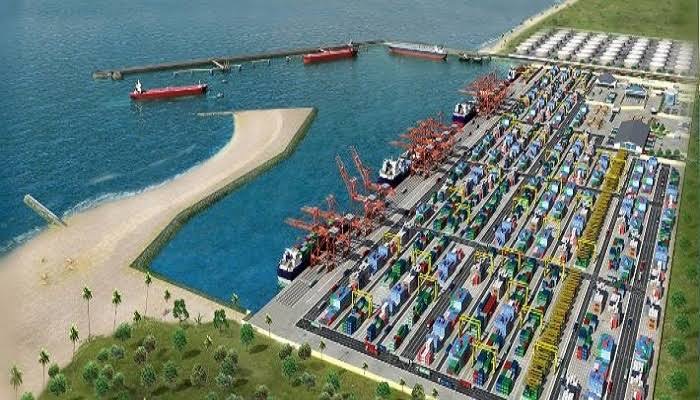
The chairman of Shipping Lines Association of Nigeria, Boma Alabi, has criticised the Cargo Tracking Bill, describing it as “another toll gate for the government.”
Ms Boma expressed the association’s concern for the bill at a public hearing organised by the House of Representative committees on shipping services, customs, port and harbour and maritime safety, education and administrations.
Ms Boma, who spoke on the circumstances surrounding the non implementation of the international cargo tracking, said that it would not enhance the ease of doing business and trading in Nigeria.
According to her, the shipping industry in Nigeria is already over burdened with red tape and certainly does not require another layer of bureaucracy which is what the proposed cargo tracking bill would result in.
“All exporters and importers are able to track their goods on the website of the shipping lines generally speaking.
“In addition, the shipping lines have to upload their manifest to the Customs Services portal which is connected to the Central Bank of Nigeria (CBN) single window.
“They also have to upload this information to the Nigerian Port Authority (NPA) , the Nigerian Maritime Administration and Safety Agency (NIMASA), the National Drug Law Enforcement Agency (NDLEA), and the Department of State Security (DSS).
“Adding the cargo bill without streamlining the existing process will only result in further delays and congestion,” she said.
Earlier, the executive secretary of the Shippers Council of Nigeria, Pius Akutah, told the committee that the country lost $2.5 billion dollars in five years over the non implementation of the International Cargo Tracking Notes (ICTN).
“If we implement it, that is what we should be able to put in the economy, within a period of two years.
“This is just part of what Nigeria is losing,” he said.
On his part, the chairman of the committee on shipping services and related matters, Rep. Abdussamad Dasuk, said that the ICTN is far more than an administrative requirement.
He said that the ICTN remains an essential tool designed to bring transparency, security, and operational efficiency to the movement of cargo across borders.
He, however, ruled that further legislative consultations and actions would be taken on the bill.
(NAN)

We have recently deactivated our website's comment provider in favour of other channels of distribution and commentary. We encourage you to join the conversation on our stories via our Facebook, Twitter and other social media pages.

More from Peoples Gazette

Agriculture
FG tasks ECOWAS on leveraging financing strategies for agroecology
The federal government has urged stakeholders in the agriculture and finance sectors in the West Africa region to leverage financing strategies to enhance agroecology practices

Politics
Katsina youths pledge to deliver over 2 million votes to Atiku
“Katsina State is Atiku’s political base because it is his second home.”

Abuja
Abuja varsity students lament transport hardship on campus
Another student, Fortune Chukwuneme, said some tricycle operators avoid distant faculties and prefer routes with higher passenger demand.

Economy
FG boosts financing, international route opportunities for indigenous airlines
“Over 90 per cent of international passenger traffic from Nigeria is still being carried by foreign airlines,” he said.

Lagos
LASHMA recruits Ilera-Ibile officers to deepen community participation
The LASHMA permanent secretary stated that the agency would in August announce a new policy of the scheme.

Africa
Zimbabwean lawmakers vote tenure elongation for sit-tight Robert Mugabe’s successor 83-year-old Pesident Mnangagwa
The development comes barely a year after Mr Mnangagwa said he would step down after his second term.

Heading 4
Kaduna has keyed into Tinubu’s reform agenda: Uba Sani
Mr Sani noted that the reforms had already started yielded tangible results.

Lagos
Building Collapse: Lagos insists on periodic structural integrity tests
The general manager said the policy was aimed at preventing avoidable building collapses through proactive monitoring and compliance.


