

Stakeholders seek adequate reporting of bullying in schools

Some education sector stakeholders in the South-South region have called for adequate reporting and documentation of bullying in secondary schools.
The stakeholders who spoke during a survey in Rivers, Akwa Ibom and Cross River said many cases of bullying in schools were left unreported.
Bassey Akpan, a retired school principal in Uyo, said bullying had become a hydra-headed monster starring the school system in the face.
The former executive officer of the All Nigerian Confederation of Principals of Secondary Schools (ANCOPSS) in Akwa Ibom said the authorities needed to determine effective ways of tackling the issue of bullying in schools.
“School authorities should stand firm in condemning bullying and meting adequate punishments on perpetrators,” he added.
Also speaking, Sunday Akpan, a serving vice principal in a technical college in Akwa Ibom, said the authorities should discourage bullying in schools.
“To tackle bullying, the students involved should be penalised; it can be through suspension or asking the parents or guardians of the perpetrator to pay a fine,” he said.
An Akwa Ibom-based civil rights activist, Bassey Emenim, also expressed concerns over the non-reportage of cases of bullying in secondary schools.
“The fact remains that we must encourage effective reporting and documentation of bullying. We must also sensitise school children to the need to stay away from bullying,” he said.
Charles Inyang, a resident of Uyo, said his 13-year-old son had faced bullying by senior students in a public secondary school.
“We need to all speak up. Bullying is dangerous; it can lead to both physical and emotional injuries,” Mr Inyang said.
Ubokmfon Williams, the chairman of the National Association of Proprietors of Private Schools (NAPPS) in Akwa Ibom, said students in private boarding schools faced some bullying, especially outside school hours.
“Teachers and other members of staff in schools should be more vigilant. Most cases of bullying occur after school hours.
“With the right supervision and vigilance, the right interventions will be made to ensure that no one is bullied during and after school hours,” he said.
MacFarlane Ejah, a Calabar-based public affairs analyst and a chartered mediator, said that the privileged class bullied the others politically and economically in the country.
“We need to start asking ourselves what our laws say about bullying. Are there people who are spared because of their status in society?
“It is the level of implementation of the laws against bullying in our society that will determine whether we encourage it as a people or not,” he said.
Grace Etuk, the head of the social works department at the University of Calabar, stated that bullying was an expression of aggression, which often begins from home.
Ms Etuk urged children to resist being bullied by others, saying, “They have to be strong and stand against such behaviours.”
Godwin Okwu, a Cross River-based private school operator, said bullying could be reduced if teachers were made to play the “house parent” role in dormitories.
He said having house parents would ensure proper monitoring and discipline within the dormitory instead of leaving such a role in the hands of fellow students.
In Rivers, some education sector stakeholders called for more effective sensitisation to bullying to instil moral values in students and enthrone discipline in schools.
Prince Wiro, the Centre for Basic Rights and Accountability Campaign’s national coordinator, said school operators should seek collaborations with relevant authorities, including the security agencies, to enlighten students on the dangers of bullying.
Henrietta Ogoh, a guidance and counselling expert, said bullying had become worse because of the presence of gangs and drug addicts in schools.
Ms Ogoh said, ”Schools should devote time every week to anti-bullying, cultism and drug abuse seminars for their students.”
Another respondent, Hilda Desmond, a lawyer and women/children rights activist, called on regulatory authorities to ensure age appropriateness before sending their children to secondary schools.
“It makes no sense sending a nine-year-old child to secondary school; the possibility of bullying is just there because the child lacks the emotional power to cope with a high school environment,” she said.
Isijana Adasi, an education consultant, called for more commitment from school operators to tackle bullying effectively.
“There is a crucial need for adequate reporting of cases of bullying. Bullying is dangerous and unacceptable,” Mr Adasi said.
(NAN)

We have recently deactivated our website's comment provider in favour of other channels of distribution and commentary. We encourage you to join the conversation on our stories via our Facebook, Twitter and other social media pages.

More from Peoples Gazette

States
Independence: NBA urges Nigerians to expect better future
The NBA said that ordinary Nigerians should be deriving benefit from the subsidy removal rather than hardship.

Agriculture
FG tasks ECOWAS on leveraging financing strategies for agroecology
The federal government has urged stakeholders in the agriculture and finance sectors in the West Africa region to leverage financing strategies to enhance agroecology practices

Politics
Katsina youths pledge to deliver over 2 million votes to Atiku
“Katsina State is Atiku’s political base because it is his second home.”

Economy
New master plan to grow capital market to N750 trillion: SEC
The Securities and Exchange Commission says the new Nigeria Capital Market Master Plan (NCMMP) 2.0 targets market growth from N250 trillion to N750 trillion.

Economy
Shell to sell Nigeria gas distribution business to Vaaris Energy
Meanwhile, the company said the transaction was still subject to regulatory approval, and Shell Nigeria Gas Group would remain part of Shell until the deal was sanctioned.
States
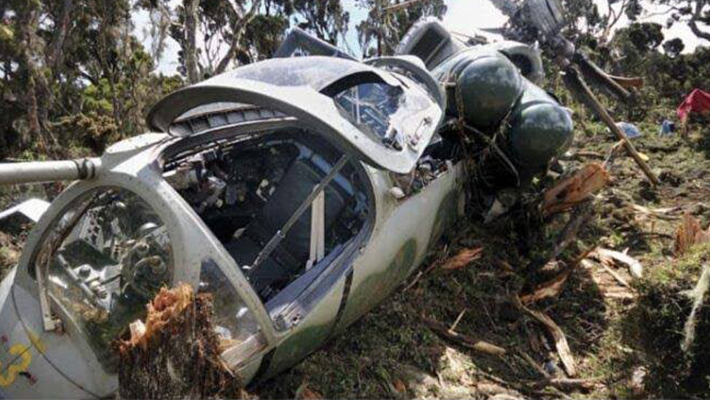
NAF recovery team, navy, NSIB divers recover crashed aircraft components
The Nigerian Air Force says recovery teams have retrieved additional components from its ATR 42-500 aircraft that crashed in Igbokoda village of Ondo.

NationWide
Tinubu govt commits N84 billion to ending child marriage by 2030
The federal government has proposed N84.48 billion to implement a five-year national strategy to end child marriage by 2030.
Health
Accountability key to better health service delivery: Aig-Imoukhuede
Aig-Imoukhuede Foundation’s chief says effective leadership, a skilled health workforce and strong accountability systems are critical to improving primary healthcare delivery.

Economy
IMF advises countries to replace fuel subsidies with targeted support for poor people
The International Monetary Fund has urged countries to replace blanket fuel subsidies with targeted support for vulnerable households.


