

Chikwe Ihekweazu on Nigeria’s battle with COVID-19 and lessons nations must abide from pandemic

The year 2020 was an annus horribilis. For those wondering the meaning of the word, it dates back to 1891, but it returned to modern use when the late Queen of England, Elizabeth II, delivered her speech at the end of 1992 wherein she described the year as one she would rather forget.
In the said year, the Queen’s household witnessed unprecedented chaos. Her only daughter and Princess Royal, Anne, got divorced, but that was not all. The Queen’s second son, Prince Andrew, and his wife, Sarah–the Duchess of York–parted ways in a highly publicised manner, which saw the press publishing Sarah’s nude photos.
A book on England’s sweetheart, Princess Diana, exposing the affair of her husband and future king, Prince Charles, with Camilla Parker Bowles–a married woman–meant that all of the Queen’s children who were married at the time were getting divorced. To top it off, fire gutted Windsor Castle, destroying 115 rooms. It was an earth-shattering year that almost demystified one of the world’s most revered institutions.
But in hindsight, the Queen’s travails were nothing compared to what the world would witness in 2020, giving the word ‘annus horibilis’ a more vicious meaning.
The COVID-19 pandemic was a cataclysmic event which threatened the very existence of mankind and led to the deaths of millions, upending the economy and worsening global poverty.
Sadly, four years later, its direct and indirect effects are still felt worldwide. The economic problems caused by the pandemic left long-term effects that still affect the world’s political system. Many countries with high poverty rates and weak political systems witnessed coups from Mali to Burkina Faso, Guinea and Niger, as well as coup attempts in countries like Guinea Bissau and Sierra Leone.
In countries with more formidable democracies, the consequences of COVID-19 helped accentuate existing economic challenges which have begun altering the political order. In the West, the economic consequences have triggered a wave of anti-migrant sentiments and deepened right-wing nationalism, with ruling and liberal parties in several countries losing elections.
From the United States to the UK, France, and Germany, wealthy countries have to cut down on spending due to budget deficits. This means that these countries are making fewer donations to less endowed countries. When the Ukraine-Russia crisis is added into the mix, statistics show that donations to Africa have dropped to a 20-year low. This is expected to exacerbate the continent’s existing challenges.
According to the UN’s World Economic Situation and Prospects report, prospects for a robust global economic recovery remain dim as the lingering effects of the COVID-19 pandemic continue. Sadly, like a mother quickly forgets the pains of labour after delivering a baby, the world has confined to distant memory their experiences of the COVID-19 pandemic.
The book, ‘An Imperfect Storm’ by erstwhile Nigerian CDC boss Chikwe Ihekweazu and his wife, Viviane, thus helps to preserve history and puts into recent context the happenings of the time, albeit from a Nigerian perspective.
The 263-page memoir offers a periscope of the challenges and successes encountered in the COVID-19 response of Africa’s largest country.
It also puts into proper perspective the gravity of the COVID-19 challenge vis-a-vis the capacity of Nigeria. Chikwe, in short, transformed a backwater government agency without a website or a functional reference laboratory in 2016 into one of Nigeria’s most vital and efficient government agencies when he exited in 2021.
Although COVID-19 is the central theme of the book, it is interspersed with events in Chikwe’s personal life, starting from when his parents met and fell in love in Germany to their return to Nigeria shortly after the Biafra war to contribute their quota to Nigerian society as well as how his decision to become a medical doctor was influenced by his father being a physician choice. He also narrates how his mother’s death in a car accident altered his life.
Chikwe exposes how Nigeria’s failure to invest in the health sector and politics undermined the country’s preparedness to tackle COVID-19 at the early stages and how sheer doggedness on the part of NCDC staff helped avert a doomsday prediction.
Eniola Akinkuotu is a journalist based in Abuja

We have recently deactivated our website's comment provider in favour of other channels of distribution and commentary. We encourage you to join the conversation on our stories via our Facebook, Twitter and other social media pages.

More from Peoples Gazette

States
Independence: NBA urges Nigerians to expect better future
The NBA said that ordinary Nigerians should be deriving benefit from the subsidy removal rather than hardship.

Agriculture
FG tasks ECOWAS on leveraging financing strategies for agroecology
The federal government has urged stakeholders in the agriculture and finance sectors in the West Africa region to leverage financing strategies to enhance agroecology practices

Politics
Katsina youths pledge to deliver over 2 million votes to Atiku
“Katsina State is Atiku’s political base because it is his second home.”

States
NDPHC begins project to end 15-year blackout in Kaduna community
Mr Agim said the Rigasa project underscored NDPHC’s commitment to extending critical electricity infrastructure beyond generation.

Politics
Nigerians are happy with Tinubu’s leadership; he has earned their support: APC Chairman
Mr Yilwatda said the APC was proud to present what he described as the most competent and credible presidential candidate.

States
Gunmen kill woman, injure two farmers in Plateau
The victims were attacked while harvesting groundnuts at their farms in the village.

Politics
2027: Shettima, Uba Sani rally support for Tinubu’s re-election
Mr Shettima urged Kaduna residents to renew the mandates of Messrs Tinubu and Sani, saying the APC is committed to continuity and development.
World
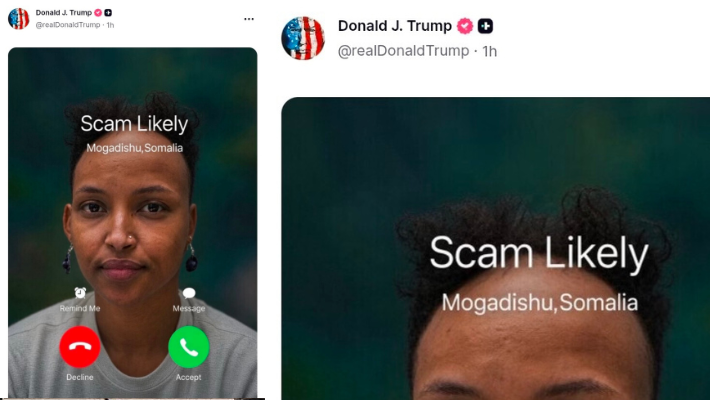
Trump posts meme tagging Ilhan Omar ‘scam from Somalia’
Mr Trump posted a screenshot of an incoming phone call with a portrait of Ms Omar without her hijab and inscription that reads: “Scam likely from Mugadishu, Somalia.”
Heading 5
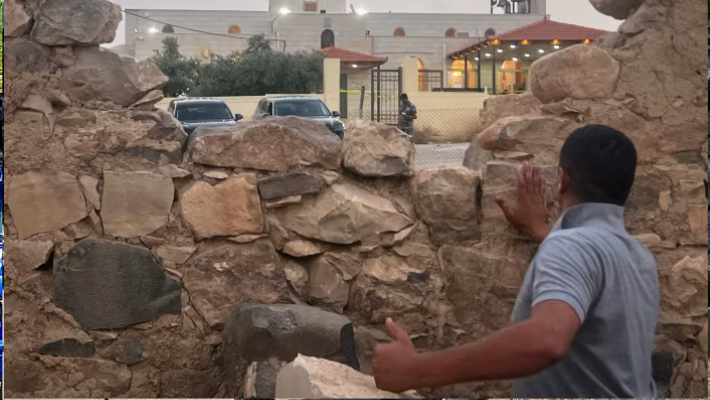
Seven killed, 34 injured as gunmen open fire at church funeral
CCTV footage showed three gunmen making their way from a road toward the church.


