

Nigerian Cancer Society decries low funding, inadequate disease awareness in rural areas

The Nigerian Cancer Society on Friday in Abuja pledged to launch an aggressive cancer awareness campaign to improve public knowledge about the disease.
The society’s President and Chief Executive Officer, Prof. Abidemi Omonisi, decried poor dissemination of cancer information, particularly in rural communities, during a media parley.
The engagement was part of the society’s activities marking the 2025 International Day for Cancer.
Mr Omonisi expressed deep concern over inadequate cancer awareness in rural areas, where most Nigerians live. He noted that this leads to late diagnosis and limited access to timely treatment.
He stated that under his leadership, the NCS would launch a vigorous awareness campaign in rural areas and translate educational materials into major local languages.
He stated that the initiative aimed to bridge the knowledge gap about cancer, which is most prevalent in rural communities.
The NCS president also decried the inefficiency of Nigeria’s national cancer registry system, stressing that science depended on data, and cancer registries were crucial in prevention and control.
Mr Omonisi highlighted the rising cancer burden in Nigeria and emphasised the need for an effective surveillance system to assess the problem’s magnitude and monitor control measures.
He noted that population-based cancer registries provide essential data for effective surveillance and planning.
He said, “For the first time in 65 years of cancer registration in Nigeria, the Federal Government, through NICRAT and the Lagos University Teaching Hospital, established a Childhood Cancer Registry in 2023.’’
He added that Nigeria has the highest number of population-based cancer registries in sub-Saharan Africa, with five registries contributing to the latest Globocan 2022 global statistics.
These registries — located in Abuja, Calabar, Ekiti, Ibadan, and Ilorin — provide data used by the International Agency for Research on Cancer (IARC-WHO) to calculate cancer incidence.
Mr Omonisi commended registry directors and staff for their achievements but lamented poor government funding, noting that most registries rely on self-financing.
He listed key challenges in cancer registration, including poor funding, inadequate technical staff, lack of data coordination, and insufficient infrastructure.
The NCS president also condemned the migration of oncology professionals for better opportunities abroad, describing it as a crisis in Nigeria’s healthcare workforce.
He further criticised the high cost of cancer treatment in Nigeria, stating that it remained unaffordable for most patients who depend on out-of-pocket payments.
Mr Omonisi urged Nigerians to take the National Health Insurance Authority enrollment seriously, stating that reliance solely on personal funds was discouraging for many patients.
He acknowledged the Federal Government’s efforts for establishing the National Cancer Health Fund (NCHF) but described current allocations as inadequate.
He noted that only ₦150 million was budgeted under “Counterpart Funding for Cancer Health Fund” (ERGP25227378) and ₦50 million under “Counterpart Funding for Childhood Cancer Health.”
The president argued that these funds were insufficient compared to previous allocations, making it a major setback for cancer care in Nigeria.
He stated, “A patient with HER2-positive early breast cancer needs ₦16.8 million for PHESGO treatment in one year, excluding other costs for lab services, surgery, and supportive care.’’
He warned that the proposed 2025 budget for the Cancer Health Fund would cover no more than 22 patients nationwide.
Mr Omonisi added, “We strongly appeal for increased funding in the 2025 budget to support indigent cancer patients, who make up over 70 per cent of those affected in Nigeria.’’
(NAN)

We have recently deactivated our website's comment provider in favour of other channels of distribution and commentary. We encourage you to join the conversation on our stories via our Facebook, Twitter and other social media pages.

More from Peoples Gazette

States
Independence: NBA urges Nigerians to expect better future
The NBA said that ordinary Nigerians should be deriving benefit from the subsidy removal rather than hardship.

Agriculture
FG tasks ECOWAS on leveraging financing strategies for agroecology
The federal government has urged stakeholders in the agriculture and finance sectors in the West Africa region to leverage financing strategies to enhance agroecology practices

Politics
Katsina youths pledge to deliver over 2 million votes to Atiku
“Katsina State is Atiku’s political base because it is his second home.”

Heading 2
Tinubu’s economic reforms yielding results despite doubts: Bagudu
Mr Bagudu described Mr Tinubu as a visionary leader whose decisions demonstrated courage and commitment to national development.
Sport
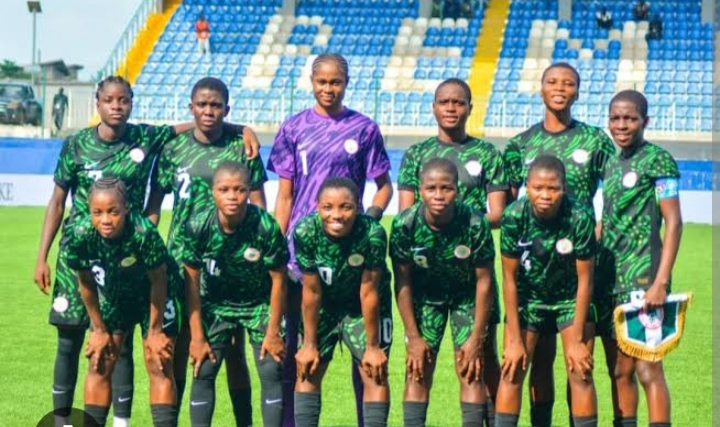
Flamingos lose 2-1 to Poland in FIFA U-17 Women’s World Cup opener
Poland’s Natalia Skrok made it two in the second half when Blanka Zajac, in the 65th minute, crossed into the Nigerian penalty area.

States
Gov Mbah scraps N750 daily ticket fee for Enugu tricycle operators, extends work hours
Mr Mbah also disclosed that tricycle operators would continue to use the state’s modern transport terminals free of charge.

States
FG unveils five-point strategy to tackle banditry, terrorism in Sokoto
Mr Ribadu called for sustained security deployments around vulnerable settlements, forest corridors and border communities.

Politics
2027: Wike urges Rivers traditional leaders to avoid ‘mistake’, back Tinubu for prosperity
Mr Wike said, “Supporting Tinubu is a support for prosperity.”
Heading 4
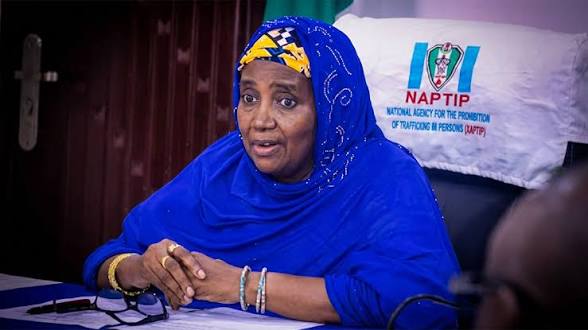
NAPTIP raises alarm over rise in parents’ facilitation of children’s sexual exploitation
The NAPTIP boss said parents and guardians were facilitating the sexual exploitation of their children to make money.


