

Nigerians raise alarm over frequent medical misdiagnosis in Port Harcourt, Uyo, Calabar

Nigerians have decried the rate of misdiagnosis in Nigeria and called for stricter guidelines and enforcement of tougher sanctions to improve diagnostic standards across the country.
They stated this during a survey in Rivers, Akwa Ibom and Cross River. They identified misdiagnosis, wrongful drug prescriptions, and inappropriate treatments as common medical errors while frowning at the poor attitude of health workers.
Narrating her ordeal in Rivers, Faith Onovo, a mother of five, recounted how she sought medical attention for persistent headaches and blurry vision at a reputable private hospital in Port Harcourt.
She said that after undergoing several tests, she was diagnosed with migraine and given medication, but months later, her symptoms worsened.
Md Onovo said that she consulted another hospital where she was diagnosed with a brain tumour, but by then, ‘’it was too late as the tumour had progressed to an inoperable stage.’’
Chinda Iwhnurohna, 48, lamented the tragic ordeal of his wife, Mercy, who, he said, suffered from severe stomach pain. He said that the doctor, after the result of the lab showed an ulcer, prescribed medication, but the pain did not stop.
“After months of suffering, we discovered it was actually appendicitis, which had already ruptured; sadly, she did not survive the surgery,” he said.
Monalisa Tamuno, a boutique owner in Port Harcourt, described the financial strain her family faced following the misdiagnosis of her late brother’s heart condition. She said that they spent everything they had on treatments and surgeries, believing he had a heart problem.
Ms Tamuno said later diagnosis showed that he had pulmonary embolism, which is a condition of one or more arteries in the lungs being blocked by a blood clot.
“But by then, we lost him. Now, we are not just mourning him; we are also struggling to survive financially,” Ms Tamuno said.
Reacting, a medical consultant at the University of Port Harcourt Teaching Hospital, Chinazor James, attributed the major contributor to misdiagnosis to quackery and inadequate training.
She also highlighted the proliferation of unregistered medical laboratories, many of which were being operated by unqualified personnel. She said that the country had a significant number of unregistered medical laboratories, and many were operated by quacks who conducted illegal medical practices.
Ms James attributed this to weak governance structures, fragile regulatory frameworks, and a lack of political will to enforce proper medical standards.
Olugbenga Akinyemi, another medical doctor, called for stronger regulations and enforcement of diagnostic standards. He noted that weak oversight had turned Nigeria into a dumping ground for substandard medical kits, diagnostic equipment, and chemical reagents.
He added that even when practitioners were genuine and had good intentions to conduct proper testing and treatment, the low-quality medical supplies would make nonsense of their profession.
He urged the government to conduct regular inspections of medical laboratories and ensure they were operating with modern equipment while mandating frequent training for laboratory scientists.
George Horsfall, a laboratory scientist, blamed both human and systemic reasons as factors responsible for diagnostic errors, listing them as overburdened hospitals, inadequate diagnostic tools, and poor infrastructure, among others.
He called for the establishment of national accreditation standards for medical laboratories to ensure consistency and reliability in test results.
In Akwa Ibom, Bassey Effiong, a victim of misdiagnosis, narrated how he was diagnosed and treated for hypertension for three years, only to see another medical consultant who diagnosed him with Parkinson’s disease.
Effiong Akpan, consultant nephrologist at the University of Uyo Teaching Hospital, described wrong diagnosis as a crime against humanity. He also condemned what he described as a ‘’trial and error’’ treatment method, stressing that medical diagnosis should be exact to avoid wastage and mortality.
The medical consultant added that ‘’human life is not like a machine that can be repaired or replaced again,’’ saying that wrong diagnosis and wrong interpretation of test results exposed patients to unnecessary anxiety.
Aniekan Peter, Akwa Ibom chairman of the Nigerian Medical Association, said, “We have people out there pretending to be medical doctors when exactly they have nothing to do in the medical profession; they are doing general harm to patients, and we must fight the menace.”
The medical officer, however, said that obsolete equipment in hospitals also caused misdiagnoses and false interpretation of results and called for routine equipment standardisation for accurate test reading and diagnosis.
Nseabasi Ekanem, a pharmacist, called for capacity building for healthcare workers, improved diagnostic techniques, provision of up-to-date diagnostic kits and collaboration between clinicians and medical laboratory personnel to reduce misdiagnosis.
In Cross River, Johnson Udeh, an ex-patient of the University of Calabar Teaching Hospital, decried health workers’ poor attitude, saying it is the greatest challenge in the sector.
Responding to some of the challenges, Ukam Edadi, NMA’s spokesman in Cross River, said the healthcare workers in Nigeria lacked an environment that enables them to do their jobs.
Regarding consultants being unavailable, Mr Edadi said there was nowhere in the world where consultants come to sit by the bedside of patients because that was the nurses’ job.
Mr Edadi, also a doctor at UCTH, said that consultants had their days to carry out ward-round and clinics, adding that overseas, sometimes, it took up to four weeks before a patient could see a consultant.
He said that the same Nigerians who got this kind of treatment abroad would come to complain about the non-availability of consultants, adding that senior registrars and house officers were always around to see patients.
(NAN)

We have recently deactivated our website's comment provider in favour of other channels of distribution and commentary. We encourage you to join the conversation on our stories via our Facebook, Twitter and other social media pages.

More from Peoples Gazette

Agriculture
FG tasks ECOWAS on leveraging financing strategies for agroecology
The federal government has urged stakeholders in the agriculture and finance sectors in the West Africa region to leverage financing strategies to enhance agroecology practices

Politics
Katsina youths pledge to deliver over 2 million votes to Atiku
“Katsina State is Atiku’s political base because it is his second home.”
States
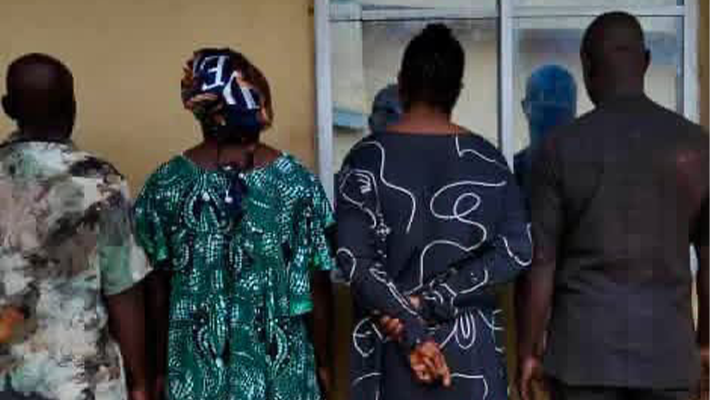
Police nab four suspects for alleged child trafficking in Abia
Ms Chinaka said the suspects allegedly conspired to steal a four-day-old baby from her mentally unstable mother.
Agriculture
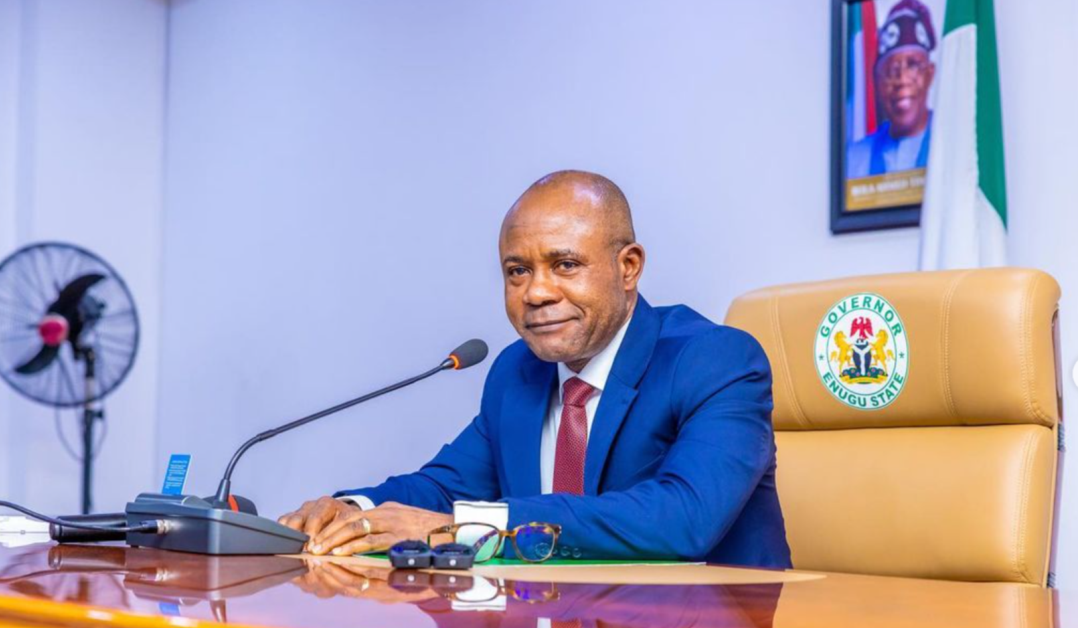
Enugu hires over 160 professionals to revive livestock production
Mr Ubru said the recruitment was in fulfilment of Governor Peter Mbah’s vision to revamp the agricultural sector.

Heading 2
Plateau government disburses N1.5 billion intervention funds to attack victims
Governor Caleb Mutfwang formally inaugurated the disbursement of the funds on Monday in Jos.

Heading 5
Don’t destroy APC like you did PDP, group warns Wike
Mr Wike has insisted that his major political priority remained securing the re-election of Mr Tinubu in 2027.

Heading 1
Atiku condemns Tinubu’s prolonged vacation abroad, says Nigeria can’t be governed on autopilot
Mr Onanuga said that the president would return to the country at the weekend.
Economy
ECOWAS to honour 60 West African start-ups
The top three start-ups will receive $30,000, $20,000 and $15,000 respectively in seed funding.


