

South-East stakeholders blame get-rich-quick syndrome for rising ritual killings

Some stakeholders, including police commands in Anambra, Ebonyi and Enugu, have attributed the recent rise in ritual killings to the get-rich-quick syndrome among the youth in the South-East.
The ritual killings among the youth and other crimes such as armed robbery, kidnapping and cultism have ravaged the zone recently.
These prompted some state governments to establish private security outfits to complement the efforts of security agencies in tackling insecurity in the country.
In Anambra, Governor Charles Soludo inaugurated the ‘Homeland Security Law’ and joint security forces, such as operations Udogachi and Agunechemba, to tackle criminals.
Tochukwu Ikenga, spokesman for the police in Anambra, and some residents of Awka decried the spate of gruesome ritual killings in a survey on the rise of ritual killings in some states of the country.
Mr Ikenga said people committed such crimes for fortification and wealth creation. He said the Anambra government and citizens had joined the police and other security agencies in tackling the menace.
Rachel Yohanna of Davina Care Foundation, Awka, said it was unfortunate that many individuals, especially the youth, engaged in money rituals driven by a quest for quick wealth.
Ms Yohanna identified poverty, unemployment, lack of parental care and peer pressure as some of the reasons driving ritual killings in the society. She said young women and children were the major victims of ritual killings because of their perceived vulnerability.
Helen Obi, a lawyer, blamed flashy lifestyle on social media and society, especially religious leaders who idolise the wealthy, even when the source of wealth was illegitimate.
In Ebonyi, the police spokesman, Joshua Ukandu, expressed worry over the spate of ritual killings across the country, adding that the menace was of great concern to the nation.
Mr Ukandu, however, noted that there had been no record or report of ritual killings. He said the command had been proactive in checkmating other crimes in Ebonyi.
On the increasing rate of ritual killings across some states, Mr Ukandu blamed it on the eroding moral fabric of the society and the quest to get quick wealth.
Mathew Unakwe, a legal practitioner in Ebonyi, called for a nationwide campaign against such heinous crimes to build a better environment.
Mr Unakwe blamed the security agencies for the increasing rate of crime in the society, calling on Nigerians, especially the government to do everything possible to eradicate ritual killings.
Ignatius Nwankwor, a political analyst, called for collaborative efforts among security agencies, traditional rulers, schools, and faith-based institutions to check for such crimes.
The spokesman for the police command in Enugu, Daniel Ndukwe, also said, “There are no ritual killings in Enugu State known to the police. We don’t have incidences of ritual killings in Enugu state. I cannot confirm or react to what does not exist in the state.”
Some residents of Nsukka in Nsukka LGA have also blamed the rise in ritual killings for getting rich quickly due to the recognition and respect accorded to rich people.
George Akubue, a lecturer at the Institute of African Studies, University of Nigeria Nsukka, said until stakeholders in every community started screening sources of wealth of people especially youths, ritual killings for money making would continue to escalate.
Mr Akubue warned that if nothing serious were done to stop the ugly trend, the security challenges in the country would take a new dimension as more youths would join the bandwagon of get-rich-quick syndrome.
Also speaking, Samuel Ike, a lawyer and rights activist, expressed concern why these bad boys target young girls for the ritual killings and urged security agencies to brace up to their responsibilities.
(NAN)

We have recently deactivated our website's comment provider in favour of other channels of distribution and commentary. We encourage you to join the conversation on our stories via our Facebook, Twitter and other social media pages.

More from Peoples Gazette

States
Independence: NBA urges Nigerians to expect better future
The NBA said that ordinary Nigerians should be deriving benefit from the subsidy removal rather than hardship.

Agriculture
FG tasks ECOWAS on leveraging financing strategies for agroecology
The federal government has urged stakeholders in the agriculture and finance sectors in the West Africa region to leverage financing strategies to enhance agroecology practices

Politics
Katsina youths pledge to deliver over 2 million votes to Atiku
“Katsina State is Atiku’s political base because it is his second home.”

Jos
Miner’s Deaths: Shettima arrives in Minna for condolence visit
Thirty-seven miners died while in NSCDC’s custody. The survivors narrated their ordeal in the security agency’s detention cell to Peoples Gazette.
States
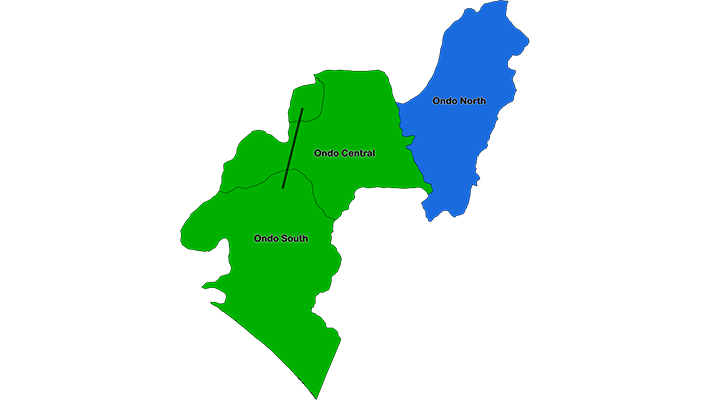
Helicopter crashes in Ondo; casualties unknown
A helicopter crashed on Monday in the Igbokoda community in Ondo State.

World
U.S. Coast Guard suspends search for passengers after medical aircraft disappears
The United States Coast Guard has announced the suspension of search and rescue operations for the passengers of a Gulfstream G100 aircraft that disappeared on Saturday.

Economy
Saudi Arabia, six OPEC nations maintain oil output targets amid U.S.-Iran war
Seven OPEC nations reaffirmed their commitment to maintain their oil production levels amid a U.S.-Iran war that has disrupted global oil supply and prices.
Health
Kaduna govt provides mental health services at PHC level
The Kaduna government has decentralised mental health services, now accessible at primary health care centres across the state.

World
Nobel Prize in medicine awarded to Deisseroth, Hegemann, Nagel for work on optogenetics
Karl Deisseroth, Peter Hegemann, and Georg Nagel are joint winners of the 2026 Nobel Prize in Physiology or Medicine for their work in optogenetics.


