

Water Bill: Again, Buhari moves to take over lucrative mineral resources of Southern Nigeria
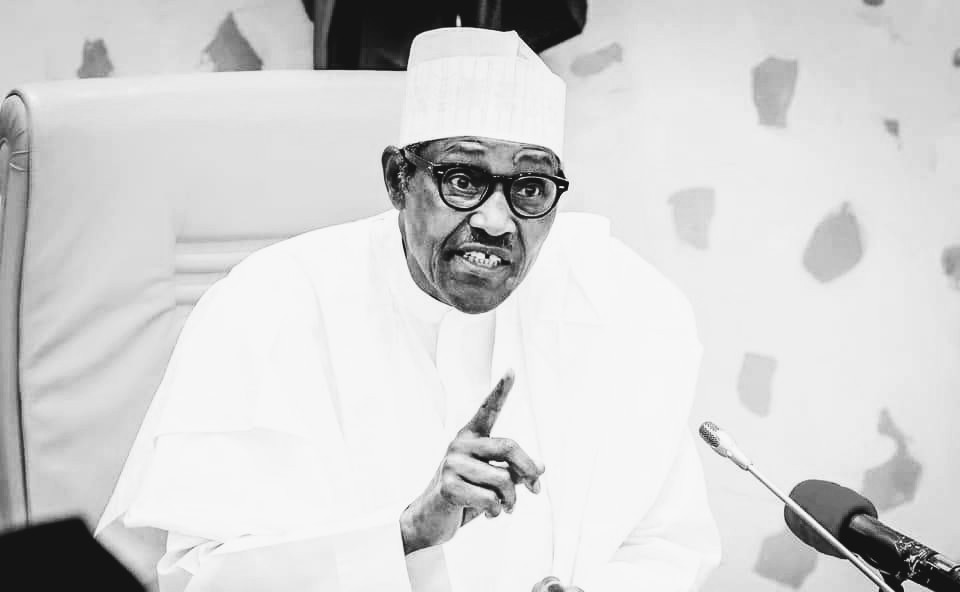
President Muhammadu Buhari on Thursday called on the National Assembly to quickly pass the National Water Resources Bill, a demand that could overheat a simmering anger from politicians and policy experts from Southern Nigeria who said the bill was yet another evidence of Buhari regime’s determination to subjugate the resource-rich section of the country.
The bill was rejected twice in 2018 and 2020 when Mr Buhari pushed it, arguing that it was to ensure access to adequate potable water amongst all Nigerians.
But the language of the bill contradicted the president’s claim. The bill was designed to give control of all water bodies in Nigeria to the federal government, a proposal that critics said made a mockery of raging clamour for a restructured and decentralised Nigeria.
Another part of the bill also pushed for citizens to get federal permission to drill bore holes in their homes or businesses premises, a move that analysts said will worsen access to potable water as obtaining permits from the government will be cumbersome and riddled with corruption.
Currently, Nigerians have legal rights to drill a well in their private residences in order to have access to the essential mineral. Only a few cities have intermittent supply of water through their various water boards. Mr Buhari has also been accused of pushing the controversial bill in order to seize the remaining critical mineral resources under state and local authorities in Southern Nigeria.
Unlike Mr Buhari’s arid northern region, Southern Nigeria has coaster areas and a vast expanse of inland water bodies.
About a year after the bill was rejected again, Mr Buhari renewed his demand on Thursday for the passage of his proposal during the inauguration of the Zobe Regional Water Supply Scheme in Katsina, urging other state governments to build strong partnerships with the federal government to provide infrastructure for Nigerians.
The president maintained that his administration would work tirelessly to ensure that Nigerians can access potable water supply and sanitation facilities.
For the president, this can only be achieved based on the “need to mobilise funds from all sources including the private sector.”
This, according to the president, is “where the need for quick passage of the National Water Resources Bill that made provision for the National WASH Fund, as well as regulatory environment for private sector involvement in the sector, become relevant.”
He added, “I, therefore, call on the National Assembly to give attention to the Bill towards its passage into law as soon as possible.”
Mr Buhari boasted that his administration was committed to developing the water sector since it took over power in 2015.
In his remarks, the Minister of Water Resources, Suleiman Adamu, noted that 106 water projects were left uncompleted by previous administrations.
The bill that seeks to transfer water resources from states to the federal government was first forwarded to the National Assembly in 2017.
While it was forwarded to be passed into law, many Nigerians kicked against it, forcing the eighth assembly’s hand to dump the bill.
However, it was reintroduced in 2020 by Abubakar Fulata, chairman of the House of Representatives Committee on Rules and Business.
Among those who criticised the bill were Nobel Laureate Wole Soyinka and Governor Samuel Ortom, who described the bill as “another version of RUGA.”
Mr Ortom stated, “The bill, in addition to its provisions, which are at variance with the Land Use Act is disguised land-grabbing legislation, designed to grant pastoralists unhindered access to river basins, adjacent marine and coastal environments across the country.
“The bill is another version of RUGA, whose objective is to create grazing areas in the 36 states of the federation for herders and their livestock.”
On his part, Mr Soyinka said the ‘Bill on National Water Resources 2020’ was designed to hand Aso Rock Absolute control over the nation’s entire water resources, both over and underground.
“The basic facilitator of human existence, water – forget for now all about streams of righteousness! – is to become exclusive to one centralized authority,” he added.

We have recently deactivated our website's comment provider in favour of other channels of distribution and commentary. We encourage you to join the conversation on our stories via our Facebook, Twitter and other social media pages.

More from Peoples Gazette

Agriculture
FG tasks ECOWAS on leveraging financing strategies for agroecology
The federal government has urged stakeholders in the agriculture and finance sectors in the West Africa region to leverage financing strategies to enhance agroecology practices

Politics
Katsina youths pledge to deliver over 2 million votes to Atiku
“Katsina State is Atiku’s political base because it is his second home.”
States
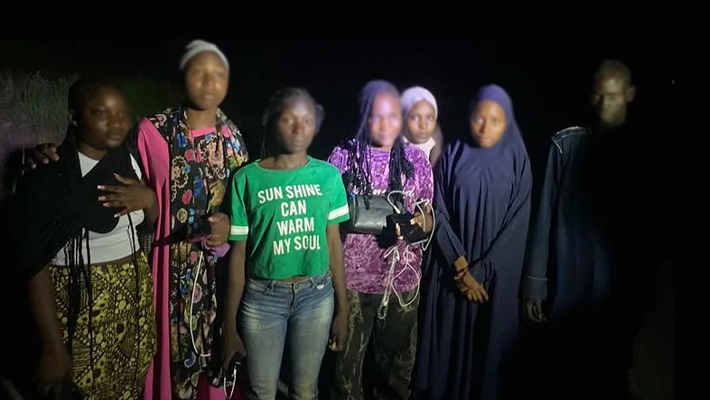
Kidnapping: Six female students rescued from bandits in Katsina, says military
The students were rescued along the Daye-Malufashi road in Danmusa council area after troops responded to a kidnapping incident at about 10:48 p.m. on Monday.

Agriculture
Ogun: Urgent response advised amid African swine fever outbreak
Eustace Iyayi, special assistant to the livestock development minister, Idi Maiha, called for an emergency response to the African swine fever outbreak in Ogun.
Economy
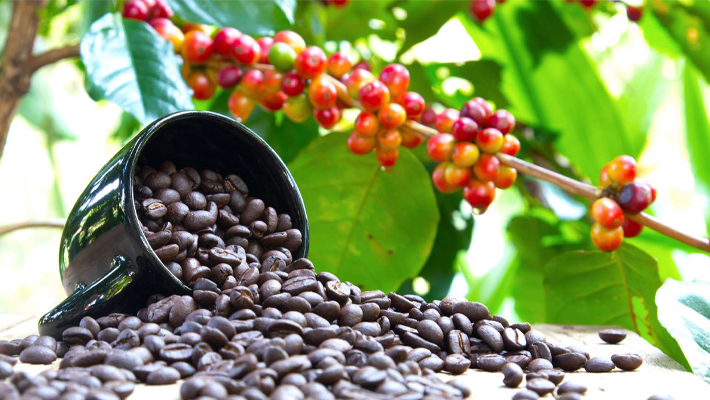
Ethiopia seeks world’s largest producer of arabica coffee status
Ethiopia is modernising its coffee industry to become the world’s largest producer of arabica coffee.

World
Vietnam now Southeast Asia’s largest electric-car market with 40% share
Vietnam became Southeast Asia’s largest electric-car market in 2025, with electric vehicles accounting for nearly 40 per cent of new-car sales, according to the IEA.
Anti-Corruption
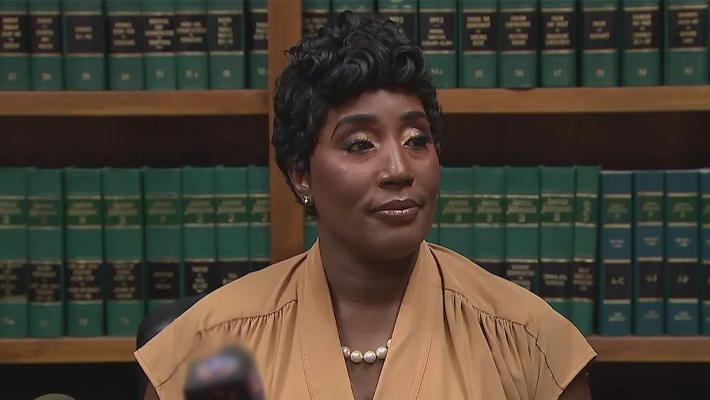
Charlotte City councilwoman Tiawana Brown, two daughters sentenced for COVID-19 loan fraud
Ms Brown will spend 10 months in prison and two years of supervised release, while her daughters, Tijema Brown, 32, and Antionette Rouse, 34, were also sentenced.

Africa
Ghana: Mahama urges developing countries against dependency on foreign health aid
Mr Mahama stated this while launching the ‘Sovereign Future’ report, which aims to reshape global health governance and foster self-reliance across the Global South.


