


IMF projects global growth at 3.0% in 2025
The International Monetary Fund (IMF) has projected global growth at 3.0 per cent in 2025 and 3.1 per cent in 2026, as significant policy shifts continue to unfold worldwide.
This projection is contained in the IMF’s latest World Economic Outlook (WEO) Update for July 2025, titled “Global Economy: Tenuous Resilience amid Persistent Uncertainty,” released on Tuesday.
The forecast for 2025 is 0.2 percentage points higher than that in the reference forecast of the April 2025 WEO and 0.1 percentage points higher for 2026.
According to the IMF, this reflects stronger-than-expected front-loading due to anticipated higher tariffs and lower average effective U.S. tariff rates compared to those announced in April.
The projection also reflected an improvement in financial conditions, partly because of a weaker U.S. dollar and fiscal expansion in several major jurisdictions.
It said global headline inflation was projected to decrease to 4.2 per cent in 2025 and 3.6 per cent in 2026, following a path similar to the forecasts projected in April.
However, the overall outlook hides significant differences among countries, with forecasts predicting that inflation will remain above target levels in the United States, while it is expected to be more subdued in other large economies.
The report said among advanced economies, growth was projected to be 1.5 per cent in 2025 and 1.6 per cent in 2026, like in the U.S., projected growth was expected to rise to 1.9 per cent in 2025 and 2.0 per cent in 2026.
This is a pace that is 0.1 percentage point higher relative to the projection in the April 2025 reference forecast, with some offset from private sector demand cooling faster than expected and weaker immigration.
It said in the Euro area, growth was expected to increase to 1.0 per cent in 2025 and 1.2 per cent in 2026, while in other advanced economies, growth was projected to decrease to 1.6 per cent in 2025 and pick up to 2.1 per cent in 2026.
For emerging markets and developing economies, growth was expected to increase to 4.1 per cent in 2025 and slightly drop to 4.0 per cent in 2026.
It noted, “Compared to the forecast in April 2025, China’s growth is reversed upwards by 0.8 percentage points to 4.8 per cent due to stronger-than-expected activity in the first half of 2025 and a significant reduction in U.S.-China tariffs.”
The report said for sub-Saharan Africa, growth was expected to remain stable at 4.0 in 2025, as predicted in the April forecast, before increasing to 4.3 per cent in 2026.
For Nigeria, growth is projected at 3.4 per cent in 2025 and 3.2 per cent in 2026.
In the Middle East and Central Asia, growth was projected to increase to 3.4 per cent in 2025 and 3.5 per cent in 2026, while for Latin America and the Caribbean, growth was projected to slow to 2.2 per cent in 2025 and recover to 2.4 per cent in 2026.
It said growth in emerging and developing Europe was also expected to slow and remain sluggish at 1.8 per cent in 2025 and 2.2 per cent in 2026.
The report indicated that economic policy uncertainty was assumed to remain elevated in 2025 and 2026, while energy commodity prices were expected to decline by about 7.0 per cent in 2025, less than projected in the April WEO.
The report said risks to the outlook were tilted to the downside, similar to the April 2025 WEO, as a rebound in effective tariff rates could lead to weaker growth.
“Elevated uncertainty could start weighing more heavily on activity, as deadlines for additional tariffs expire without progress on substantial, permanent agreements.
“Geopolitical tensions could disrupt global supply chains and push commodity prices up.
“Larger fiscal deficits or increased risk aversion could raise long-term interest rates and tighten global financial conditions. Combined with fragmentation concerns, this could reignite volatility in financial markets,” the report said.
It said on the upside, global growth could be lifted if trade negotiations lead to a predictable framework and to a decline in tariffs.
The report indicated that policies must instill confidence, ensure predictability, and promote sustainability by easing tensions, maintaining price and financial stability, restoring fiscal buffers, and implementing essential structural reforms.
(NAN)

We have recently deactivated our website's comment provider in favour of other channels of distribution and commentary. We encourage you to join the conversation on our stories via our Facebook, Twitter and other social media pages.

More from Peoples Gazette

Agriculture
FG tasks ECOWAS on leveraging financing strategies for agroecology
The federal government has urged stakeholders in the agriculture and finance sectors in the West Africa region to leverage financing strategies to enhance agroecology practices

Politics
Katsina youths pledge to deliver over 2 million votes to Atiku
“Katsina State is Atiku’s political base because it is his second home.”

NationWide
Nigeria must accelerate urban sanitation reforms, stakeholders say
Stakeholders in Nigeria’s water and sanitation sector have called for accelerated reforms, increased investment and stronger collaboration to tackle urban sanitation challenges.

Rights
Police officers arrested in Ebonyi for assaulting civilian
The police command in Ebonyi has identified and detained officers over the assault on a civilian in the Ohaukwu council area.

Health
EFCC worried about cases of hypertension rising among Nigerian youths
The Economic and Financial Crimes Commission Clinic has expressed concern over the growing number of young Nigerians being diagnosed with hypertension and diabetes.

States
Ibadan artisan arraigned for fraud, theft
A 30-year-old artisan, Tunde Olaore, was arraigned before the Iyaganku Magistrates’ Court in Ibadan on Tuesday on charges of fraud and theft.

States
I will provide technology for Nigerian security forces to defeat terrorists, bandits: Tinubu
Mr Tinubu says his administration will deploy emerging technologies and intelligence-driven operations to combat contemporary security threats and protect Nigerians’ lives.
World
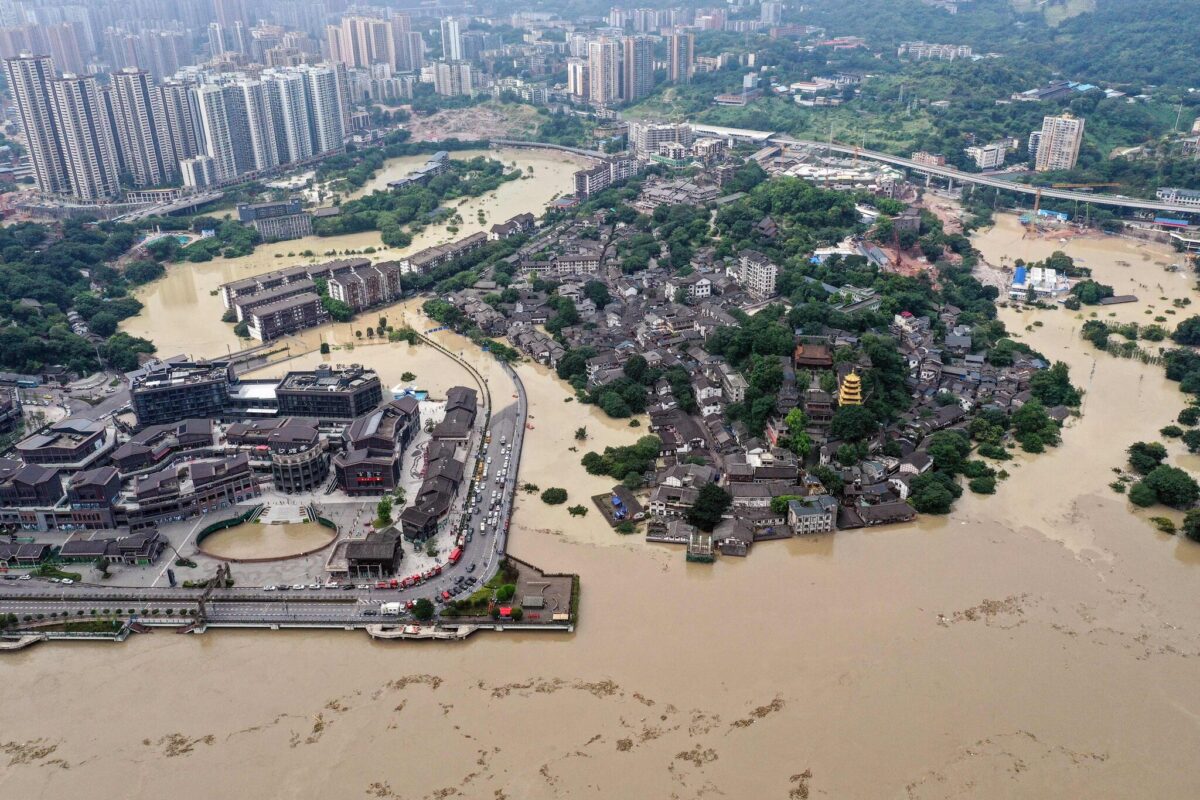
15 people killed in China’s flooding after torrential rainfall
Heavy rainfall and thunderstorms in parts of China have caused severe flooding, raising the death toll to 15 and leaving more than 300 people injured.


