

PRAWA asks Tinubu, National Assembly to abolish death penalty in Nigeria

Uju Agomoh, executive director of the Prisoners’ Rehabilitation and Welfare Action, has renewed her call for the abolition of the death penalty in Nigeria.
Ms Agomoh made this call on Thursday in Abuja.
She urged the government to align its justice system with international human rights standards and shift toward more humane, rehabilitative justice practices.
Ms Agomoh, an associate professor of criminology and security studies, highlighted the inherent risks, psychological impacts, and moral implications of capital punishment.
According to her, the use of the death penalty is irreversible and prone to fatal errors due to flaws in the justice system.
Ms Agomoh described the death penalty as inherently cruel, inhuman and degrading, saying that it offers no proven deterrent against crime. She stressed that the prolonged incarceration of individuals on death row often amounts to psychological torture, adding that it leaves inmates in prolonged uncertainty and despair while placing a huge strain on prison authorities.
She said that PRAWA supported life imprisonment or long-term sentences with opportunities for rehabilitation instead of executions, noting that these alternatives offer more constructive solutions and align with global justice reforms.
Ms Agomoh cited a PRAWA-produced documentary on the death penalty, which highlighted these concerns and proposed reforms.
She also shared her recent experience attending the 50th anniversary of the Alternatives to Violence Project in Purchase, New York, where she met a man, Otis Johnson, who was wrongly sentenced and spent 42 years in prison.
Ms Agomoh called for strengthened investigative practices, improved access to fair trials, victim support, and offender rehabilitation.
She referenced Rwanda’s use of the Gacaca community-based justice system after the 1994 genocide as an example of how even the gravest crimes could be addressed through restorative rather than retributive justice.
Highlighting human rights concerns, Ms Agomoh pointed out key issues surrounding the death penalty in Nigeria.
This, she said, included the risk of wrongful executions due to flawed investigations, legal aid gaps, and prolonged delays, causing mental and emotional distress to inmates.
To address these challenges, Ms Agomoh recommended the legislative repeal of the death penalty from Nigeria’s criminal laws.
She also suggested that the commutation of all existing death sentences to life imprisonment with or without parole, based on the severity of the offence, should be considered.
Ms Agomoh stressed that Nigeria’s de facto moratorium on executions, having not carried out state-sanctioned executions in several years, offered a timely opportunity to formalise the practice through policy and law.
“Abolishing the death penalty would send a strong message of Nigeria’s commitment to dignity, justice reform, and a more effective, humane penal system.
“The country has both a legal and moral obligation to progressively abolish the death penalty and to lead by example in West Africa by embracing justice systems that are more rehabilitative and less punitive,’’ she maintained.
(NAN)

We have recently deactivated our website's comment provider in favour of other channels of distribution and commentary. We encourage you to join the conversation on our stories via our Facebook, Twitter and other social media pages.

More from Peoples Gazette

Agriculture
FG tasks ECOWAS on leveraging financing strategies for agroecology
The federal government has urged stakeholders in the agriculture and finance sectors in the West Africa region to leverage financing strategies to enhance agroecology practices

Politics
Katsina youths pledge to deliver over 2 million votes to Atiku
“Katsina State is Atiku’s political base because it is his second home.”
NationWide
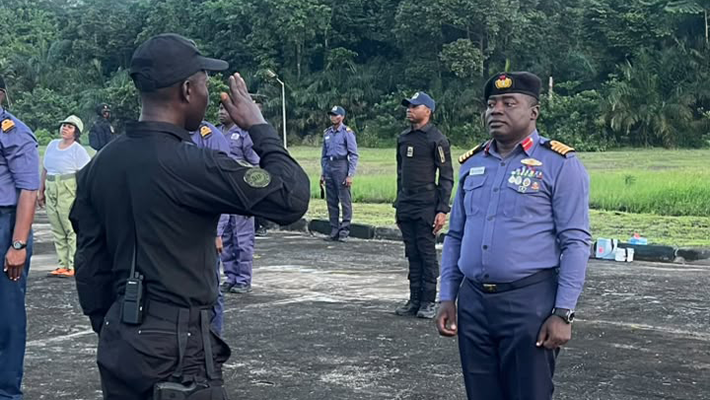
Navy holds route march to boost combat readiness
The exercise, conducted through Egweama communities in Brass, aimed to enhance physical endurance, promote healthy living, and maintain a physically fit force.
Sport
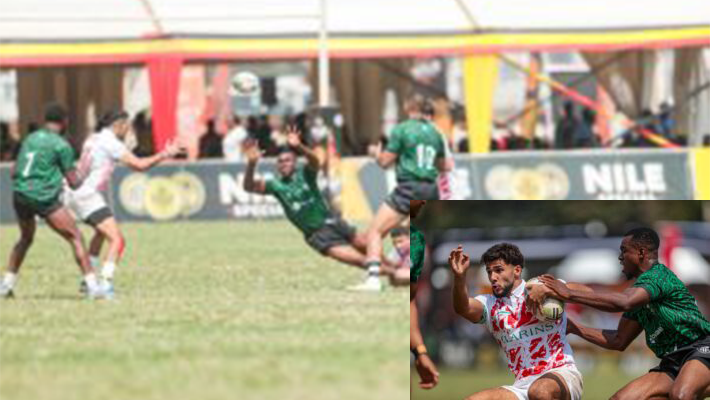
Nigeria’s Stallions beat Ghana, fall to Morocco in Africa rugby men’s sevens
The Stallions opened their campaign with a 26-5 victory over Ghana’s Black Eagles but suffered a 36-5 defeat to Morocco in their second match of the competition.

Heading 4
APC reviews structures, declares readiness for 2027
APC National Chairman, Prof. Nentawe Yilwatda, said the review covered the party’s structures from the national, state, local government and ward levels to polling units.
Heading 1
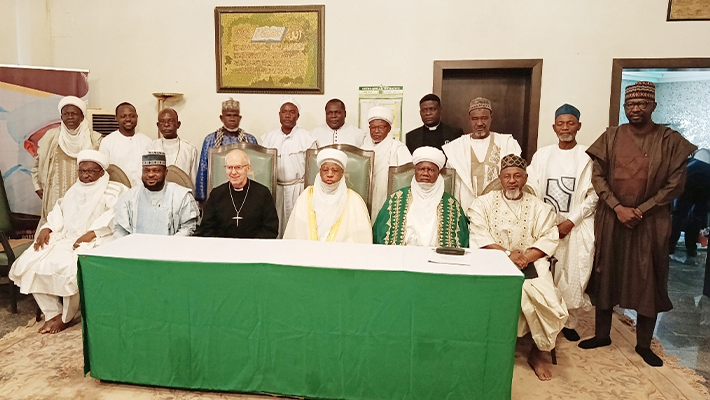
Sultan, ex-Archbishop of Canterbury urge peaceful coexistence in Nigeria, beyond
“There is a need for a strong call on religious and faith communities to work towards checking all forms of hatred,” the Sultan said.
Abuja
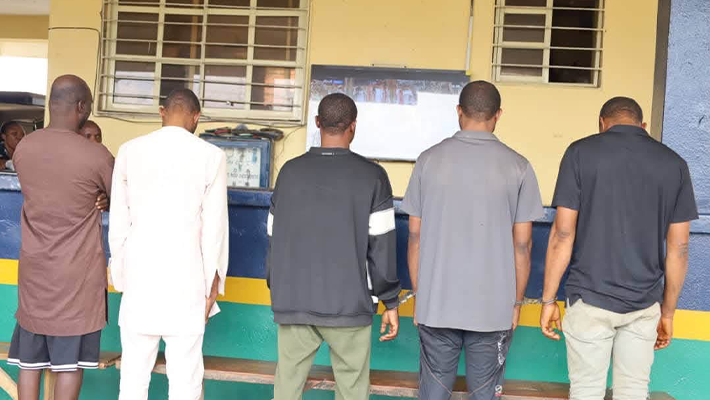
Police arrest suspected ‘one chance’ robbers in Abuja
The FCT police command arrested three suspected members of a ‘one chance’ robbery gang in Abuja.
Economy
TCN, Imcomtel inspect Katsina substation ahead of major installation
TCN, Katsina sub-region, and Imcomtel Engineering Limited inspected the Katsina 330/132/33 kilovolt (kV) transmission substation project ahead of a major installation.


