


FG, stakeholders discuss ways to revive textile sector

The minister of state for industry, John Enoh, on Friday, joined stakeholders in the textile sector to explore possibilities of revitalising Nigeria’s textile industry.
Mr Enoh, during a textile and apparel revitalisation meeting at the Bank of Industry (BoI) in Lagos, reiterated the federal government’s commitment to advancing industrialisation.
He noted that the government’s pronouncement of the “Nigeria First” policy had now, more than before, necessitated the importance of implementing Executive Order 3.
This, he said, would reduce counterfeiting and promote local content.
The minister highlighted some of the federal government’s thematic initiatives, including a focus on smuggling and illegal importation.
He urged stakeholders of the textile subsector to ensure that business model-focused innovation and playing in the open market are priorities, saying that Nigeria is a huge marketplace.
Mr Enoh also urged them to be abreast of the government’s various funding interventions and approvals, most recently the N1.5 trillion recapitalisation boost for the Bank of Agriculture.
“Textile subsector stakeholders should follow up on that to ensure cotton and cotton crops are properly given attention.
“Smuggling is such a cankerworm, and as part of the work we are doing, one of our five thematic areas is counterfeiting and illegal importation, and in a few weeks, we will convene relevant authorities and government bodies to ensure smuggling is tackled head-on.
“It is possible for a revival to take place, and I have noted all your complaints and pledge to address them, but government would not do everything. Together, government, stakeholders and development finance institutions must expend efforts until achievement is made in the textile subsector with measurable gains,” he said.
The country representative for the United Nations Industrial Development Organisation (UNIDO), Philbert Johnson, said there was a renewed urgency to build resilience and an inclusive and green industrial ecosystem in Africa in the face of global economic uncertainties and environmental challenges.
He noted that UNIDO had, over the years, worked closely together to support Nigeria’s efforts in strengthening industrial capacities, enhancing value addition, promoting innovation and creating decent jobs.
He said their shared vision aligned with the priorities of Nigeria’s industrial development plan, the Sustainable Development Goals and Agenda 2063, especially those related to industry innovation partnerships and climate action.
“UNIDO remains fully committed to working with stakeholders to scale up impactful interventions in areas such as agro-industrial development, climate-smart manufacturing, renewable energy and digital industrial scale,” he said.
Moussa Dabo, associate vice president of Africa Finance Corporation (AFC), said their journey on a three-day tour with the minister showed the promise and possibilities of the country’s textile industry.
Mr Dabo noted that the competition from the Chinese was because they had built their ecosystem, which means infrastructure, energy, and also cheap labour.
He said Nigeria had what it took to address its competition gaps via innovation, infrastructure and the design of a policy that would put the country on the global map.
The executive director of BoI, Ifeoma Uz’Okpala, urged textile industry stakeholders to embrace innovation as a means of reviving moribund industries.
Ms Uz’Okpala stated that the revitalisation and development of the textile sector would help save foreign exchange and create jobs.
“Government would do what it has to do, but on our own, we have to innovate.
“I laud the government for the investment and interest in reviving the sector and call for further stakeholders’ engagement to make the industry come back alive,” she said.
The divisional head of BoI, Olayinka Mubarak, noted that the tour with the minister showed the country’s textile story of promise, pain and possibilities up close.
Mr Mubarak, however, asserted that passion, resilience and innovation could breathe life back into the industry.
He said the stakeholders’ engagement has provided a clear insight that revival was possible, but that it would take deliberate action, strong partnership, and a shared commitment.
“The textile and the apparel sector once powered our economy.
“Together, we have the opportunity to weave a new story for the sector based on revival, resilience, and innovation,” she said.
The director-general of the Nigerian Textile Manufacturers Association, Kwajaffa Hamma, called for capacity building of civil servants to reduce bureaucracy and facilitate their support for the sector.
Mr Hamma called for an end to smuggling and counterfeiting of Nigerian textiles, saying that if smuggling is curtailed by 30 per cent, most of our companies will be revived.
Peter Godonu, president of the National Union of Textile, Garment and Tailoring Workers of Nigeria, lauded the government for placing the revitalisation of Nigeria’s textile and apparel industry on the front burner of its Renewed Hope agenda.
Mr Godonu said the move was a clear signal that industrial revival was once again being prioritised as a driver of job creation, poverty reduction, and national development.
He noted that the textile industry at its peak employed over 450,000 workers directly and over a million indirectly.
Mr Godonu said decades of neglect, smuggling, policy inconsistencies, high production costs, and weak infrastructure had crippled the sector.
The union boss said that for the revitalisation of the textile and garment sector to be sustainable, it must be inclusive, involving workers, employers, investors, and relevant government agencies.
He stated that efforts must be made to address key challenges, such as access to affordable long-term financing for manufacturers and stable power supply and infrastructure to reduce production costs.
“We must combat smuggling and unfair imports through strengthened border controls and ensure strict enforcement of Executive Order 003 and the Nigeria First policy to ensure local patronage of made-in-Nigeria textiles.
“Nigeria must invest in skills development and research to make our workforce globally competitive.
“Additionally, we urge the government to adopt a worker-centred industrial policy that promotes decent work, protects workers’ rights, and encourages social dialogue,” he said.
(NAN)

We have recently deactivated our website's comment provider in favour of other channels of distribution and commentary. We encourage you to join the conversation on our stories via our Facebook, Twitter and other social media pages.

More from Peoples Gazette

Agriculture
FG tasks ECOWAS on leveraging financing strategies for agroecology
The federal government has urged stakeholders in the agriculture and finance sectors in the West Africa region to leverage financing strategies to enhance agroecology practices

Politics
Katsina youths pledge to deliver over 2 million votes to Atiku
“Katsina State is Atiku’s political base because it is his second home.”
States
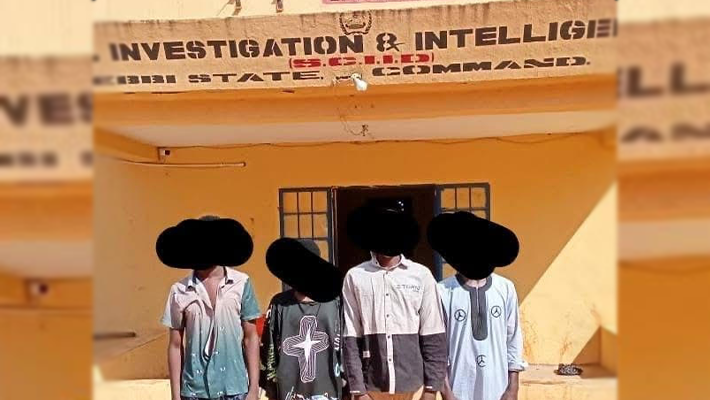
Police arrest suspects in Kebbi over kidnap threat, N30 million ransom demand
The police said the suspects were arrested following a complaint by Aminu Garba, who reported receiving anonymous phone calls demanding N30 million.

NationWide
Nigeria lost about N2.4 trillion to grid underutilisation since 2015: NISO
The NISO boss said Nigeria has lost about N2.4 trillion in capacity payments due to underutilisation of the power sector grid since 2015.

NationWide
Our new digital platforms will allow Nigerians to track govt spending, demand accountability: FG
Mr Arabi said the platforms will strengthen transparency, accountability, knowledge management and evidence-based implementation of public service reforms.

NationWide
Information minister tasks media on ethical, balanced journalism
According to him, the media remains one of the most powerful forces for shaping public opinion.
Sport
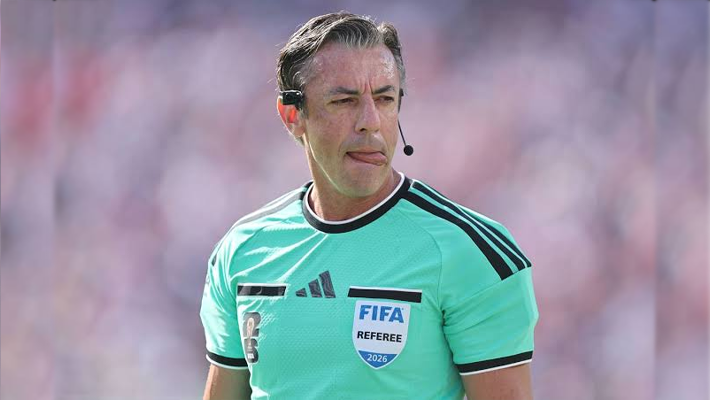
2026 World Cup: Who is FIFA referee Trump called ‘a little suspect’?
In his refereeing career spanning over two decades, Claus has officiated 318 professional football matches.

States
Ogun lawyers boycott court over N100,000 virtual hearing fee, oath administration hike
Lawyers in Abeokuta, Sagamu, and Ota commenced a three-day boycott of court proceedings to protest new policies introduced by the state judiciary.


