

FG to host health financing policy dialogue in September

The Federal Ministry of Health and Social Welfare says it will host the National Health Financing Policy Dialogue from September 1 to 4 in Abuja.
Kamil Shoretire, the director of Health Planning, Research and Statistics, announced this on Sunday in Abuja.
Mr Shoretire said that the dialogue would address the country’s persistent health financing challenges and chart a pathway to sustainable solutions.
He stated that the dialogue would bring together policymakers, development partners, health financing experts, civil society, media representatives, health insurance providers, private sector players, and academia.
He said that the gathering would translate high-level commitments into actionable strategies to strengthen Nigeria’s health financing architecture.
According to him, the National Health Financing Policy provides the framework for mobilising, pooling, and allocating resources for healthcare delivery in Nigeria.
“It is designed to promote equity, efficiency, and financial protection, reduce the dominance of out-of-pocket spending, expand health insurance coverage, and move the country closer to Universal Health Coverage. The four-day policy dialogue will allow stakeholders to share experiences, identify bottlenecks, and propose reforms that can accelerate Nigeria’s health financing transition,” he said.
Despite several policy reforms, Nigeria continues to fall short of the 2001 Abuja Declaration, in which African leaders pledged to allocate at least 15 per cent of their national budgets to health.
In contrast, Nigeria allocates less than five per cent of its budget to health, with public spending at approximately 0.5 percent of GDP. This has left households bearing the brunt of healthcare costs.
Data from the World Bank and other sources indicate that out-of-pocket expenditure accounts for approximately 76 per cent of total health spending in Nigeria, one of the highest rates in the world.
As a result, millions of Nigerians are exposed to catastrophic health expenditures, with healthcare costs pushing vulnerable families further into poverty.
In 2022, Nigeria signed the National Health Insurance Authority (NHIA) Act into law, making health insurance mandatory for all Nigerians and legal residents.
The law empowers the NHIA to regulate insurance providers and extend coverage to millions previously excluded.
Health experts said that the upcoming dialogue will be crucial in exploring how the NHIA Act can be fully implemented and how the Basic Health Care Provision Fund (BHCPF) can be expanded.
They said that innovative financing, including public-private partnerships, sin taxes, and donor alignment, could help reduce the current financing gap
Maimuna Abdullahi, a health economist and monitoring and evaluation specialist with the African Health Budget Network, said Nigeria could not achieve Universal Health Coverage without reducing the reliance on out-of-pocket spending.
“The dialogue is an opportunity to rethink financing models, strengthen accountability, and ensure that health insurance truly works for the poor,” she said.
Civil society groups also stressed the importance of transparency and accountability, calling for reforms to ensure that resources earmarked for health reach frontline facilities where they are needed most.
(NAN)

We have recently deactivated our website's comment provider in favour of other channels of distribution and commentary. We encourage you to join the conversation on our stories via our Facebook, Twitter and other social media pages.

More from Peoples Gazette

States
Independence: NBA urges Nigerians to expect better future
The NBA said that ordinary Nigerians should be deriving benefit from the subsidy removal rather than hardship.

Agriculture
FG tasks ECOWAS on leveraging financing strategies for agroecology
The federal government has urged stakeholders in the agriculture and finance sectors in the West Africa region to leverage financing strategies to enhance agroecology practices

Politics
Katsina youths pledge to deliver over 2 million votes to Atiku
“Katsina State is Atiku’s political base because it is his second home.”
Politics
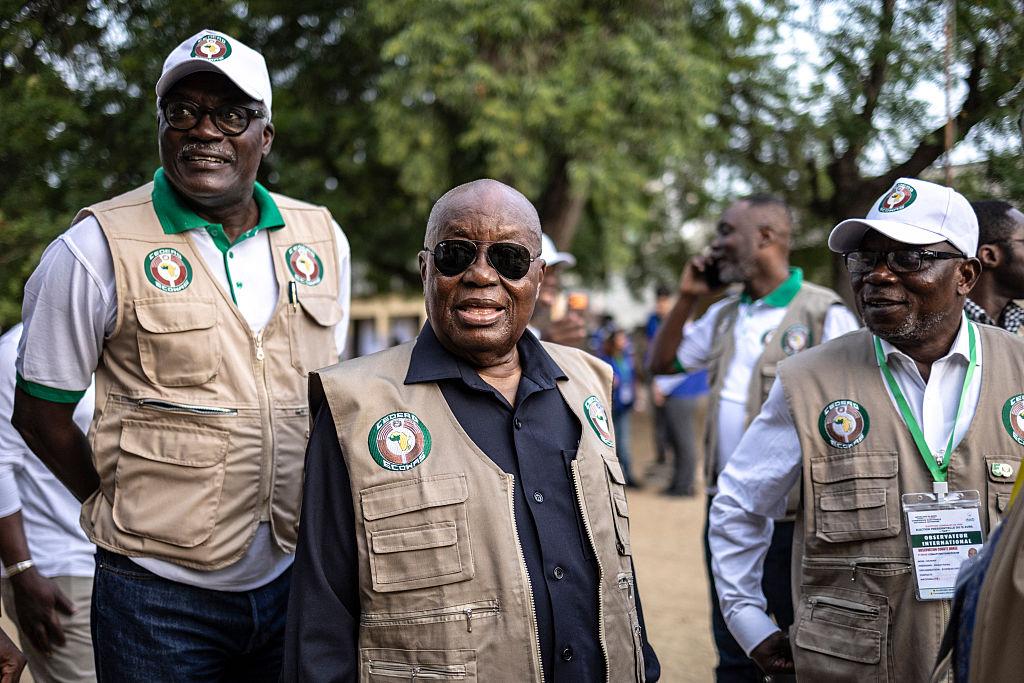
ECOWAS electoral bodies adopt AI guidelines to boost election integrity
ECONEC, an umbrella body for election management bodies in West Africa, has adopted a regional guideline on using artificial intelligence in electoral processes.
Africa
Tinubu’s petrol subsidy removal offers lessons for African countries: Oyedele
Mr Oyedele said the reforms showed the importance of introducing economic policies in the right order, explaining government decisions clearly and gaining public trust.

Abuja
Nigeria’s foreign reserves highest in 18 years, hitting $59 billion
Nigeria’s foreign exchange reserves rose to $58.81 billion by October 12, 2026, the highest level recorded since November 19, 2008, when reserves were $58.91 billion.
Education
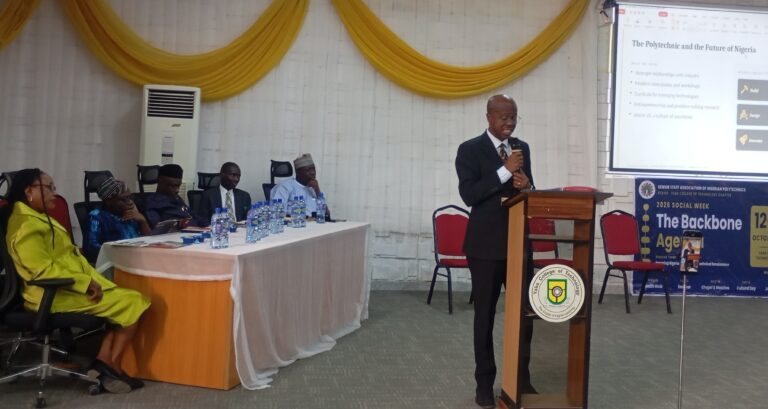
YABATECH rector urges recognition of administrative staff
YABATECH rector described the registry as the institution’s administrative backbone, urging sustained investment in staff capacity development.
Economy
Edo assembly considers N77 billion supplementary appropriation bill
The bill scaled second reading during plenary on Tuesday, following Governor Monday Okpebholo’s request for legislative consideration of the proposed supplementary budget.

Economy
Stock market sheds N144 billion amid sell-offs
The Nigerian stock market shed N144 billion on Tuesday as sell-offs in 21 equities pushed key performance indicators down by 0.09 per cent.


