

Economist urges institutional discipline, fiscal prudence to tackle poverty in Nigeria
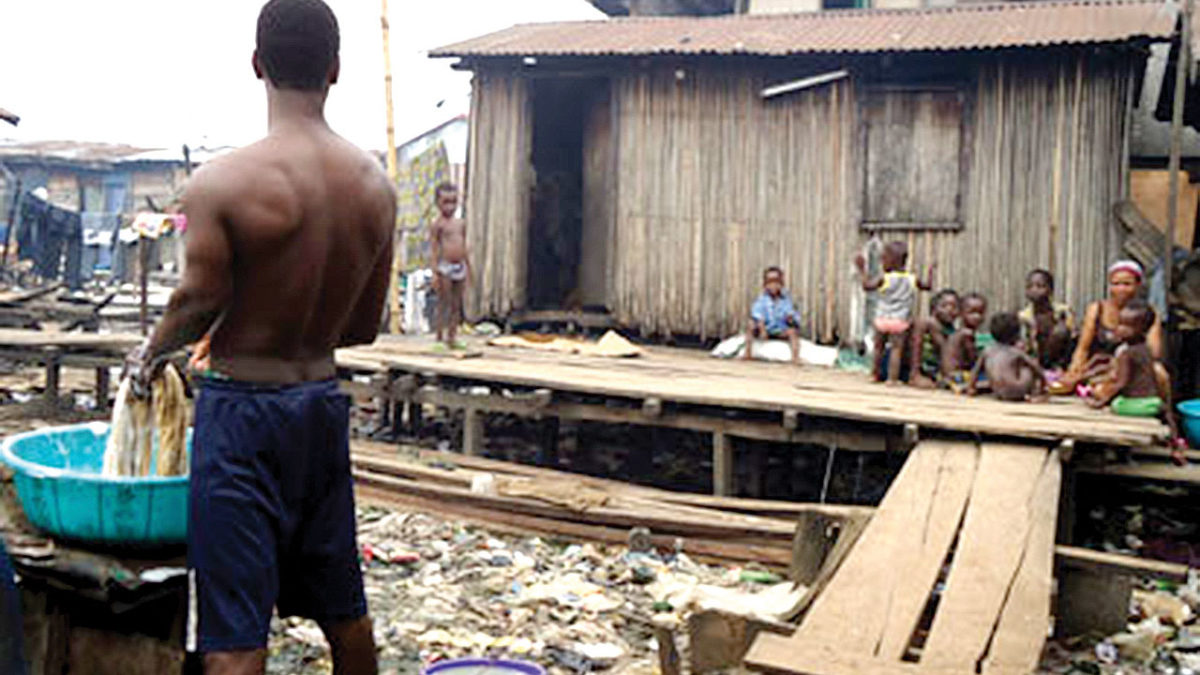
Victoria Hauwa-Ibrahim, an economist and public policy expert from Nasarawa State University, Keffi, has urged governments at all levels to demonstrate stronger institutional discipline and fiscal prudence to reduce poverty and improve citizens’ welfare.
Ms Hauwa-Ibrahim said in Lafia on Thursday that Nigeria’s long-term quest for sustainable prosperity depended on consolidating ongoing reforms such as fuel subsidy removal and exchange rate unification with credible governance practices.
She warned that failure to back the reforms with institutional accountability and prudent management could place the country at a disadvantage in achieving inclusive development.
“As Nigeria marks 65 years of independence and approaches the 2030 finish line of the Sustainable Development Goals (SDGs), realism must replace rhetoric. The aspiration to end poverty in all its forms has proven operationally difficult for an emerging economy like Nigeria. Our focus should shift from chasing ideals to achieving measurable progress in the areas that drive prosperity,” she said.
The economist, citing data from the National Bureau of Statistics (NBS), said that Nigeria’s real gross domestic product (GDP) grew by 4.23 per cent in the second quarter of 2025, driven largely by the non-oil sector.
She, however, noted that beneath the growth figures lay a “sobering reality”, as persistent inflation continued to erode purchasing power and undermine living standards.
“Inflation, though easing to 20.1 per cent in August 2025 from 33.2 per cent in 2024, remains among the highest in Africa. The IMF projects an average of 24 per cent for 2025.
“This means that even as output expands, real incomes continue to fall. Nigeria’s per capita income, at about $835, lags behind South Africa’s $3,000 and Egypt’s $2,200. Population growth continues to outpace job creation,” she said.
Ms Hauwa-Ibrahim said Nigeria must sustain an annual growth of at least six per cent for a decade to make meaningful progress in poverty reduction.
On human capital, the development consultant described Nigeria’s Human Capital Index score of 0.36 as “a national emergency” that highlighted underinvestment in education and health.
“Our greatest constraint is not the absence of oil but the deficit of productivity.
“Budgets are dominated by recurrent expenditure and debt servicing, leaving little for schools, hospitals and vocational training.
“Without investment in people, the demographic boom could become a source of instability rather than growth,” she said.
Ms Hauwa-brahim also noted that Nigeria ranked 125th of 133 countries on the “Institutions” pillar of the 2024 Global Innovation Index, reflecting weak governance, corruption, and policy inconsistency.
“These challenges discourage investment and innovation, and reforms to strengthen the rule of law, simplify taxation, and ensure policy consistency would cost little but yield significant economic dividends,” she added.
The economist further observed that the Central Bank of Nigeria’s tight monetary policy had stabilised the Naira but could not alone address structural inflation.
“Public debt has risen to about ₦149 trillion, with over 80 per cent of the budget going to recurrent expenditure and debt service. Without rebalancing spending towards capital projects, fiscal weakness will continue to undermine monetary efforts,” she warned.
Reflecting on Nigeria’s economic history, she noted that the nation’s growth had been marked by “alternating booms and busts” driven by oil dependence, policy inconsistency, and missed opportunities.
According to her, the current reforms present “a narrow but critical window” for structural transformation.
“The ICT revolution shows what Nigerians can achieve when given a supportive regulatory environment. Telecommunications, fintech, and the creative industries have flourished beyond oil, proving that human talent is Nigeria’s greatest asset.
“The next challenge is to replicate such success in agriculture, manufacturing, and renewable energy,” she said.
The economist maintained that true development should be measured by access to quality education, healthcare, jobs, and food security, rather than by GDP growth alone.
“Progress must be tracked through measurable indicators: lower inflation, improved learning outcomes, and higher productivity,” she said.
According to her, Nigeria must now choose between two futures as the SDG deadline approaches in 2030.
“By 2030, Nigeria could emerge as a $500 billion economy with a thriving middle class or remain trapped in poverty and instability.
“The outcome will depend on whether the lessons of history are heeded. Sustainability is not a slogan; it comes from consistent policies, strong institutions, and investment in people,” she said.
(NAN)

We have recently deactivated our website's comment provider in favour of other channels of distribution and commentary. We encourage you to join the conversation on our stories via our Facebook, Twitter and other social media pages.

More from Peoples Gazette

Agriculture
FG tasks ECOWAS on leveraging financing strategies for agroecology
The federal government has urged stakeholders in the agriculture and finance sectors in the West Africa region to leverage financing strategies to enhance agroecology practices

Politics
Katsina youths pledge to deliver over 2 million votes to Atiku
“Katsina State is Atiku’s political base because it is his second home.”
![Nigerian Upstream Petroleum Regulatory Commission [NUPRC]](https://gazettengr.com/wp-content/uploads/NUPRC.png)
NationWide
FG returns 13 oil blocks to bid basket for future licensing rounds
Mr Egba said bidders would be assessed on their proposed field development plans and other technical parameters.

States
Troops rescue kidnap victims, nab terrorist logistics suppliers in operations across Zamfara, Katsina, Kebbi
The statement noted that on 19 July 2026 vehicle conveying 10 motorcycles suspected to be for terrorists were intercepted during a routine stop-and-search operation in Kebbi State.

States
Man, 23, in court for allegedly threatening to kill his parents
The prosecutor said the offences contravene Sections 97, 287 and 396 of the Penal Code.

States
Court adjourns Benue candidates’ suit against APC until August 27
The judge warned that absence of any counsel resulting in a delay of the proceedings would attract sanctions.

Heading 4
Gov. Sani lectures states on how to copy Kaduna’s peace model
Mr Sani stressed that quality healthcare is not for a privileged few in Kaduna State but ‘’a fundamental right of everyone, particularly the downtrodden.’’

Heading 2
CBN retains benchmark interest rate at 26.5%
The latest decision to maintain the current policy stance followed a thorough assessment of the balance of risks.


