

World Bank commits to turning agriculture into viable business

The World Bank has reiterated its commitment to turning agriculture into a viable business that drives jobs, income, and food security across the globe.
World Bank Group president Ajay Banga said this on Tuesday in Washington, at the ‘AgriConnect Flagship Event’ on the sidelines of the 2025 Annual Meetings of the IMF/World Bank Group.
Mr Banga said that agriculture had always been central to development.
“Today, the challenge is to make it about how to grow more food, and turn that growth into a business that produces higher incomes for smallholder farmers and more opportunity across entire economies.
“Over the next 10 years to 15 years, about 1.2 billion young people in developing countries will come of age, but current trends suggest only 400 million jobs will be created. Hundreds of millions will either power the global economy or spill over into unrest and migration. That is why the World Bank Group has made job creation our central mission,” he said.
The World Bank president said that jobs ultimately came from the private sector, adding that they do not all start there.
“Countries move along a continuum: early on, the public sector drives job creation; over time, private capital and entrepreneurship take the lead. Our three-pillar strategy reflects that arc; build infrastructure and skills, create predictable regulations and a business-friendly environment, and back investors with risk tools that crowd in capital.
“We see potential in five sectors: infrastructure, agribusiness, healthcare, tourism, and value-added manufacturing. Today, we will focus on agribusiness, central both to jobs and to meeting global food demand that is projected to rise more than 50 per cent in the coming decades,” he said.
He said that emerging markets were at the centre of both objectives, adding that the developing world has the ingredients: land, sun, water, and people.
“Africa holds 60 per cent of the world’s uncultivated arable land and can boost yields on land already farmed. Latin America already produces enough food for well over a billion people, but infrastructure is a challenge. Across Asia, smallholder farmers manage most farmland; an enormous base to lift with better technology, finance, and market access,” he said.
He said that globally, 500 million smallholders produced 80 per cent of the world’s food, adding that most still remained stuck in subsistence farming—lacking electricity, storage, training, and market access.
“Fewer than one in 10 have access to commercial finance. The opportunity has been there for decades; what’s changing is our ability to organise at scale to shape the future of food security, nutrition, growth, and employment,” he said.
Mr Banga said that in 2024, the World Bank Group began executing a strategy that recognised this reality by setting out to help smallholders raise productivity and scale.
“We also set out to connect them to structured value chains that lift incomes and guard against exploitation so farmers are not forced to sell land for lack of credit, insurance, or market access. At the same time, we have set a target to double our agribusiness commitments to nine billion dollars annually by 2030, aiming to mobilise an additional $5 billion. It is grounded in what we have tested in the field and in lessons borrowed from others,” he said.
Mr Banga said that the focus was on the small farmer who lacks inputs, credit, advice, or a dependable buyer.
“Producer organisations, often built by governments, entrepreneurs, or private actors, can connect them to suppliers, insurers, buyers, and lenders,” he said.
(NAN)

We have recently deactivated our website's comment provider in favour of other channels of distribution and commentary. We encourage you to join the conversation on our stories via our Facebook, Twitter and other social media pages.

More from Peoples Gazette

States
Independence: NBA urges Nigerians to expect better future
The NBA said that ordinary Nigerians should be deriving benefit from the subsidy removal rather than hardship.

Agriculture
FG tasks ECOWAS on leveraging financing strategies for agroecology
The federal government has urged stakeholders in the agriculture and finance sectors in the West Africa region to leverage financing strategies to enhance agroecology practices

Politics
Katsina youths pledge to deliver over 2 million votes to Atiku
“Katsina State is Atiku’s political base because it is his second home.”

States
Accountability Lab decries voter apathy, insecurity in Kaduna
Mr Abubakar said the Kaduna Stat provided platforms for citizens to participate in budget preparation and implementation.
States
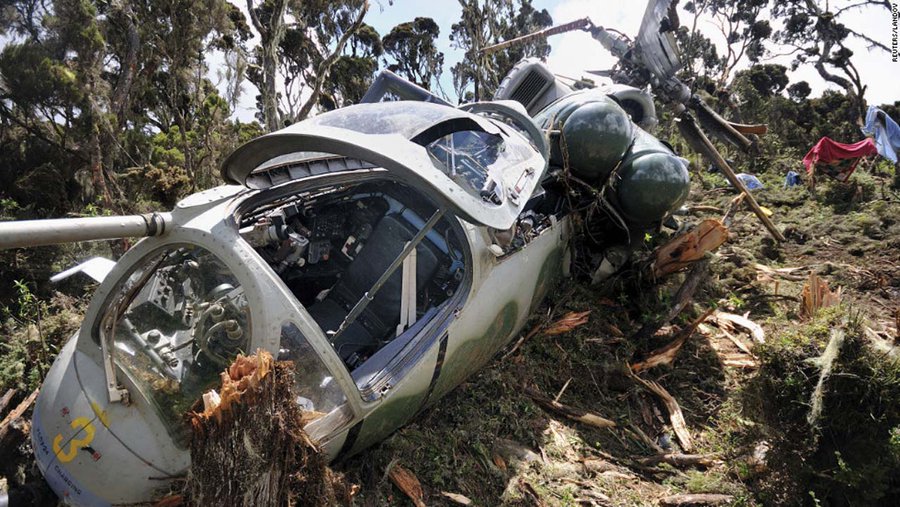
Police awaiting heavy equipment to recover wreckage of NAF aircraft
The aircraft marked NAF-931 with 25 people on board on Monday plunged into a swampy area near the Naval Base in Igbokoda.

NationWide
2027: INEC’s upload of our logo ended campaign uncertainty, says NDC
We are fighters and we will fight until the end,” Mr Dickson said.

Health
Tackling DR Congo Ebola outbreak is like battling ‘megafire,’ says MSF as cases surge in North Kivu
The MSF acknowledged that it cannot respond to the crisis alone.

Africa
81% African businesses expect rise in economic activities despite AfCFTA hurdles: PAFTRAC
PAFTRAC said access to finance remains a key challenge for African countries.
Hot news Home top
2027: Lagos leads with 7,488,633 registered voters as INEC names top 10 states
The INEC chairman said Ekiti State has 1,055,708 registered voters, while Bayelsa State has 1,200,691.


