

Toyota, Honda turn India into car production hub away from China
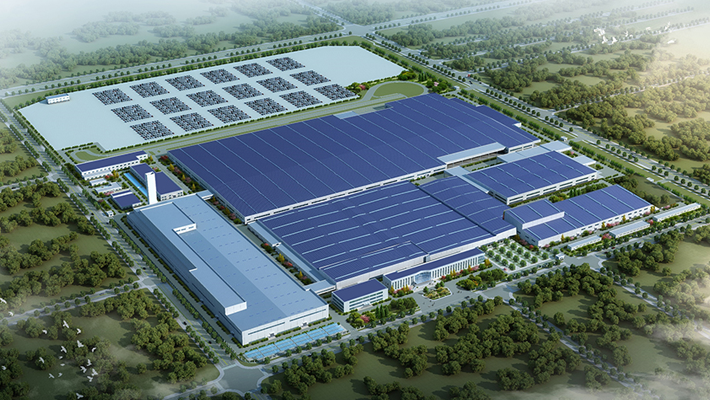
Toyota, Honda, and Suzuki are spending billions of dollars to build new cars and factories in India, a sign of the country’s growing importance as a manufacturing hub as Japanese automakers redraw global supply chains to reduce dependence on China.
Leo, the world’s largest carmaker, and Suzuki, the leader in the Indian market with almost a 40 per cent share, have separately announced investments totalling $11 billion to beef up manufacturing and export capabilities in the world’s third-largest auto market.
Honda announced last week that it will establish India as a production and export base for one of its planned electric vehicles.
India’s low costs and vast labour pool have long been an attraction for manufacturers.
Now, Japanese automakers are stepping up their operations as they pivot away from China, both as a market and a manufacturing base, according to multiple industry executives.
India remains all but closed to Chinese EVs, so Japan’s carmakers – at least for now – will not face bruising competition from BYD and others there.
A brutal price war among Chinese EV makers has made it difficult for them to turn a profit.
Adding to the pain, Chinese carmakers are now expanding overseas and snatching market share from Japanese rivals in Southeast Asia.
“India is a good choice as a replacement market for China,” said Julie Boote, autos analyst at Pelham Smithers Associates in London, citing low profit margins in China.
“For the time being, the Japanese think it’s a much better market because they don’t have to deal with the Chinese competitors.”
Other draws include the improved quality of India’s manufactured goods and incentives from Prime Minister Narendra Modi’s government, according to the executives.
Toyota and Suzuki each have majority ownership of their Indian units. Honda owns 100% of its business there.
Japan’s annual direct investment in the Indian transport sector, which includes automakers, jumped more than sevenfold between 2021 and 2024, reaching 294 billion yen (about $2 billion) last year.
As Japanese automakers revved up investment in India, they cooled on China: direct investment in China’s transport sector saw an 83 per cent decrease over the same period, to 46 billion yen last year.
Toyota is collaborating with Japanese and Indian vendors to reduce costs and increase production of hybrid components.
India is one market where a tight supply of hybrid parts has been observed amid a surge in demand this year.
It has localised its offerings, said an executive at a major Toyota supplier.
The Japanese automaker plans to launch 15 new and refreshed models in India by the end of the decade and deepen its rural network, Reuters reported last week.
It aims to capture 10 per cent of the passenger car market by the end of the decade, up from its current eight percent share.
“The Indian market is extremely important and is set to grow in the future,” Toyota president Koji Sato told reporters at last week’s Japan Mobility Show, noting many other automakers were also paying attention to the market.
Last year, Toyota announced more than $3 billion in investment to expand production at its existing factory in southern India by about 100,000 vehicles per year and build a new plant in western Maharashtra state, which is expected to begin production before 2030.
That is expected to take Toyota’s Indian production capacity to more than one million vehicles.
At its quarterly earnings on Wednesday, the automaker highlighted the growing importance of India to its profits, particularly as the North American business has been impacted by tariffs.
India’s economic growth has averaged eight per cent over the past three fiscal years, a surge that Mr Modi’s government wants to sustain by luring more foreign manufacturers.
It is rolling out incentives to get them to produce goods for both domestic and global markets.
India manufactured about five million passenger cars during the last financial year, of which almost 800,000 were exported, and the remainder were sold in the domestic market.
Domestic sales grew about 2 per cent from a year ago, while exports rose 15 per cent.
Government limits on Chinese investment are effectively another form of assistance, making it difficult for new Chinese carmakers to enter and for existing ones, such as SAIC’s MG Motor and BYD.
“India’s protectionist stance toward neighbouring countries is a blessing in disguise for Japanese carmakers,” said S&P Global Mobility’s Gaurav Vangaal. “Because of this, they see an opportunity to expand investment in India, enhancing their cost competitiveness against domestic players.”
Local companies Tata Motors and Mahindra & Mahindra have been expanding their offerings with SUVs, taking market share from Suzuki. Before the pandemic, Suzuki held about 50 per cent of the passenger car market.
India is never an easy market. Foreign automakers such as Ford and General Motors previously struggled there and eventually exited.
For Honda, India is the largest market for its highly profitable two-wheeler business, and it now intends to expand its four-wheeler business, chief executive Toshihiro Mibe told the mobility show.
Honda said its top three focus markets for the car business are the United States, followed by India and Japan.
It plans to make India the production and export base for one of its ‘Zero series’ electric cars, with one model to be exported to Japan and other Asian markets from 2027.
Suzuki’s $8 billion investment in India is primarily aimed at expanding its local production capacity to four million cars per year, from the current 2.5 million.
Its Indian business, Maruti Suzuki, is the country’s top-selling carmaker and largest car exporter.
“We would like to grow India as Suzuki’s global production hub,” president Toshihiro Suzuki told reporters on the sidelines of the mobility show. “We would like to enhance exports from India.”
(Reuters/NAN)

We have recently deactivated our website's comment provider in favour of other channels of distribution and commentary. We encourage you to join the conversation on our stories via our Facebook, Twitter and other social media pages.

More from Peoples Gazette

Agriculture
FG tasks ECOWAS on leveraging financing strategies for agroecology
The federal government has urged stakeholders in the agriculture and finance sectors in the West Africa region to leverage financing strategies to enhance agroecology practices

Politics
Katsina youths pledge to deliver over 2 million votes to Atiku
“Katsina State is Atiku’s political base because it is his second home.”

Hot news Home top
Husband pays ‘hired killer’ $1,720 advance to murder his wife, mother-in-law
The aggrieved husband wanted his wife killed because she planned to file for divorce.

Anti-Corruption
Agricultural firm Scoular to pay over $10 million to resolve foreign bribery case
Scoular employees communicated about shipments and bribes. In total, Scoular authorised bribes of more than $400,000 and avoided fees and costs of more than $6.5 million.

States
FRSC mobilises stakeholders against overloading in Sokoto
The zonal commanding officer in charge of Zone 10, Shaba Bariam-Akanbi, inaugurated the three-day exercise on Monday in Sokoto.

Africa
ECOWAS approves appointment of new officials
The Economic Community of West African States (ECOWAS) has approved new appointments to its strategic statutory positions and specialised institutions for 2026 to 2030.
States
Two persons killed in Ogun motorcycle, truck collision
Two people died on Monday in a crash involving a motorcycle and a Dongfeng pickup truck at Koto-Ajala, inbound Owode, in Obafemi Owode council area of Ogun.

Economy
Banking, insurance shares lift stock market by N2 trillion
The Nigerian stock market gained N1.756 trillion on Monday, driven by sustained buying in banking, insurance and industrial stocks.


