


Experts laud Dangote Refinery’s expansion from 650,000 to 1.4 million barrels per day
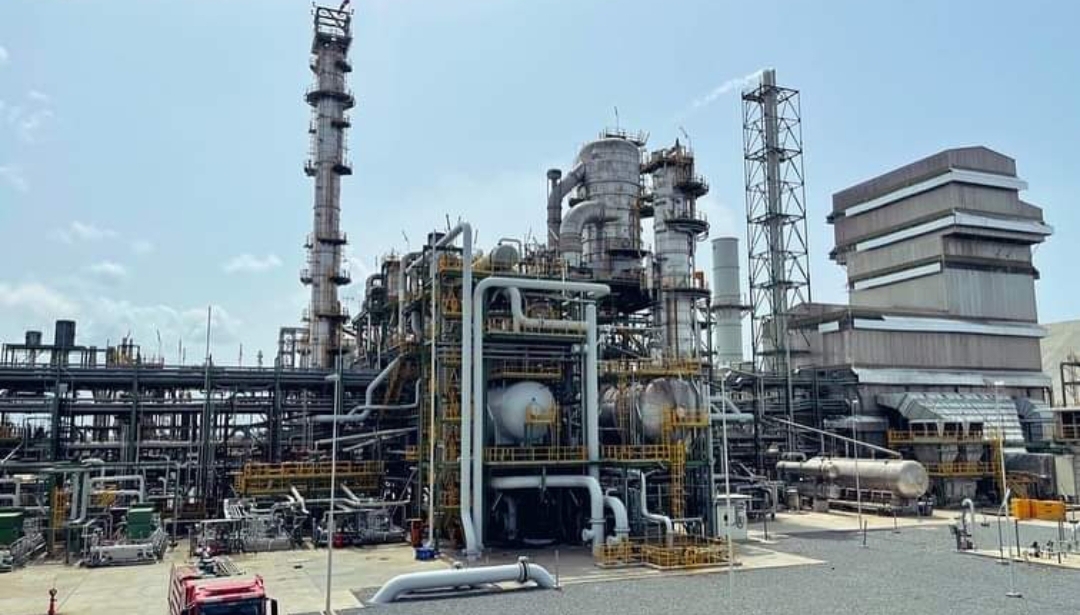
Some economic and energy experts have commended the Dangote Refinery for its plan to expand its refining capacity from 650,000 barrels per day to 1.4 million barrels per day.
They stated that the move would put Nigeria on the path to achieving full self-sufficiency in petroleum products, conserve foreign exchange, and improve fuel affordability for ordinary citizens.
They spoke in separate interviews with journalists in Lagos on Sunday, following the announcement of the expansion by Aliko Dangote, the president of the Dangote Group.
Muda Yusuf, chief executive officer of the Centre for the Promotion of Private Enterprise (CPPE), described the move as a landmark step in Nigeria’s industrial development.
“We should be proud that a Nigerian of such stature has demonstrated the capacity and courage to ensure that our country becomes self-reliant in refined petroleum,” Mr Yusuf said.
According to him, the expansion would enable the refinery to meet Nigeria’s domestic fuel demand and export more products to global markets, strengthening the country’s foreign reserves.
Mr Yusuf said the project would also boost the country’s macroeconomic stability by reducing the huge amount of foreign exchange previously spent on importing refined petroleum.
“Before now, Nigeria expended about 30 per cent of its foreign exchange earnings on fuel imports. This expansion will help conserve a substantial portion of that,” he explained.
Mr Yusuf said the refinery’s growing capacity would strengthen Nigeria’s industrial base, attract new investments, and create a positive global perception of the country’s economic potential.
Similarly, Ayodele Oni, partner and chair of the Energy and Natural Resources Practice Group at Bloomfield, described the refinery expansion as a “bold and transformative industrial venture.”
He stated that the establishment of such a large complex within Nigeria would promote local content, create jobs, and stimulate technological advancements in the energy sector.
However, he noted that legitimate concerns exist about the possible emergence of monopolistic dominance within the sector.
“There are always concerns around monopoly, and rightly so. This is why state regulators like the Federal Competition and Consumer Protection Commission must be effective and proactive,” he said.
Mr Oni added that it would be unjust to criticise Dangote for taking calculated risks in a difficult business environment where many investors have often shied away.
“It would also be unfair to deny him the benefits of his huge investment. What matters is ensuring fairness, transparency, and open competition,” Mr Oni said.
Also, Boniface Okezie, president of the Progressive Shareholders Association of Nigeria, lauded Dangote for demonstrating consistency and ambition in expanding the refinery’s capacity.
He said the development was an indication of confidence in Nigeria’s economy and a reflection of the growing participation of indigenous investors in large-scale projects.
Mr Okezie, however, urged the Dangote Group to prioritise domestic consumption over export, stressing that Nigeria’s energy needs remain enormous and largely underserved.
“Charity should begin at home. The immediate focus should be on meeting domestic fuel demand rather than rushing to export to recoup investment,” Okezie said.
“These kinds of investments take time before they begin to yield profit. Emphasis should be on affordable pricing for local consumers.”
Mr Okezie also called on the federal government to support other domestic investors who had secured licences to build refineries, noting that they need incentives to thrive.
He said increased participation by private investors would promote healthy competition, create jobs, and stabilise fuel pricing in the long term.
The Dangote Refinery recently announced plans to expand its facility from 650,000 barrels per day to 1.4 million barrels per day. It described the expansion as a strategic move to boost global refining capacity.
(NAN)

We have recently deactivated our website's comment provider in favour of other channels of distribution and commentary. We encourage you to join the conversation on our stories via our Facebook, Twitter and other social media pages.

More from Peoples Gazette

Agriculture
FG tasks ECOWAS on leveraging financing strategies for agroecology
The federal government has urged stakeholders in the agriculture and finance sectors in the West Africa region to leverage financing strategies to enhance agroecology practices

Politics
Katsina youths pledge to deliver over 2 million votes to Atiku
“Katsina State is Atiku’s political base because it is his second home.”

States
Osun APC chieftain calls for restraint, credible poll
Mr Oyintiloye urged stakeholders to refrain from violence and ensure a peaceful electoral process, adding that no political ambition is worth the life of any citizen.

NationWide
2027: Afenifere seeks stronger Yoruba-Igbo ties, warns against ethnic division
Mr Wellington said the initiative was informed by growing mutual suspicion between the Yoruba and Igbo communities, which he described as unhealthy for national unity.

World
Israeli Prime Minister Netanyahu rejects Trump’s Gaza peace plan
The PM said he would not withdraw forces until the Palestinian group Hamas fully disarms.
NationWide
Ex-finance minister Kemi Adeosun’s husband for burial Thursday
Mr Adeosun died last Wednesday in Lagos State.

States
Police intervene in Niger drivers’ protest
Commercial drivers blocked the Mokwa to New-Bussa and Mokwa to Bida to Ilorin roads to protest alleged kidnapping of their colleagues by suspected bandits.
Opinion
Aderonke Atoyebi: When Results Speak: Why Tinubu’s commendation of Zacch Adedeji matters
Dr Adedeji, in line with the express directive of President Tinubu, championed reforms that make taxation simpler, fairer, and more efficient.


