

Uba Sani presents N985.9 billion 2026 draft budget to Kaduna assembly

Kaduna State Governor, Uba Sani, on Monday presented a ₦985.9 billion Appropriation Bill for the 2026 fiscal year to the Kaduna State House of Assembly
Mr Sani described it as a people-oriented budget designed to consolidate gains in security, infrastructure, education and rural development.
Presenting the draft budget before lawmakers at Lugard Hall, the governor said the proposal represented not only a constitutional requirement but “a solemn civic engagement” anchored on transparency, equity and citizens’ welfare.
Mr Sani disclosed that the 2026 budget was prepared through one of the most extensive consultation processes ever conducted in the state, involving traditional leaders, civil society organisations, women and youth groups, academia, business leaders and vulnerable populations across the 23 LGAs in the state.
He stated that contributions from farmers, traders, teachers, artisans, persons with disabilities and widows formed a major part of the fiscal framework, strengthening participatory governance.
The draft budget projects ₦734.2 billion in recurrent revenue and ₦251.6 billion in capital receipts. Capital expenditure constitutes 71 per cent of the proposal, reflecting the administration’s development priorities.
The governor stated that education and infrastructure were each allocated 25 per cent of the budget, health 15 per cent, agriculture 11 per cent, security 6 per cent, social development 5 per cent, governance 5 per cent and climate action 4 per cent.
He further revealed that each of the 255 wards in Kaduna State would receive ₦100 million for community-selected projects under the Ward Development Committee initiative, which he described as the largest grassroots budgeting model in the country.
Mr Sani appealed for the lawmakers’ swift consideration of the bill, saying it embodies “renewal, resilience and a far-reaching vision for progress in every home, ward and local government.”
Reviewing the 2025 fiscal year, Mr Sani described it as a period of “remarkable achievements and resilient advancement” despite economic pressures, fluctuating federal allocations and persistent security challenges.
On security, he said Kaduna State continued to confront banditry, kidnapping and communal tensions, but improved collaboration with federal security agencies had enhanced operations and restored calm to several troubled communities.
According to him, previously divided communities were reconciling, farmlands had reopened and schools earlier shut due to insecurity were now fully operational under the Kaduna Peace Model.
The governor reported that the state was currently implementing 140 road projects covering 1,335 kilometres, with 64 already completed. He said the new roads were opening economic corridors and reconnecting long-neglected settlements.
He added that the transport sector had undergone significant reforms, noting that the Kaduna Bus Rapid Transit (KBRT) system—set to be the first in Northern Nigeria—would feature CNG-powered buses, digital ticketing and a 24km dedicated corridor.
He announced that the Interstate Bus Terminal in Kakuri was 75 per cent complete, while the subsidised transport scheme had saved the residents over ₦500 million through free and discounted rides.
Mr Sani also said the Kaduna Light Rail project was progressing, with Phase I covering the Rigachikun–Sabon Tasha corridor and Phase II planned to link Millennium City to Rigasa.
He added that major bus park construction was also underway.
The governor said over 500,000 hectares of abandoned farmlands had been recovered, while feeder roads, markets and extension services were being revitalised to boost agricultural productivity.
He added that agricultural investment grew from ₦1.4 billion in 2023 to ₦74.2 billion in 2025, enabling the distribution of more than 900 trucks of free fertiliser and expanded support for irrigation, mechanisation, livestock vaccination and seed improvement.
He highlighted the African Development Bank–supported $510 million Special Agro-Industrial Processing Zone as a catalyst positioning Kaduna as an emerging agro-industrial hub.
Mr Sani described education as the “cornerstone” of the state’s development strategy.
He said 535 schools had been reopened and more than 300,000 out-of-school children returned to classrooms in 2025, following a 40 per cent reduction in tertiary institution fees.
Mr Sani listed the construction of 736 classrooms, renovation of 1,220, provision of essential learning facilities, training for over 33,000 teachers, and establishment of bilingual schools and vocational hubs.
In the health sector, the governor said all the 255 Primary Healthcare Centres had been upgraded to Level 2 status.
He cited the renovation of 15 general hospitals, completion of five others, and the inauguration of the 300-bed Bola Tinubu Specialist Hospital.
Mr Sani added that the government implemented CONMESS and CONHESS for health workers, strengthened emergency response services, built an oxygen plant, improved the state medical warehouse and earmarked ₦1 billion for health insurance for vulnerable households.
Mr Sani also outlined strides in vocational training, including the establishment of the Institute of Vocational Training and Skills Development in Rigachikun, two satellite campuses, partnerships with Microsoft and Google, and the remodelling of Panteka Market to support over 38,000 artisans
Responding, the Speaker of the Kaduna State House of Assembly, Yusuf Liman, commended the governor for presenting what he described as an “ambitious, comprehensive and development-driven” budget proposal.
Mr Liman said the 2026 draft budget demonstrated a clear commitment to expanding rural infrastructure, strengthening human capital and ensuring balanced growth across the state.
He applauded the governor for granting lawmakers direct involvement in constituency projects—describing it as a first in Kaduna’s history—and for upholding the principles of separation of powers.
The speaker assured that the house would subject the budget to a transparent and thorough review, pledging collaboration with the Executive to accelerate development and deliver democracy dividends.
(NAN)

We have recently deactivated our website's comment provider in favour of other channels of distribution and commentary. We encourage you to join the conversation on our stories via our Facebook, Twitter and other social media pages.

More from Peoples Gazette

Agriculture
FG tasks ECOWAS on leveraging financing strategies for agroecology
The federal government has urged stakeholders in the agriculture and finance sectors in the West Africa region to leverage financing strategies to enhance agroecology practices

Politics
Katsina youths pledge to deliver over 2 million votes to Atiku
“Katsina State is Atiku’s political base because it is his second home.”

States
Lagos commissioner praises Tinubu, Oyo govt, security agents over pupils, teachers’ rescue
The commissioner urged school administrators and communities to strengthen school security infrastructure.

Hot news Home top
Norwegian Air changes logo to British Airways after losing World Cup bet
The 2026 World Cup marked a historic milestone for Norway because it’s the first time the Scandinavian nation reached the tournament’s quarter-finals.
Heading 5
Alleged Fake Agency: Police to arraign PFIPC DG Adeniyi Adeyemi Tuesday
Mr Adeyemi was alleged to have operated the fictitious agency from the 2nd Floor of the Federal Secretariat Complex in Abuja, Phase III, before his arrest.
States
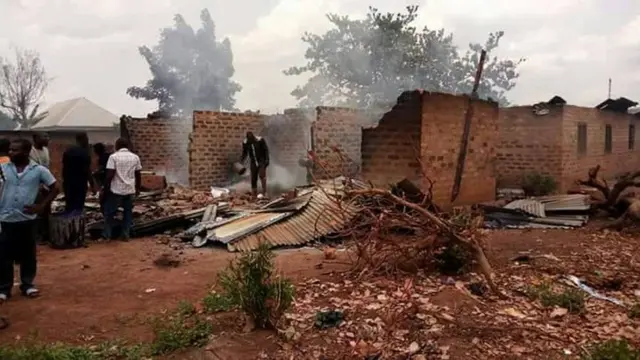
Benue deputy governor demands justice for suspected killer herders’ victims
The deputy governor assured the people that the state government was committed to the protection of lives and property.

NationWide
NDLEA intercepts South African woman with heroin at Abuja airport
Mr Babafemi said the suspect concealed 14 large blocks of heroin weighing 5.75kg in her luggage.


