

Stakeholders urge reforms to improve healthcare quality, reduce costs

Healthcare stakeholders have called for urgent reforms to strengthen quality, affordability, and equity in Nigeria’s healthcare delivery system.
They said that millions of people remained at risk due to slow progress in implementing essential policies and reducing out-of-pocket expenditure.
They made the call in a webinar on Thursday at Universal Health Coverage (UHC) Day 2025 High-Level Convening, themed, “Unaffordable Health Costs? We’re Sick of It.”
The 2025 UHC Day High-Level Convening was organised by the Nigeria UHC Forum, in collaboration with the PharmAccess Foundation.
It brought together national and sub-national leaders, policymakers, health financing experts, development partners, civil society, and implementing organisations to drive equitable, high-quality, and financially accessible healthcare for all Nigerians.
The convening focused on reducing financial hardship and strengthening domestic healthcare financing.
At the stakeholder engagement, Njide Ndili, president of the Healthcare Federation of Nigeria, said that unaffordable healthcare costs and inequities had pushed many families into poverty.
Ms Ndili emphasised that quality was the arrowhead of UHC and commended the Coordinating Minister of Health, Muhammad Ali Pate, for prioritising reforms.
She said Nigeria should do more to meet the global UHC target of 2030, urging collaboration among governments, the private sector, civil society, and development partners.
Funke Fasawe, country director, Clinton Health Access Initiative, said that citizens’ access to healthcare should not depend on their purchasing power.
“Too many people are dying because they have to pay out of pocket for even the most basic services,” she said.
Ms Fasawe called for stronger policy implementation and collective pressure from citizens, not just institutions, to ensure accountability in the health system.
Saheed Ogunme, chief medical director of the Federal Medical Centre, Ebute-Meta, Lagos State, said healthcare providers daily witnessed devastating effects of unaffordable care on patients.
“We see daily the challenges of patients who cannot afford care, and it is disheartening. Hospitals lose money, and it affects our bottom line.
“Nigeria must decide the road we want to travel, whether to adopt a tax-funded system like the UK’s NHS or an insurance-driven model like in the United States,” he said.
Meanwhile, in a video clip played during the event, Mr Pate highlighted the federal government’s ongoing initiatives to enhance access to quality healthcare through collaborations with SafeCare and Access, emphasising governance, efficiency, and digital transformation.
“As a project, we work with various state governments and non-junior tertiary hospitals through the Summit Committee we created two years ago.
“SafeCare has been instrumental in setting ethical standards, accrediting services, and enhancing the capacity of our health system to focus on quality improvement,” he said.
Under the Health Sector Rural Investment Initiative, he said the ministry was focusing on three pillars: governance to improve responsiveness and accountability, prioritising effective, affordable services, and reducing rural healthcare disparities.
“We are beginning to see improvements, although we are not there yet. Quality is about using resources efficiently. Poor-quality care is wasteful.
“The resilience of our health system will be enhanced if we move toward overall quality improvement, and partners like Sifke are contributing to this direction,” he added.
Digital transformation was also highlighted as a critical enabler for system-wide quality improvement.
All speakers agreed that Nigeria should urgently move beyond discussions to concrete implementation that improves service quality, reduces out-of-pocket spending, and expands access for underserved populations.
(NAN)

We have recently deactivated our website's comment provider in favour of other channels of distribution and commentary. We encourage you to join the conversation on our stories via our Facebook, Twitter and other social media pages.

More from Peoples Gazette

States
Independence: NBA urges Nigerians to expect better future
The NBA said that ordinary Nigerians should be deriving benefit from the subsidy removal rather than hardship.

Agriculture
FG tasks ECOWAS on leveraging financing strategies for agroecology
The federal government has urged stakeholders in the agriculture and finance sectors in the West Africa region to leverage financing strategies to enhance agroecology practices

Politics
Katsina youths pledge to deliver over 2 million votes to Atiku
“Katsina State is Atiku’s political base because it is his second home.”
States
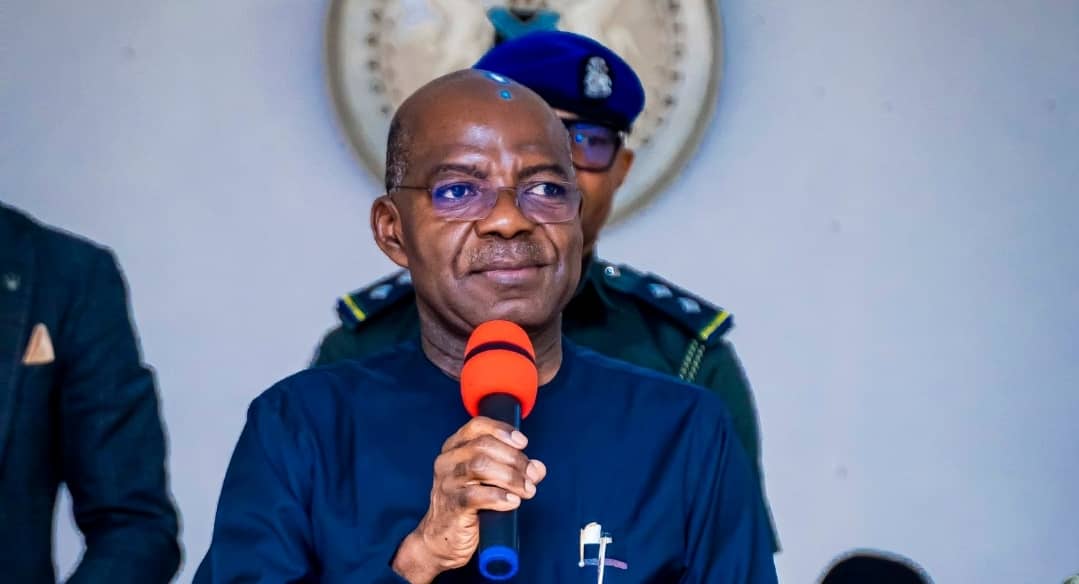
Otti advises Abia residents to reject election-season politicians’ promises
The bishop thanked God for giving Abia the opportunity to be governed by Mr Otti.

Heading 3
NiMet predicts three-day rain, sunshine nationwide from Monday
The agency also predicted cloudy skies with intervals of sunshine across the southern region.
States
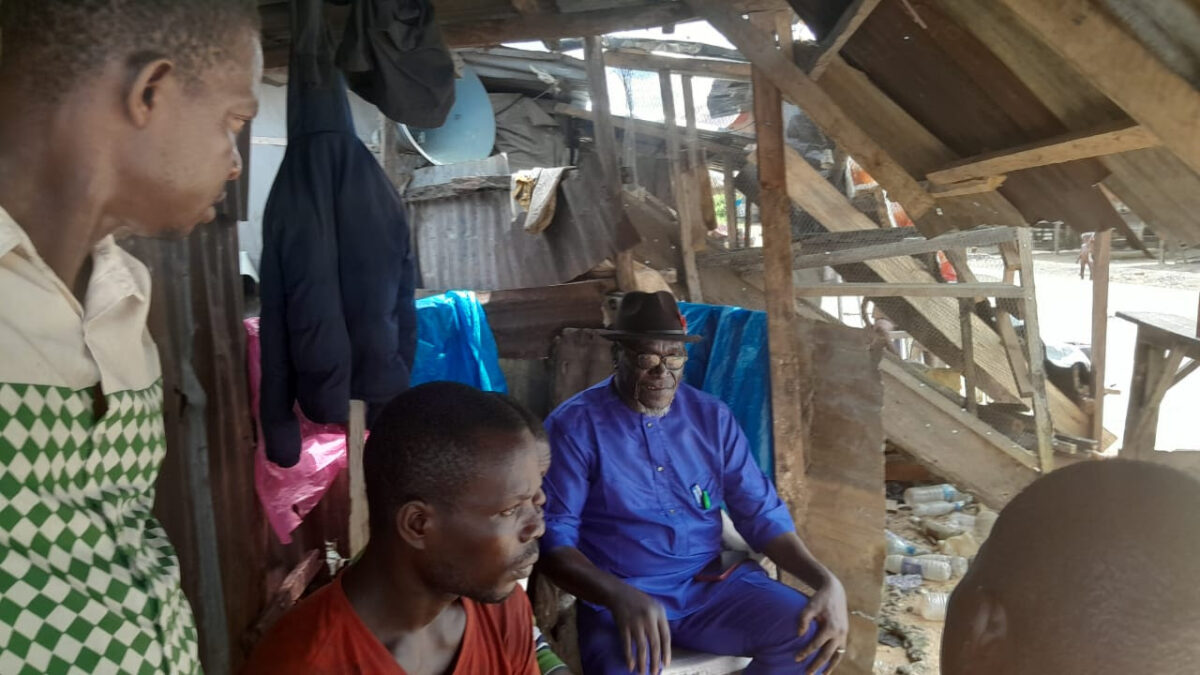
Environmentalists seek probe into Bayelsa, Rivers tremors
A fruit seller, Benita Douglas, said the vibration broke another trader’s table.

States
Coalition urges investment in girls’ education to end child marriage
Mr Ibn-Attahir said keeping girls in school was essential to ending child marriage.

Hot news Home top
FG condemns Houthi attack on Saudi Arabia’s airport, urges restraint
The ministry stressed the need to respect Saudi Arabia’s sovereignty and territorial integrity.

States
PDP governorship candidate vows free shops for traders affected by Enugu market demolition
Mr Nnaji described trading as an integral part of the people’s economic and social life.


