

Experts speak on child development, impact of noise pollution on cognition

Experts in child psychology and education have stressed the importance of a calm, safe learning environment for children, warning that constant noise and insecurity can negatively affect concentration, memory and overall academic performance.
In separate interviews with Peoples Gazette, specialists explained that children learn best when their surroundings support their mental and emotional well-being.
Oluwatoba Elegbeleye, a professor of Psychology at Obafemi Awolowo University, Ile-Ife, Osun State, said the safety and comfort of a learning space play a major role in shaping a child’s cognitive growth.
“Cognitive development is a painstaking, conscious input that does not foreclose issues of safety and every other thing that can give comfort and can subjugate stress,” Mr Elegbeleye said.
“Any minute occurrence that disturbs peace of mind, distracts attention and poses danger would definitely have an effect on short- and long-term memory. It would disturb one from making proper memory storage.”
Referencing the wave of mass abductions of schoolchildren in Northern Nigeria, he noted that fear creates a hostile atmosphere for learning.
He said: “All those things instill fear and if there is fear, learning cannot take place. If there is any iota of disturbance and fear it is going to affect learning. Academic performance is all about proper learning.”
“People don’t learn under threat. The moment you allow stress to be an intervening variable, it would definitely impede academic performance.”
Supporting this view, a professor of Educational Administration at the University of Lagos, Stephen Oyebade, cited a facilities management course that emphasises proper school siting in secure and quiet locations.
“A place you want to develop future leader should be safe, serene, secured and stable. You cannot put children near the atlantic where any upsurge can sweep them away. Or quarry or barracks, where they will always be hearing strange sounds disturbing their concentration. Or a market where noise will disturb their serenity,” Mr Oyebade said.
Modiu Olaguro, former Mathematics Education lecturer at the University of Lagos and current Doctoral Candidate at Virginia Tech, U.S., said safety must come first before any discussion on sound interference.
“Teaching and learning requires a calm and serene environment. Teachers and students, members of staff need to feel safe. The first thing is safety. So, before we talk about the impact of sound on concentration, we should talk about safety,” Mr Olaguro said.
He added that schools function as complex systems, where external disruptions increase the burden on learners.
“Every single thing happening in the school impacts teaching and learning. The quality of staff. The curriculum. The motivation of the staff. The schedule of some subjects on the timetable. Everything impacts teaching and learning. That’s why the school in some way can be regarded as a complex system always in a dynamic state. If the school is a dynamic system, anything that comes from outside becomes an additional burden and problem.”
Mr Olaguro further explained that factors like hunger and poor home conditions make school hours mentally demanding, which is why quiet spaces are essential.
He said: “Studies have shown that air and noise pollution have significant effect on cognitive development. Cognitive development involves the process of humans acquire knowledge through learning and experience. This is related to cognitive abilities which emcomass, memory, language usage, perception and planning. Cognitive development involves the evolution of intellectual capacity, with intelligence being the most critical aspect.”
Also speaking to The Gazette, Umoru Thadeus, lecturer and Doctor of Psychology at Prince Abubakar University, Anyigba, Kogi State, described noise pollution as a major environmental risk to children’s cognition.
He said: “Studies have showned that cognitive development is negatively affected by air and noise pollution, most importantly, noise pollution. WHO asserts that children and adolescence are the most vulnerable to noise because the bodies, the brain, auditory system, limbic system and psycological structure, such as memory, perception, cognition are still in the formative process. The noise that ordinarily does not interfere with adult may have significant effect on children. So children have the most adverse, irreversible consequences of noise pollution because their bodies and psycological structuress are still in formative stage. Damages at this stage have long term implications and sometimes irreversible consequences as they may have reduced the opportunity to develop the attention required for proper learning and development.”
Explaining the negative impact of noise pollution on school environment, he added: “When school environment is constantly under noise, there would be interference of memory as teachers and students would have difficulty in maintaining attention and focusing on task until completion. Sudden blast or blarring of honk from heavy-duty trucks can make even the teacher and students lose concentration. That actually affects learning.”
According to Mr Thadeus, noise pollution also increases stress, frustration and restlessness, thereby affecting learning. It also interference with communication is also another major problem. When noise becomes constant it affects memory, reading comprehension.
The World Health Organisation recommends noise levels below 35 decibels in classrooms for good teaching and learning conditions. The agency has also described noise as an “underestimated threat” capable of causing both short- and long-term health issues.
The WHO guidelines highlight risks including “sleep disturbance, cardiovascular effects, poorer work and school performance, hearing impairment, etc.”
Research published in the study Health Effects of Noise Exposure in Children states that “There is robust evidence for an effect of school noise exposure on children’s cognitive skills such as reading and memory, as well as on standardised academic test scores.”

We have recently deactivated our website's comment provider in favour of other channels of distribution and commentary. We encourage you to join the conversation on our stories via our Facebook, Twitter and other social media pages.

More from Peoples Gazette

States
Independence: NBA urges Nigerians to expect better future
The NBA said that ordinary Nigerians should be deriving benefit from the subsidy removal rather than hardship.

Agriculture
FG tasks ECOWAS on leveraging financing strategies for agroecology
The federal government has urged stakeholders in the agriculture and finance sectors in the West Africa region to leverage financing strategies to enhance agroecology practices

Politics
Katsina youths pledge to deliver over 2 million votes to Atiku
“Katsina State is Atiku’s political base because it is his second home.”
States
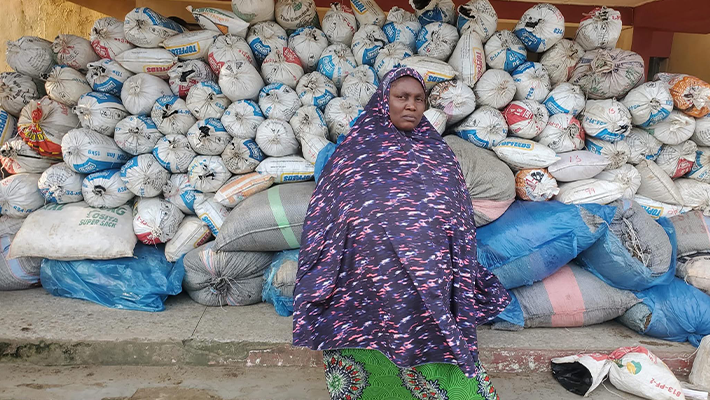
Previously convicted 83-year-old grandma arrested over drug dealing in Abia
The NDLEA said the suspect was re-arrested following credible intelligence indicating that she ran a notorious drug joint.
States
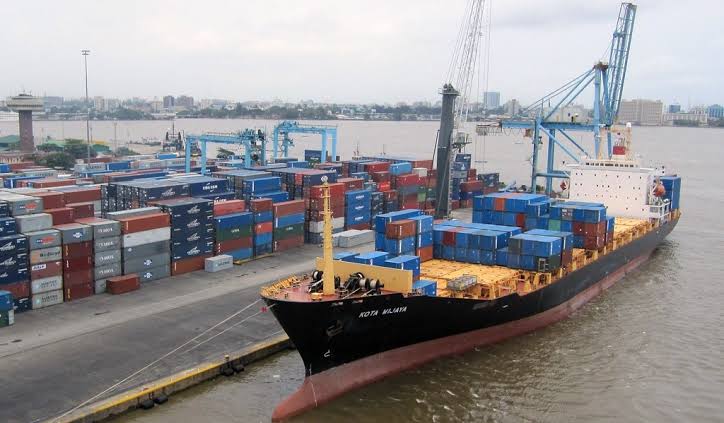
NPA moves to decongest Apapa port corridors
The port manager called for stronger stakeholder collaboration to address congestion.

Lagos
Sanwo-Olu to inaugurate Tinubu-Hamzat campaign headquarters in Lagos
Governor Babajide Sanwo-Olu of Lagos State will on Monday inaugurate the PBAT-KOH Lagos Central Campaign Headquarters on Lagos Island.
States
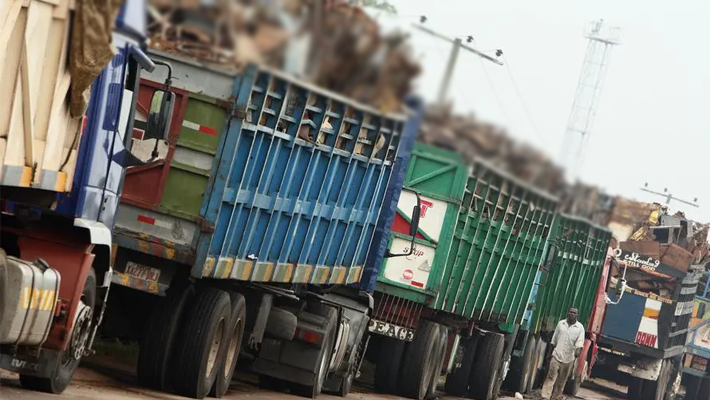
Articulated vehicles block Makurdi-Lafia Highway after clash with immigration officers
The situation left locals and travellers passing through Makurdi stranded.

World
Study finds trust in science fell below pre-COVID-19 levels, links decline to financial hardship
“The steepest declines are among people who feel they are struggling financially,” the study finds.

States
Large consignments of illicit drugs seized in Lagos, Kano, five other states: NDLEA
NDLEA said in a statement that the states were Lagos, Taraba, Kano, Kaduna, Edo, Cross River and Ondo.


