

Exorbitant party nomination fees turning democracy into elite contest, says IPAC
The Inter-Party Advisory Council (IPAC) has raised concerns over the escalating cost of nomination forms by major political parties in Nigeria ahead of the 2027 general elections.
The umbrella body of political parties cautioned that the trend had weakened inclusivity and undermined credible participation in the country’s democratic process.
The Lagos State IPAC spokesman, James Adeshina, who is also the Lagos State Chairman of the People’s Redemption Party (PRP), expressed the concern in Lagos.
Mr Adeshina said while the Independent National Electoral Commission (INEC) had consistently assured Nigerians of its commitment to credible elections, the integrity of the electoral process must begin from the point of candidate emergence within political parties.
He noted that the rising cost of nomination forms across several dominant political parties had increasingly placed elective offices beyond the reach of competent and grassroots aspirants lacking strong financial backing.
“Across several major political platforms, nomination forms have reached staggering prices, effectively shutting out capable and reform-driven aspirants,” he said.
According to him, the situation risks turning Nigeria’s democracy into what he described as an “elite marketplace” rather than a genuine contest of ideas, competence, and service delivery.
Saying IPAC did not have constitutional authority to regulate internal party decisions, including nomination fees, Mr Adeshina said the body remained committed to promoting fairness, inclusivity, and best democratic practices.
He urged political parties to urgently review their nomination fee structures in the interest of broader representation and public trust in the political system.
Mr Adeshina cautioned that the excessive cost of nomination fees could weaken internal party democracy and erode citizens’ confidence in governance structures.
He also advised aspirants discouraged by high fees in some political parties to explore alternative platforms with more affordable processes.
“Several political parties under IPAC maintain lower and more accessible nomination costs, providing credible aspirants viable opportunities to contest elections without undue financial burden,” he said.
He cautioned that when access to political leadership was determined primarily by financial strength, governance risked being driven by personal financial recovery rather than public service.
According to him, key risks associated with high nomination fees include exclusion of credible aspirants, weakening of internal democracy, erosion of public trust, and emergence of profit-driven governance.
Mr Adeshina called on the INEC, political parties, and other democratic institutions to collaborate in safeguarding the integrity and inclusiveness of Nigeria’s electoral system.
“Electoral credibility is not only about transparent voting processes but also about equitable access to candidacy. Nigeria’s democracy must remain open, competitive and inclusive, not commercialised,” he said.
Noting that democracy should not be for sale, Mr Adeshina said exorbitant fees undermined inclusivity in politics.
(NAN)

We have recently deactivated our website's comment provider in favour of other channels of distribution and commentary. We encourage you to join the conversation on our stories via our Facebook, Twitter and other social media pages.

More from Peoples Gazette

States
Independence: NBA urges Nigerians to expect better future
The NBA said that ordinary Nigerians should be deriving benefit from the subsidy removal rather than hardship.

Agriculture
FG tasks ECOWAS on leveraging financing strategies for agroecology
The federal government has urged stakeholders in the agriculture and finance sectors in the West Africa region to leverage financing strategies to enhance agroecology practices

Politics
Katsina youths pledge to deliver over 2 million votes to Atiku
“Katsina State is Atiku’s political base because it is his second home.”
Africa
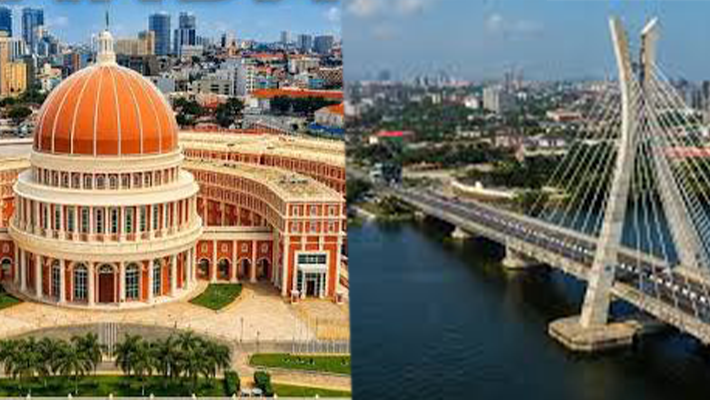
Luanda to overtake Lagos as Sub-Saharan Africa’s most populous city by 2050: World Bank
Angola’s capital, Luanda, could surpass Lagos as Sub-Saharan Africa’s most populous city by 2050, according to a recent World Bank report.

Abuja
UN warns outer space arms race worsening
The United Nations Office for Disarmament Affairs has warned that growing military competition in outer space threatens international peace and security.

Abuja
Police apprehend Abuja pastor over stolen car
The police arrested a pastor, Edwin Nwabueze, and another suspect, Sadiq Jamiu, for stealing a Toyota Camry at UTC Plaza, Garki District, Abuja.

States
Terrorists invade Kebbi, kill 12 including police inspector
Mr Usman said seven civilians and a police inspector were killed during an attack on Wednesday, when the officer was responding to a distress call.

Economy
Nigeria seeks UN-backed maritime surveillance to combat piracy, oil theft
Nigeria has called on the United Nations Security Council to support a regional maritime surveillance system to combat piracy, oil theft and other crimes.

Anti-Corruption
U.S. indicts suspects in multimillion-dollar ‘ghost student’ loan scam linked to Kenyan fraudsters
Investigators said the fraud had been ongoing since at least 2021, with estimates putting the scale of the fraud well over $200 million.


