

Experts warn of risks as Nigeria leads Africa in spam calls

Telecommunications and cybersecurity experts have warned that Nigeria’s emergence as Africa’s most spammed country and eighth globally could pose serious economic and security risks if unchecked.
The experts said the growing volume of spam calls was gradually eroding public trust in mobile communication and threatening business operations, digital transactions and national cybersecurity efforts.
They spoke on Friday in Lagos, following a global spam-monitoring report showing that more than half of the unknown calls received by Nigerians were identified as spam.
The report showed that telecom-related calls accounted for 35 per cent of spam traffic in the country.
According to the report, the increase is linked to rising levels of automated telemarketing, fraudulent schemes, and the misuse of telecommunications infrastructure by cybercriminals impersonating network providers, banks, and service agents.
Bayo Akinlade, a telecommunications policy analyst, said many Nigerians now avoid answering unfamiliar calls because of fears surrounding scams, identity theft and financial fraud.
“When citizens stop trusting phone calls, it affects banking, logistics, healthcare, emergency response and government outreach programmes relying on communication,” he said.
Mr Akinlade noted that legitimate businesses were also struggling to reach customers because many subscribers ignored unknown numbers, assuming they were fraudulent callers. According to him, the trend can reduce customer engagement and negatively affect sectors that rely on direct mobile communication for service delivery.
He urged telecoms operators to deploy stronger caller verification systems to identify and filter suspicious traffic before calls reach consumers.
Mr Akinlade also called on the Nigerian Communications Commission to strengthen enforcement against unauthorised telemarketing and fraudulent bulk call operations.
Adaobi Eze, a cybersecurity consultant, said the growing sophistication of spam operations exposed weaknesses in digital security awareness and enforcement of telecom regulations.
Ms Eze said fraudsters increasingly used automated software and artificial intelligence-driven voice systems to place thousands of calls daily, making detection more difficult.
“Spam calls now extend beyond marketing disturbances and are linked to phishing operations, identity theft schemes and financial fraud targeting vulnerable citizens,” she said.
She warned that repeated exposure to fraudulent calls could discourage digital participation, especially among elderly users and rural populations adapting to mobile financial services. According to her, declining trust in phone communication can affect mobile banking adoption, e-commerce activities and digital inclusion initiatives promoted by government and private operators.
Ms Eze called for nationwide consumer awareness campaigns to educate subscribers on recognising fraudulent communication patterns and safeguarding personal information from scammers.
Ibrahim Yusuf, a digital economy researcher, warned that the trend could undermine Nigeria’s ambition of becoming Africa’s leading technology-driven economy.
Mr Yusuf said trust remained critical to digital ecosystems, noting that users repeatedly exposed to spam or scam calls often became hesitant toward digital platforms generally.
He stressed the need for telecom operators, financial institutions, and cybersecurity agencies to collaborate on advanced spam-detection technologies capable of identifying suspicious behavioural patterns in real time.
Mr Yusuf also advocated stronger enforcement of Nigeria’s data protection regulations to prevent illegal access to subscriber information used by spam operators.
Tunde Folarin, an industry observer, said Nigeria’s growing digital population and widespread mobile penetration had attracted organised spam networks and cybercriminal groups.
Mr Folarin noted that Nigeria’s expanding fintech ecosystem and increased reliance on mobile transactions heightened risks associated with fraudulent communication activities.
He warned that abuse of telecom infrastructure could discourage foreign investment in Nigeria’s digital economy if cybersecurity and consumer protection concerns persisted.
(NAN)

We have recently deactivated our website's comment provider in favour of other channels of distribution and commentary. We encourage you to join the conversation on our stories via our Facebook, Twitter and other social media pages.

More from Peoples Gazette

Agriculture
FG tasks ECOWAS on leveraging financing strategies for agroecology
The federal government has urged stakeholders in the agriculture and finance sectors in the West Africa region to leverage financing strategies to enhance agroecology practices

Politics
Katsina youths pledge to deliver over 2 million votes to Atiku
“Katsina State is Atiku’s political base because it is his second home.”

World
Canadian province sues OpenAI over ChatGPT’s role in mass shooting
British Columbia has filed a lawsuit against OpenAI and its CEO, Sam Altman, over the Tumbler Ridge school shooter’s interactions with ChatGPT.
Kano
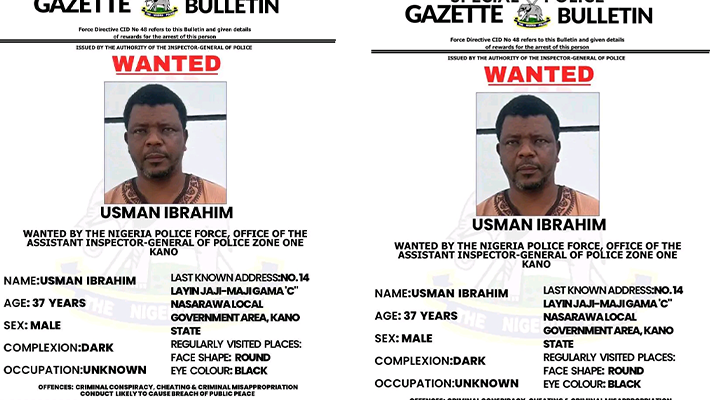
Police declare criminal suspect Usman Ibrahim wanted
The office of the assistant inspector-general of police, Zone 1, Kano, has declared Usman Ibrahim a wanted suspect in an alleged criminal conspiracy.

Abuja
Abuja ex-convict nabbed in Maitama for attempted car theft
The suspect had previous arrest records in two separate car theft incidents in Garki and Zuba divisions and had served time before being released from Keffi Prison last April.

Anti-Corruption
How Bauchi accountant-general transferred funds to private company: Witness
Williams Abimbola, a compliance officer with United Bank for Africa, has testified in the ongoing trial of Bauchi’s accountant-general, Sirajo Jaja.
States
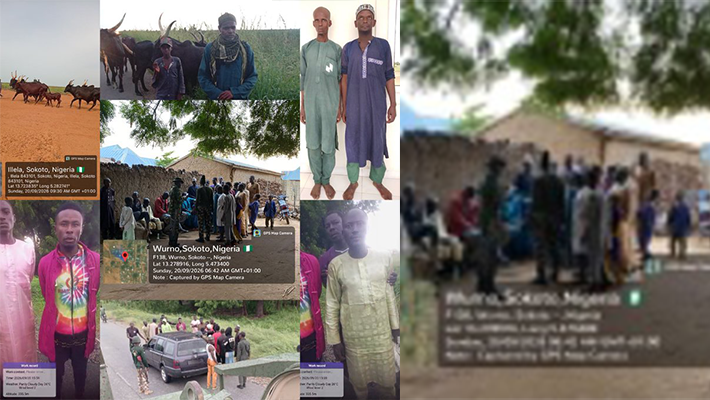
Troops capture alleged Lakurawa terrorists in Sokoto, free 23 hostages
Troops of Fansan Yamma say they rescued 23 kidnapped victims and foiled terrorist attacks in separate operations across Sokoto.

Abuja
TCN to shut Kukwaba transmission substation for six-hour maintenance
The Transmission Company of Nigeria has announced a six-hour maintenance exercise at its 132/33kV Kukwaba Transmission Substation in Abuja on Tuesday.


