

FG expands newborn sickle cell screening, seeks insurance coverage
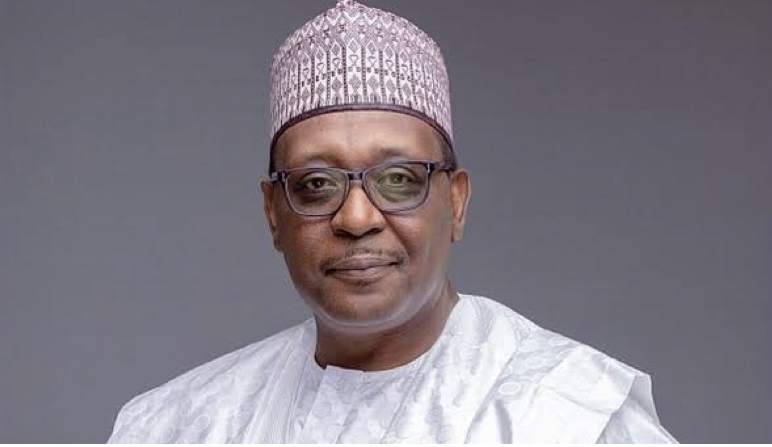
The federal government says it has commenced implementation of the Universal Newborn Screening Policy for sickle cell disease (SCD) in selected health facilities in Lagos, Kano and the Federal Capital Territory (FCT).
The Coordinating Minister of Health and Social Welfare, Muhammad Pate, said this in Abuja at a news conference marking the 2026 World Sickle Cell Day.
Observed globally on June 19 to raise awareness about SCD, the day has the theme “Closing the Survival Gap: Equity in Sickle Cell Care.”
Mr Pate, who was represented by the permanent secretary, Daju Kachollom, said the programme was being implemented with support from the Clinton Health Access Initiative (CHAI).
He also announced the revision of the National Guidelines for the Prevention, Control and Management of Sickle Cell Disease to strengthen the use of hydroxyurea therapy and other evidence-based interventions.
According to him, primary healthcare workers are already being trained, beginning with the South-West, while standard operating procedures and desk guides are being deployed nationwide.
He said the government had established and equipped six Centres of Excellence for Sickle Cell Disease, one in each geopolitical zone.
“These centres are fitted with high-performance liquid chromatography machines and other critical resources to support newborn screening, specialised diagnosis and comprehensive care,” he said.
Mr Pate described sickle cell disease as one of Nigeria’s most pressing public health challenges, noting that about 25 per cent of adults carried the sickle cell gene.
He said an estimated 100,000 infants die annually from complications associated with the disease, accounting for about eight per cent of infant mortality in the country.
“Today, our focus is not simply on raising awareness. It is on accelerating action to close the survival gap and ensure that every Nigerian living with sickle cell disease has access to timely diagnosis, quality treatment and financial protection,” he said.
The minister said the government was engaging the National Health Insurance Authority (NHIA) to include affordable newborn screening, essential diagnostics and subsidised hydroxyurea therapy in the national benefit package.
“Access to life-saving care must be determined by need and not by the ability to pay,” he said.
Mr Pate added that the government would continue integrating sickle cell services into maternal, newborn, child and adolescent health programmes while strengthening surveillance, research and partnerships.
Earlier, the director of public health, Charles Nzelu, said Nigeria remained the most sickle cell-endemic country in Africa.
Mr Nzelu said statistics showed that only about half of children born with the disease survived beyond five years in Nigeria, compared with more than 95 per cent in developed countries.
“The best form of control for sickle cell disease is prevention,” he said.
He urged traditional and religious leaders, civil society organisations, development partners and the media to intensify awareness and advocacy efforts.
Also speaking, the director of the Centre of Excellence for Sickle Cell Disease Research and Training at the University of Abuja, Obiageli Nnodu, highlighted ongoing efforts to improve diagnosis, treatment and research.
Ms Nnodu said the centre had screened more than 38,000 babies in the FCT through newborn screening programmes and established a disease registry containing more than 10,000 patients across 25 centres nationwide.
She said the centre was also implementing projects to scale up the use of hydroxyurea, whose uptake remained below 20 per cent in Nigeria.
“We are training healthcare workers across 16 sites to increase adoption of hydroxyurea so that patients can benefit from this disease-modifying treatment,” she said.
According to her, more than 700 genetic counselors have been trained nationwide, while radio sensitisation campaigns on newborn screening have commenced across the six geopolitical zones.
She expressed optimism that Nigeria could move from being the country with the highest burden of sickle cell disease to becoming a leader in finding solutions.
Sharing his experience, a sickle cell warrior, Kenneth Maduka, called for greater government support and efforts to tackle stigma.
Mr Maduka said many persons living with the condition struggled with recurrent pain crises, costly medications and discrimination in spite of their abilities and qualifications.
“Stigma takes the place of our name, our ability and our capacity. Sometimes people deny us opportunities because of our health status,” he said.
He said many patients relied on support from individuals and foundations because treatment costs remained high.
“If government can include more support in its policies, it will help us a long way and make life easier for people living with sickle cell disease,” he said.

We have recently deactivated our website's comment provider in favour of other channels of distribution and commentary. We encourage you to join the conversation on our stories via our Facebook, Twitter and other social media pages.

More from Peoples Gazette

States
Independence: NBA urges Nigerians to expect better future
The NBA said that ordinary Nigerians should be deriving benefit from the subsidy removal rather than hardship.

Agriculture
FG tasks ECOWAS on leveraging financing strategies for agroecology
The federal government has urged stakeholders in the agriculture and finance sectors in the West Africa region to leverage financing strategies to enhance agroecology practices

Politics
Katsina youths pledge to deliver over 2 million votes to Atiku
“Katsina State is Atiku’s political base because it is his second home.”

NationWide
FG says infrastructure, market access crucial to unlocking Nigeria’s gas resources
The minister said gas must increasingly support productive sectors and expand domestic energy access.

World
Ex-Australian Catholic bishop bags six-year jail term for sexually abusing young men
Six years ago, amid allegations against him in 2020, Mr Saunders resigned as Bishop of Broome.

Health
FG seeks responsible pet ownership, vaccination to prevent human deaths from dog-triggered rabies
The statement noted that the WHO would support Nigeria in rabies investigations and response coordination.

Economy
AHIN @30: NGX chairman seeks stronger collaboration among capital market stakeholders
The NGX Group chairman said Nigeria’s economic ambitions required a capital market capable of mobilising long term funding.

Heading 1
Uba Sani tells northern elite to develop blueprint to tackle region’s problems
Mr Sani decried the maternal and child mortality rates in Northern Nigeria.

Heading 2
Ireland considers EU-Nigeria migration deal to return undocumented migrants
Mr Burke stated that the agreement would remain in force for five years.


